
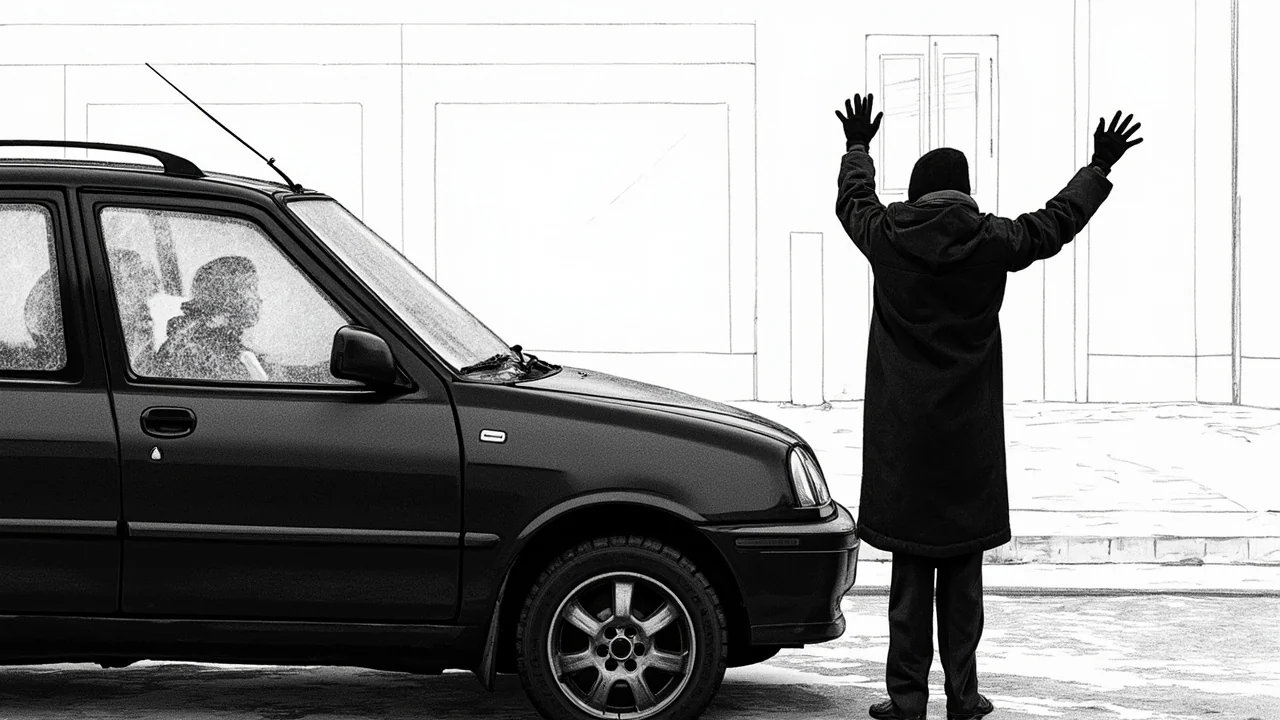
Denmark's strict parking enforcement has sparked a debate over fairness after a woman in Silkeborg was fined 510 kroner because frost obscured her parking disc. Vibeke Degn discovered the ticket on her car windshield on December 30th, a day of severe cold. The official violation stated her parking disc was 'unreadable,' as it was hidden behind a layer of ice. She insists her car had not exceeded the two-hour limit on Åhavevej. This case highlights a recurring winter conflict between municipal rules and practical reality for Danish drivers.
A Cold Surprise and a Heated Dispute
Vibeke Degn was baffled by the fine. She argues it was impossible to prevent the frost from forming while her car was legally parked. 'I think it's very unfair,' Degn said. 'I have nothing against parking attendants, but what am I supposed to do?' She emphasized the impracticality of the situation, noting, 'You don't stand and watch your car while it's parked.' After contacting Silkeborg Municipality, which issued the fine, she felt she had no recourse. Despite her frustration, she has paid the 510-krone penalty and moved on, though she wishes to warn others of the potential cost during frosty weather.
The Municipality's Unyielding Position
Silkeborg Municipality defended the fine in its correspondence with Degn. Officials cited photo documentation showing the parking disc was illegible. A key municipal policy was invoked: parking attendants, known as city assistants, are prohibited from clearing ice or snow from a windshield to inspect the disc. Vejtekniker Henrik Antoniussen explained the attendant's rationale. The assessment was that the car's heavily iced windshield indicated it had been parked overnight, thus exceeding the time limit. 'The city assistant says the windshield was so iced up that the car cannot have been parked there legally,' Antoniussen stated. The municipality maintains the fine was correctly imposed based on this visual evidence and the attendant's professional judgment.
The Legal Landscape of Danish Parking Control
This incident touches on a core principle of Danish parking law: the driver's responsibility. Municipal regulations consistently place the onus on the vehicle owner to ensure a parking disc is clearly visible and set correctly. The rules do not typically account for weather as an extenuating circumstance. Legal experts often note that while the law is clear, its application in cases of force majeure, like sudden frost, can be contentious. A driver's obligation to 'secure the disc's legibility' conflicts with the physical reality of Danish winters, where a car can become iced over within an hour. This gap between regulation and reality is where most public disputes arise.
Comparative Practices in Other Danish Cities
While Silkeborg upheld the fine, practices can vary across Denmark's 98 municipalities. Some city councils instruct their parking attendants to use greater discretion during extreme winter conditions. In other jurisdictions, attendants might note a repeated pattern—a car parked in the same spot with a frosted windshield over consecutive days—before issuing a fine for overstaying. However, the common thread remains that attendants are not required to clear windows. The variation in local application underscores the lack of a national standard for this specific winter scenario, leaving citizens subject to the interpretation of their local council.
A Recurring Winter Dilemma for Danes
Vibeke Degn's case is not isolated. Every winter, Danish media report similar disputes from various parts of the country. The core question persists: where does reasonable enforcement end and unreasonable rigidity begin? Citizens argue that fines for obscured discs in freezing weather feel like a penalty for the climate itself. Municipalities counter that the rule is essential for maintaining turnover in public parking spaces and that making exceptions for weather would create a significant enforcement loophole. This annual debate reflects a broader tension within the Danish welfare model between strict, rule-based governance and flexibility for individual circumstances.
The Broader Implications for Trust and Community
Beyond the 510 kroner, cases like these impact the perceived legitimacy of local authorities. When citizens feel penalized for circumstances beyond their control, it can erode trust in the system's fairness. Community leaders often stress that enforcement should align with common sense to maintain public support. The dilemma for municipalities is balancing efficient traffic management with empathetic citizen relations. As Denmark continues to navigate its integration of detailed social policies into daily life, small-scale conflicts over parking fines serve as microcosms of a larger challenge: administering a rules-based society with both consistency and humanity.
A Question of Proportionality
Ultimately, the story of the frosted windshield fine raises a fundamental question about proportionality in public administration. Is the primary goal of parking policy to generate revenue from technical violations, or is it to ensure the availability of parking spaces? If the latter is true, then the visual assessment that a car 'looked like' it was parked overnight becomes a subjective substitute for concrete evidence of overstaying. For Danish drivers, the lesson is clear: in winter, the responsibility to preemptively clear a potential frost layer rests entirely with them, regardless of the legal parking duration. Yet, one must ask, does such stringent enforcement during a frost truly serve the public good, or does it simply fuel resentment against a system perceived as inflexible?