
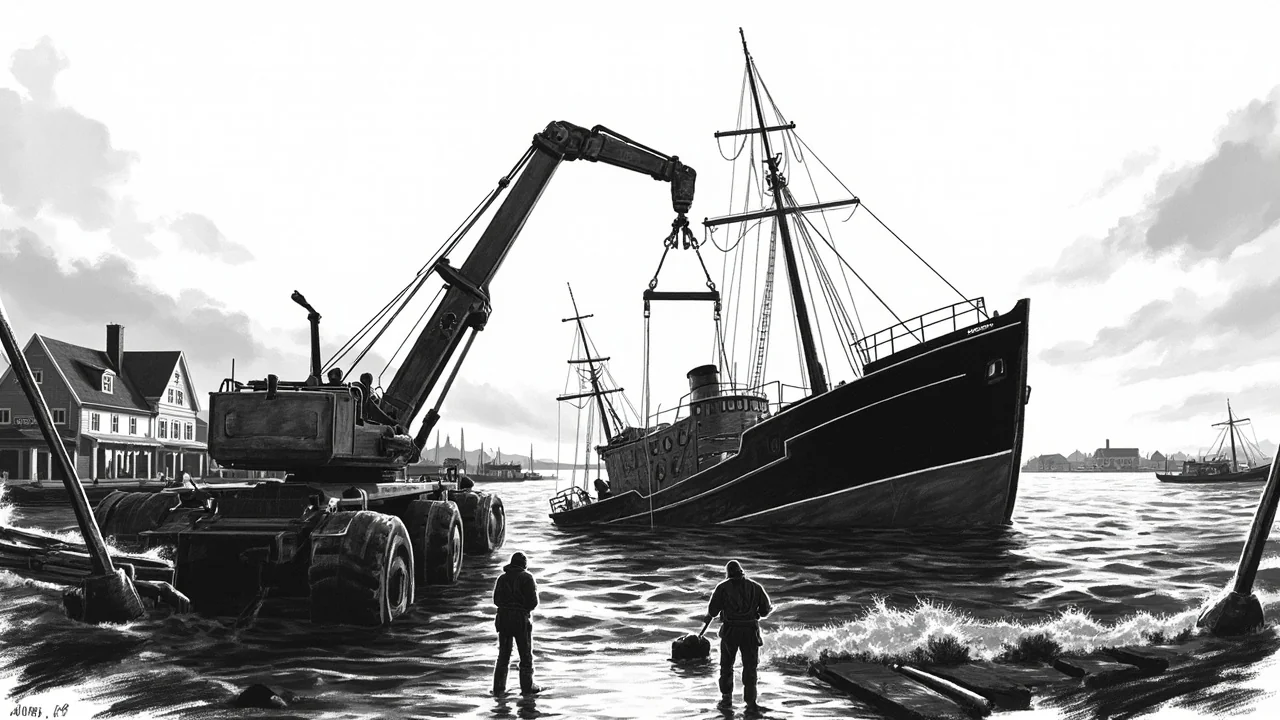
Denmark's Ebeltoft harbor today ended a five-month environmental ordeal by removing a sunken cutter that had leaked oil near the historic Fregatten Jylland. The derelict vessel, which sank in December, had become a persistent nuisance in the harbor basin, disrupting the frigate harbor and posing risks to the popular tourist attraction. Local citizens expressed widespread joy as contractors lifted the cutter from the water, marking a significant cleanup effort by Syddjurs Kommune. This operation highlights the ongoing challenges Danish municipalities face in maintaining public spaces and addressing abandoned properties, reflecting broader themes in Danish society news where community welfare intersects with environmental stewardship.
A Harbor's Longstanding Nuisance
Since December, the sunken cutter lay submerged in Ebeltoft's harbor basin, directly adjacent to the iconic Fregatten Jylland, a preserved wooden frigate that draws thousands of visitors annually. The wreck had been leaking oil into the water, creating a visible sheen and raising concerns about potential damage to the historic ship and marine life. Residents described the cutter as an eyesore that marred the picturesque setting of the harbor, a key spot for local tourism and community gatherings. Over the months, the situation grew more urgent as the leak persisted, prompting increased calls for action from both the public and municipal authorities. The cutter's position under a bridge complicated removal efforts, requiring specialized equipment and planning to avoid further disruption.
The Day of Removal
On Thursday, Syddjurs Kommune oversaw the successful extraction of the cutter, hiring a private contractor to haul the vessel onto land. Sanne Attermann, head of technique and environment for the municipality, explained the process in a statement. 'We have hired a contractor to ensure this boat can come ashore,' she said, noting that the operation proceeded smoothly despite earlier logistical hurdles. Citizens gathered to watch the removal, with several telling reporters of their relief and satisfaction. One longtime Ebeltoft resident remarked, 'It's been a ghost ship for years, and finally seeing it gone feels like a weight lifted.' The immediate next step involves transporting the cutter to Trafikhavnen, where it will await classification as waste before being scrapped.
Municipal Challenges and Action
The removal process was delayed by ownership issues, as the last known owner had sold the cutter to an individual whom the municipality could not locate. This left the vessel in legal limbo, complicating responsibility for its disposal. Danish municipalities often grapple with such cases, where abandoned properties or vehicles become public hazards, requiring intervention under Danish welfare system principles that prioritize community safety and environmental protection. Syddjurs Kommune's action demonstrates how local governments in Denmark step in when private owners fail to act, using public funds to address nuisances that affect collective well-being. This aligns with Denmark social policy that emphasizes proactive municipal roles in maintaining order and cleanliness, even in smaller towns like Ebeltoft.
Community Relief and Historical Context
Fregatten Jylland, launched in 1860, is a centerpiece of Danish maritime heritage, and its preservation is vital for cultural and economic reasons. The sunken cutter's proximity had sparked fears among locals about potential harm to the frigate's hull or its surroundings, which could impact tourism revenue. Community leaders emphasized that the removal restores not just the harbor's aesthetics but also a sense of pride and security. 'This is about respecting our history and ensuring our public spaces are safe for everyone,' said a local council member. The incident underscores how Danish society news often features stories where historical preservation meets modern municipal governance, showcasing the balance between past and present in community life.
From Ghost Ship to Waste
With the cutter now on land, authorities will classify it as affald, or waste, paving the way for its dismantling and recycling. This step is part of Denmark's stringent environmental regulations, which mandate proper disposal of hazardous materials like oil-contaminated vessels. The process involves assessing the cutter for salvageable parts before shredding it, with costs likely borne by the municipality if the owner remains unfound. Such cases are not uncommon in Danish harbors, where abandoned boats occasionally become burdens on public resources. The outcome here may set a precedent for similar situations, highlighting the importance of clear ownership records and municipal vigilance in preventing long-term environmental damage.
Broader Implications for Danish Society
This event in Ebeltoft reflects wider themes in Danish society, where integration of public welfare and environmental care is key. While not directly related to Copenhagen integration or immigration policy, it showcases how Danish municipalities operate within a framework that values community input and rapid response to local issues. The successful removal after months of disruption illustrates the effectiveness of Denmark's decentralized governance model, where local authorities have the autonomy to address problems promptly. As Denmark continues to prioritize sustainability and public health, incidents like this serve as reminders of the ongoing need for vigilance and cooperation between citizens and government. What other hidden nuisances might Danish harbors face, and how can communities better prevent them?