
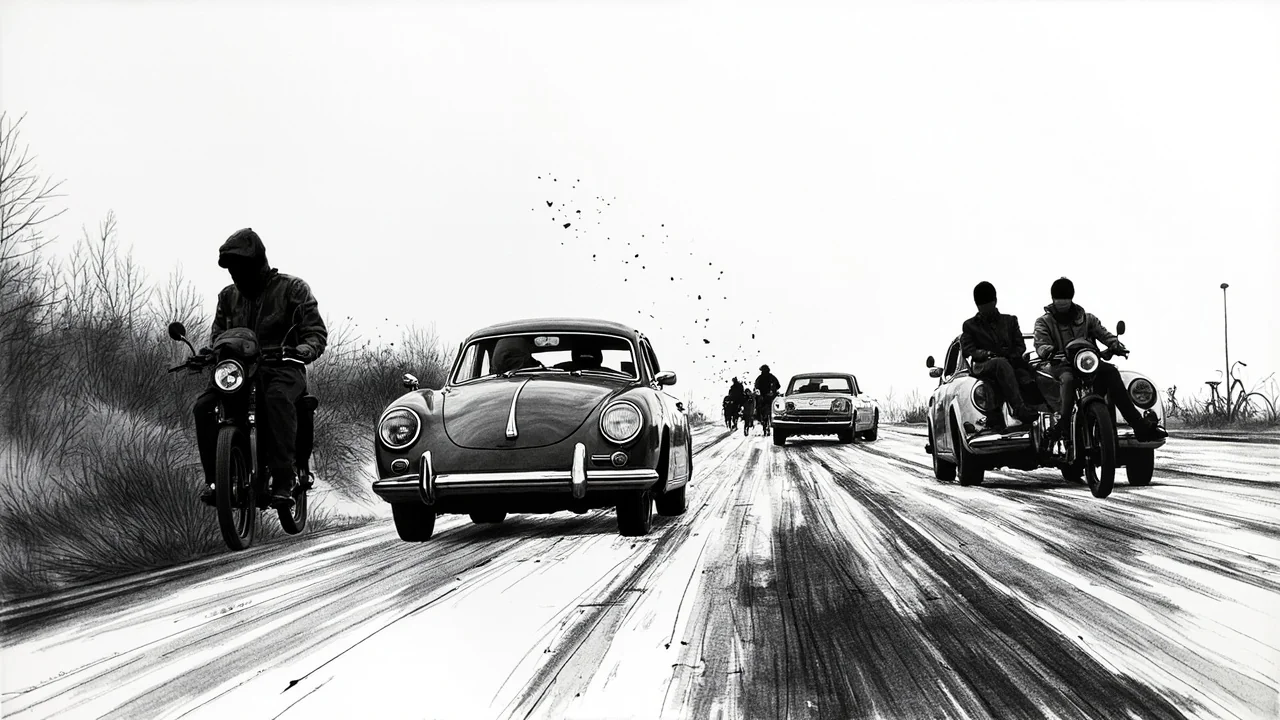
Denmark's new law allowing 17-year-olds to drive alone has resulted in 1,085 criminal charges in just six months. The startling figure, released by police, reveals a concentrated wave of traffic offenses led primarily by speeding. This policy experiment, aimed at increasing mobility for rural youth, now faces intense scrutiny as communities and officials weigh safety against social benefits.
As a reporter who has covered integration and social policy for years, I see this as more than a traffic story. It is a case study in Danish social engineering, where a well-intentioned reform meets the unpredictable reality of adolescent behavior. The data prompts difficult questions about responsibility, supervision, and the limits of legislative goodwill in a society built on trust and rule-following.
A Reform Meets the Open Road
In 2023, Denmark changed its traffic laws. The goal was practical: to help teenagers in remote areas get to jobs, education, and social activities without relying on parents or public transport. The policy granted a provisional license at 17, permitting solo driving under certain conditions. It was a classic Danish welfare solution, designed to solve a geographic inequality and foster independence. The assumption, deeply embedded in the national psyche, was that young people would reciprocate this trust with responsible behavior. The first half-year of data tells a different story. Police have registered an average of over six charges per day specifically against these newly empowered young drivers. The most common offense is excessive speed, indicating a fundamental mismatch between the freedom given and the maturity exercised.
The Numbers Behind the Headlines
The figure of 1,085 charges is stark but requires context. It represents all criminal charges, not minor traffic tickets, meaning these are serious violations. While the total number of 17-year-olds holding licenses is not public, the charge rate suggests a significant pattern of misuse. "The high speed cases are particularly worrying," a senior traffic police officer told Nordics Today. "It shows a disregard for the law's conditions and for public safety." This isn't about occasional mistakes. It points to a systemic testing of boundaries. Municipalities that championed the law for its social utility are now grappling with the consequences. Local councils in rural areas, which lobbied for the change, must reconcile their support with safety concerns from residents who share roads with these inexperienced, and often reckless, young motorists.
A Social Policy Under the Microscope
This situation touches a nerve in Danish social policy debates. Denmark often uses legislative change to engineer positive social outcomes, from integration programs to educational reforms. Success depends on high levels of public compliance. The driver's license law was a gift of autonomy, expecting responsible citizenship in return. The wave of charges reveals a fracture in that social contract. Experts in youth behavior are not entirely surprised. "Granting major autonomy in a high-risk activity like driving to 17-year-olds is a significant intervention," said Karen Mikkelsen, a sociologist at the University of Copenhagen who studies adolescent development. "Their brain development, particularly in areas governing risk assessment and impulse control, is incomplete. The law may have overestimated behavioral maturity while underestimating the psychological allure of speed and power a car provides."
From my perspective, covering integration, I see parallels. New freedoms require frameworks for success. Just as new citizens need language training and cultural orientation, young drivers need more than a license and a rulebook. They need ingrained habits of responsibility. The current data suggests the policy provided the tool without sufficiently reinforcing the mindset. The Danish welfare model succeeds on mutual obligation. The state provides opportunity, and the citizen acts responsibly. Here, that second part is faltering, creating a dilemma for policymakers.
Community Reactions and Safety Fears
In towns outside major cities, reactions are mixed. Some parents defend the law, citing the tangible benefits for their children's daily lives. Others express deep anxiety. "I was for it initially," said Henrik, a father of two in Jutland who asked not to use his full name. "Now, I hear stories of races on country roads. My younger son is 16, and I'm hesitant to let him get a license next year. It feels like a lottery." This erosion of trust is perhaps the most damaging outcome. Local police districts report increased patrols on roads popular with young drivers, diverting resources from other duties. Community safety forums in municipalities like Ringkøbing-Skjern and Viborg have placed the issue on their agendas, with residents demanding action. The social harmony the law aimed to promote is being strained by fear of accidents and property damage.
Searching for Solutions on the Horizon
Facing this data, authorities are at a crossroads. A full repeal of the law is considered unlikely, as it would punish responsible young drivers and re-isolate rural youth. Instead, a recalibration is underway. Proposals being discussed include stricter graduated licensing with longer probationary periods, mandatory installation of speed-governing technology in vehicles driven by 17-year-olds, and compulsory advanced driving courses focused on risk awareness. The National Police have recommended more targeted traffic enforcement and educational campaigns in schools. "The goal is not to revoke freedom but to better scaffold it," a policy advisor from the Ministry of Transport explained. "We must embed safety into the structure of the privilege."
This approach aligns with Danish social policy methods: diagnose, adjust, and improve. The six-month data serves as a brutal diagnosis. The adjustment phase is now beginning. It will likely involve tighter rules, more technology, and greater parental accountability. The coming year will be a test of whether a pragmatic, data-driven correction can salvage the original intent of the law. For the 17-year-olds behind the wheel, it is a lesson in how quickly societal trust can be depleted, and how hard it is to earn back.
The Road Ahead for Danish Trust
The story of Denmark's 17-year-old drivers is a parable about modern governance. It highlights the tension between liberalizing individual opportunity and maintaining collective security. Denmark's high-trust society is not a given; it is reinforced daily by citizens choosing to follow the rules. When a large cohort appears to break them so flagrantly, it forces a societal recalculation. The 1,085 charges are more than statistics. They are 1,085 individual failures of judgment that collectively challenge a core Danish belief: that given freedom, people will act for the common good. The state's response will reveal much about Denmark's future path—whether it leans toward stricter control or renewed efforts to cultivate internalized responsibility. For now, the open road for teenagers looks a little less open, and the journey toward a balanced solution has just begun.