
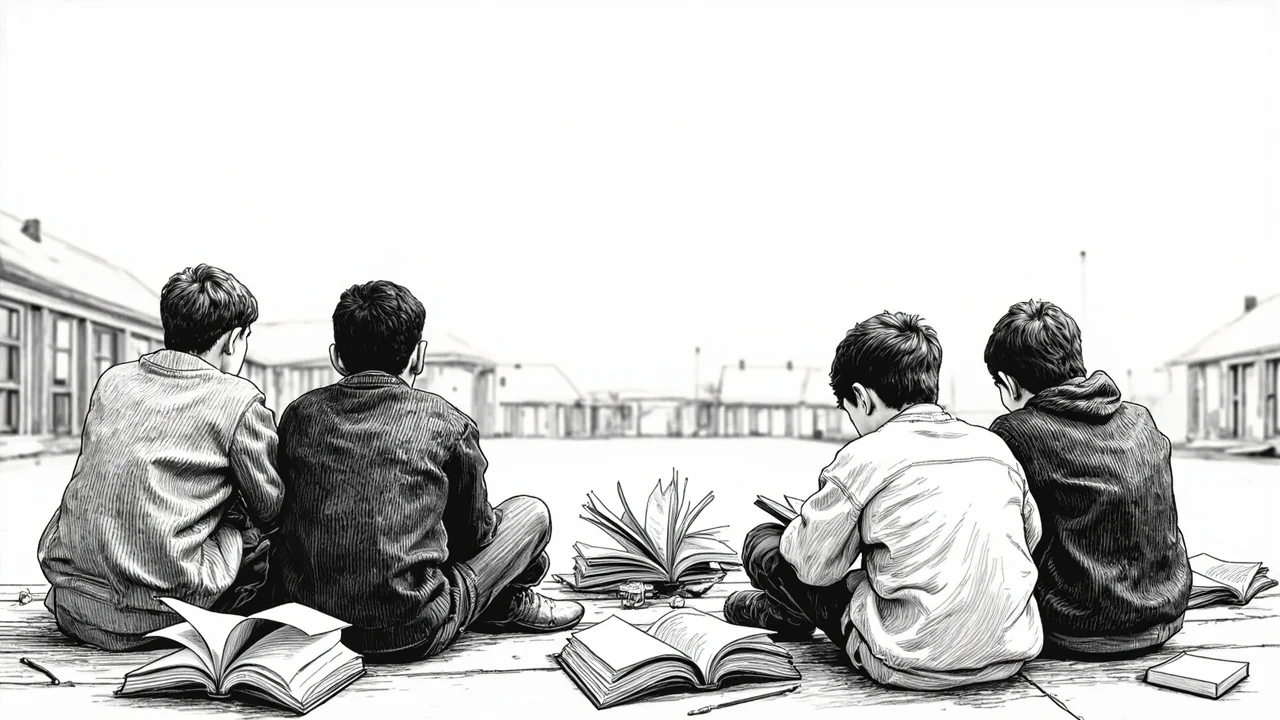
Denmark announces a major push to reverse a national reading crisis, with a 20 million kroner investment in a new national comic house as its centerpiece. Culture Minister Jakob Engel-Schmidt is launching a multi-point plan aimed directly at the 42 percent of 15-year-olds who, according to recent PISA data, struggle to comprehend complex texts. The initiative seeks to rekindle reading for pleasure, a skill experts warn is in dangerous decline. The new comic house in Copenhagen will serve as a national hub to promote the genre as a legitimate and engaging gateway to literature for children and young people. 'Reading is central to both education and personal development,' Engel-Schmidt said in a statement announcing the plan. 'We are in a serious situation where children are losing the joy of reading and the ability to immerse themselves in a book. We need to meet them where their interests are.' The ministry's strategy explicitly acknowledges comics and graphic novels as powerful tools for literacy, moving them from the fringe into the core of cultural policy.
A National Hub for Sequential Art
The 20 million kroner earmarked for the new comic house represents the plan's most concrete and sizable investment. While a specific location in Copenhagen is yet to be finalized, the vision is for a physical space dedicated to the creation, exhibition, and celebration of Danish and international comics. The hub will host workshops for young people, professional development for illustrators and writers, and major public exhibitions. This institutional recognition is a significant shift for a medium that has historically battled for legitimacy alongside traditional literature. Proponents argue that the visual narrative form is uniquely suited to captivate reluctant readers and build the foundational skills needed for more complex reading later. The investment mirrors strategies seen in other Nordic countries, where libraries and cultural centers have increasingly integrated graphic novels into their core youth programming.
The Wider Strategy Beyond the Building
Beyond the bricks and mortar of the new house, the minister's plan includes broader support for initiatives that connect children with books. This involves funding for author visits to schools, campaigns to promote daily reading aloud in families and classrooms, and partnerships with public libraries across Denmark's municipalities. The plan directly responds to alarming reports from Danish teachers and librarians, who have documented a steep drop in reading stamina and textual comprehension among students over the past decade. The focus is unapologetically on fostering 'lyst'—the desire or joy of reading—rather than purely on academic metrics. However, the ministry is clear that the social and economic implications of poor literacy are profound, affecting future education paths, job opportunities, and social integration. The plan frames reading not just as a school subject, but as a critical life skill for participation in a democratic society.
One Key Recommendation Left Pending
Despite the comprehensive scope of the announced plan, the Culture Minister has notably bypassed one specific recommendation, at least for now. A government-appointed expert committee on reading had previously suggested the introduction of a dedicated 'book start' program. Such a program would typically involve gifting book packages to new parents at health visitor check-ups, a practice established in nations like the UK to encourage early parent-child reading. When pressed on this omission, Engel-Schmidt stated the recommendation was 'under continued evaluation,' but emphasized the need to first roll out and assess the current suite of initiatives. Some critics within the literary and educational sectors see this as a missed opportunity to intervene at the earliest possible stage, arguing that reading habits are formed long before a child reaches school age. The decision highlights the ongoing debate about the most effective points of intervention in a child's literacy journey.
Reactions from the Front Lines
Initial reactions from educators and comic industry professionals have been cautiously optimistic. 'Seeing the government put real money and a national strategy behind the power of comics is unprecedented,' said a veteran Danish comic artist who requested anonymity ahead of formal project consultations. 'It sends a message that this art form matters.' School librarians in Copenhagen and Aarhus have welcomed the focus on engagement, though they stress that sustained funding for updating library collections is equally crucial. 'A fantastic comic house in Copenhagen is great, but we need the books on the shelves in local schools and libraries in every region to make a daily difference,' commented a municipal library coordinator in West Jutland. The success of the plan will ultimately depend on its implementation and its ability to translate a central Copenhagen initiative into tangible benefits for children across Denmark, including in areas where cultural resources are thinner.
A Cultural Investment in Future Generations
Denmark's 20 million kroner comic house plan is more than a cultural infrastructure project. It is a targeted policy response to a documented societal challenge, using a popular medium as its spearhead. By betting on comics, the government is attempting to bridge the gap between the digital habits of young people and the deep cognitive benefits of sustained reading. The initiative acknowledges that protecting and nurturing Denmark's strong literary tradition requires adaptation and new pathways. As the national reading crisis continues to impact educational outcomes and social cohesion, this investment represents a significant test case. Can a bold, genre-specific cultural policy move the needle on a complex, multi-faceted problem? The answer will unfold in the coming years, in the hands of the children and teenagers it aims to inspire.