
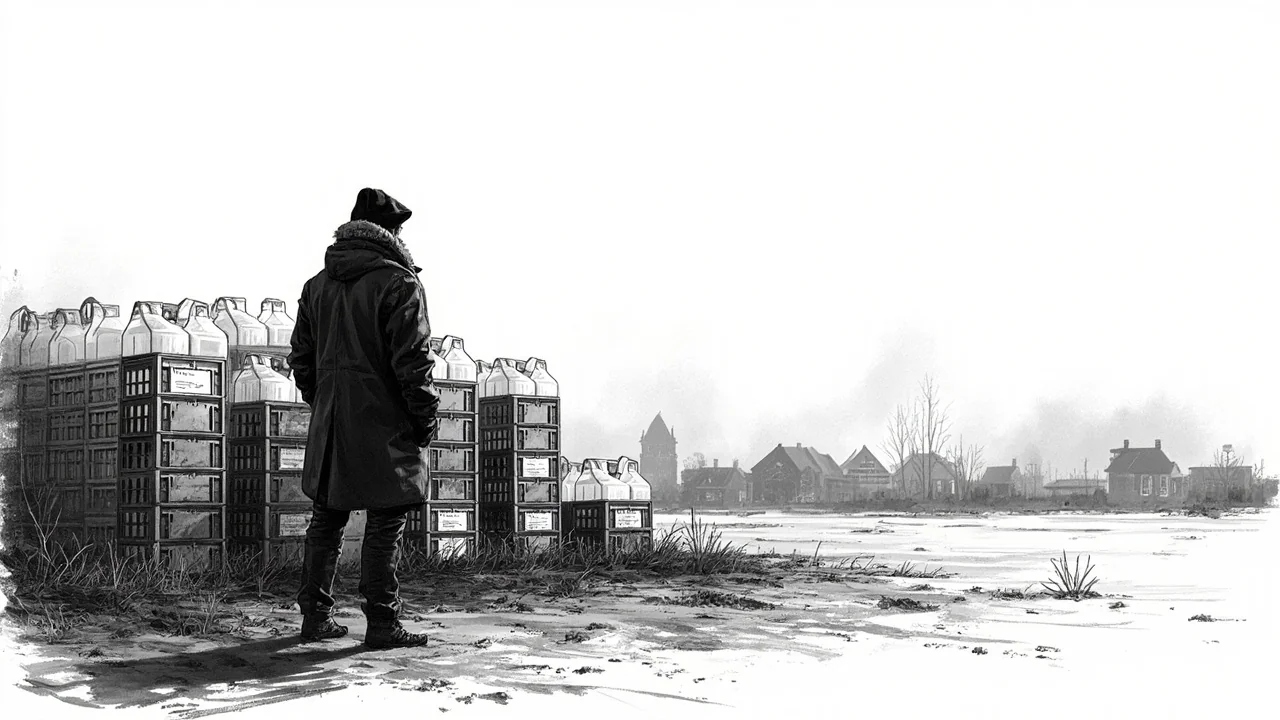
Denmark's pristine groundwater, the source of its famously clean tap water, faces a contamination threat that could force a historic shift to bottled supplies. A new report exposes critical gaps in protecting the nation's water wells from agricultural and industrial pollution. This revelation challenges a core element of Danish identity and the welfare state's promise of universal, high-quality public goods.
For generations, Danes have enjoyed what many consider a basic right: safe, delicious water flowing directly from the tap. This isn't just a convenience. It represents a profound social contract and a point of national pride, symbolizing a society that manages its resources and protects its citizens. The potential loss of this guarantee strikes at the heart of the Danish model. It raises difficult questions about environmental stewardship, agricultural policy, and the long-term sustainability of the welfare state itself.
A Foundation of Trust Under Threat
The report details how thousands of water abstraction sites across the country lack sufficient protective zones. These zones are essential buffers against nitrate runoff from fertilizers, pesticide residues, and pollutants like PFAS from industrial sites. Without them, the natural filtration process through soil and rock is compromised. A senior researcher involved with the findings stated bluntly that comprehensive water treatment, or even a switch to bottled water, could become a reality if protection measures are not strengthened immediately.
This isn't a distant, abstract problem. Contamination occurs gradually, often undetected until concentrations exceed safety limits. Municipalities in agricultural regions, particularly in Jutland, have already faced local challenges with nitrate levels. The new analysis suggests these are not isolated incidents but symptoms of a systemic vulnerability. It highlights a tension between Denmark's powerful agricultural sector and its environmental goals, a conflict playing out directly beneath our feet.
The Staggering Cost of a Broken Covenant
Moving to bottled water or large-scale treatment would represent a monumental policy failure with deep social and economic consequences. First, the financial cost would be enormous, burdening municipalities and ultimately taxpayers. Second, it would create a two-tier system. Those who could afford it might opt for premium bottled water, while others would rely on a potentially diminished public supply. This erosion of a universal service contradicts the egalitarian principles central to Danish society.
Imagine the daily reality: supermarkets stacked with plastic bottles, households budgeting for water as a commodity, and public institutions struggling with procurement costs. The environmental impact of plastic waste would contradict Denmark's green ambitions. The social ritual of filling a glass from the tap—a simple act of trust in the system—would be replaced by a transaction. The researcher's warning is not about a temporary inconvenience but a fundamental downgrade in the quality of public life.
Policy Crossroads and Agricultural Accountability
The solution path is clear but politically fraught. It requires stricter regulation of agriculture, including mandatory, expanded protective zones around all water wells and stricter limits on fertilizer use. It demands faster action on persistent industrial chemicals. This puts the government in a difficult position, balancing the interests of a major economic sector against a non-negotiable public good. Past voluntary agreements with farmers have shown mixed results; the new report implies mandatory action is now necessary.
Some Danish municipalities have already begun proactive land acquisition around wellfields to control activities. Others are investing in advanced monitoring. These local efforts are commendable but insufficient without a coordinated national strategy. The issue transcends ministry silos, touching on environment, food, industry, and health. A spokesperson for the Danish Society for Nature Conservation said the report should be a "final wake-up call" for politicians to prioritize water security over agricultural intensification.
A Test of the Nordic Model's Resilience
This crisis is a test case for the Nordic model's ability to confront long-term challenges. The model excels at delivering high-quality universal services, but its preventative capacity is now under scrutiny. Can it regulate powerful industries to safeguard a common resource for future generations? The answer will define Denmark's environmental legacy. Other Nordic nations watch closely, as many face similar pressures on their water sources.
The Danish welfare system is built on predictability and collective security. The safety of drinking water is a bedrock assumption. If that assumption fails, it shakes public confidence in the state's ability to manage other complex, slow-burning crises, from climate adaptation to public health. Protecting groundwater is not merely an environmental issue. It is an act of social preservation, defending a key component of what makes Danish society function with such a high degree of trust and cohesion.
The Choice: Prevention or a Bottled Future
Denmark stands at a crossroads. One path leads to decisive, potentially unpopular regulatory action to shield the groundwater. The other leads toward a future where the trusty tap is no longer a source of pride but of doubt. The researcher's stark prediction about bottled water is not an inevitability. It is a challenge. The technology and knowledge to protect the water exist. What is required is the political will to place this most fundamental resource above short-term economic interests.
The coming months will reveal which value the Danish political system holds higher: the right to clean water directly from the ground, or the freedom to pollute the very source of that right. For a nation that has built its identity on trust, equality, and sensible management, the choice should be clear. The world is watching to see if Denmark can protect the liquid foundation of its society, or if its children will grow up in a country where safe water comes with a price tag and a plastic seal.