
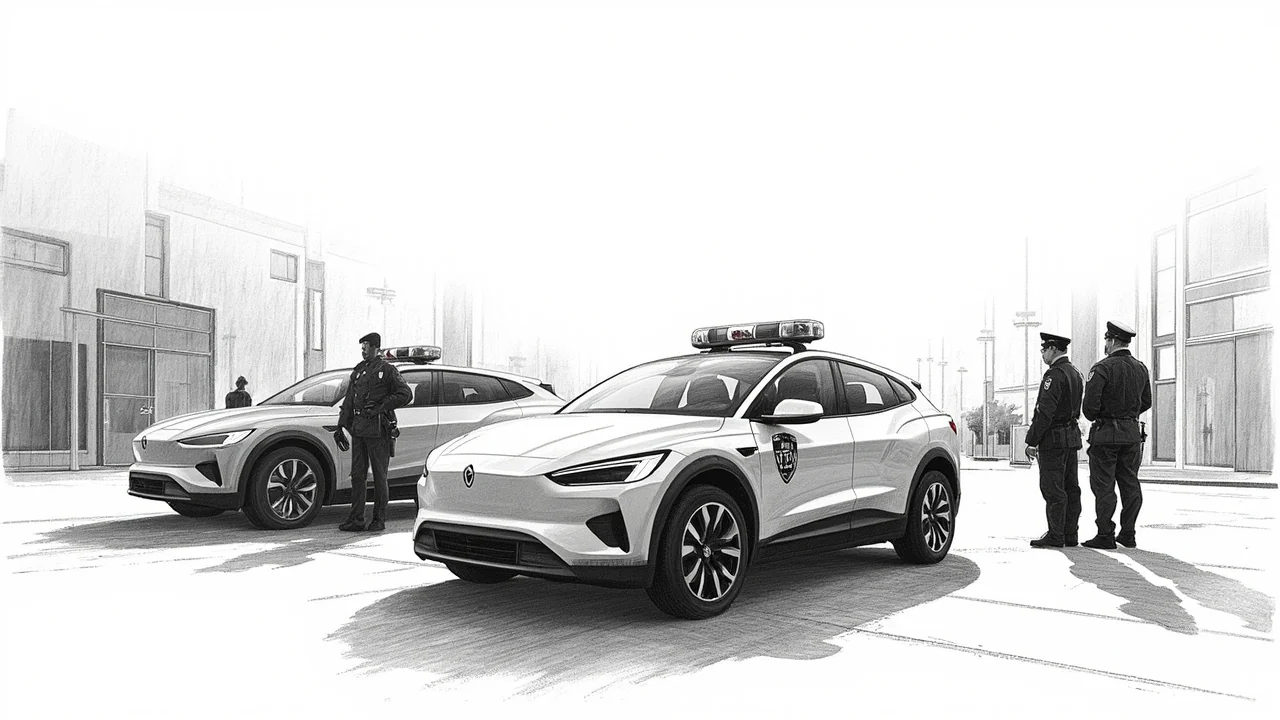
Denmark's taxpayers face extra costs as the national police force rolls out electric patrol cars after a 300,000-kilometer pilot project, highlighting the economic trade-offs in the country's green transition. Rigspolitiet announced Monday that all police districts can now use electric vehicles, following tests in four regions, but the shift from diesel comes with a higher price tag due to exemption from taxes and infrastructure investments. Police Inspector Jens Yndgaard said in a statement that while operational savings offset some expenses, the transition carries a noticeable cost, funded through a multi-year political agreement. For Danish businesses, this move signals growing demand in the electric vehicle sector, with potential ripple effects for Copenhagen's trade districts and renewable energy firms.
The Pilot Project's Economic Footprint
Over slightly more than a year, ten Volkswagen ID.4 electric cars logged 300,000 kilometers of patrol driving in Midt- and Vestjyllands Politi, Østjyllands Politi, Københavns Politi, and Københavns Vestegns Politi. The analysis revealed no significant issues with range, addressing initial concerns about reliability for emergency services. However, a side effect emerged: officers in passenger seats reported increased motion sickness during electric-driven runs with sirens and lights activated. Jens Yndgaard noted that preliminary feedback from researchers at Gødstrup Regionshospital indicates training and knowledge can mitigate this, suggesting it won't hinder broader adoption. From a business perspective, this trial underscores the operational viability of EVs in critical services, a key consideration for Danish companies eyeing public sector contracts in green technology.
Cost Breakdown and Taxpayer Implications
The transition to electric patrol vehicles imposes additional expenses on Danish taxpayers, as electric cars are more expensive than traditional diesel models, and police are exempt from vehicle taxes. According to Rigspolitiet's press release, extra costs also include investments in charging infrastructure and other indirect expenditures. Jens Yndgaard acknowledged that experiences from the pilot indicate lower operational costs for electric cars, balancing some of the premium, but the upfront investment remains substantial. This financial dynamic reflects broader trends in Denmark's economy, where green initiatives often require initial public funding before yielding long-term savings. For instance, similar shifts in municipal fleets across Copenhagen's business districts could amplify demand for Danish renewable energy solutions, potentially boosting exports.
Infrastructure Investments and Trade Opportunities
Investing in charging infrastructure for police fleets presents both a cost challenge and a business opportunity. The need for widespread, reliable charging stations could spur growth in Denmark's energy sector, particularly for companies based in the Øresund region, such as Ørsted or Vestas, which lead in renewable technology. While specific figures weren't disclosed, such projects typically involve millions of kroner, impacting local trade and commerce. As a business correspondent, I see this aligning with Denmark's export strengths—wind energy and smart grid systems—where Danish firms reported revenues exceeding 50 billion kroner last year. The police transition may catalyze further investments, benefiting Copenhagen's Nordhavn and other hubs focused on green innovation.
Operational Savings and Economic Balancing Act
Police Inspector Jens Yndgaard emphasized that electric patrol cars are cheaper to run than diesel counterparts, offering some relief to the budget. Operational savings stem from lower fuel and maintenance costs, a factor that could make Denmark's public sector EV adoption more sustainable economically. This balance between higher initial costs and reduced ongoing expenses is critical for taxpayers and policymakers, mirroring debates in Danish business news about renewable energy investments. For example, Danish companies in the automotive supply chain, like battery management firm Lithium Balance, might see increased demand, supporting job creation in trade-intensive areas. The political backing via the multi-year agreement ensures funding, but monitoring these savings will be essential for future fiscal decisions.
Broader Business and Export Implications
Denmark's police EV shift extends beyond domestic costs, influencing trade and export prospects. As a country renowned for renewable energy, Denmark's commitment to electrifying public fleets could enhance its global reputation, driving sales of Danish green technology abroad. Companies in Copenhagen's stock exchange-listed sectors, such as energy and industrials, may benefit from increased domestic deployment, which often leads to export contracts. For instance, successful integration of police EVs could serve as a case study for Scandinavian neighbors, boosting cross-border trade in the Øresund region. However, reliance on imported vehicles like Volkswagen ID.4 highlights a gap in local manufacturing, posing a challenge for Denmark's trade balance. Addressing this could involve incentivizing Danish startups in the EV space, fostering economic resilience.