
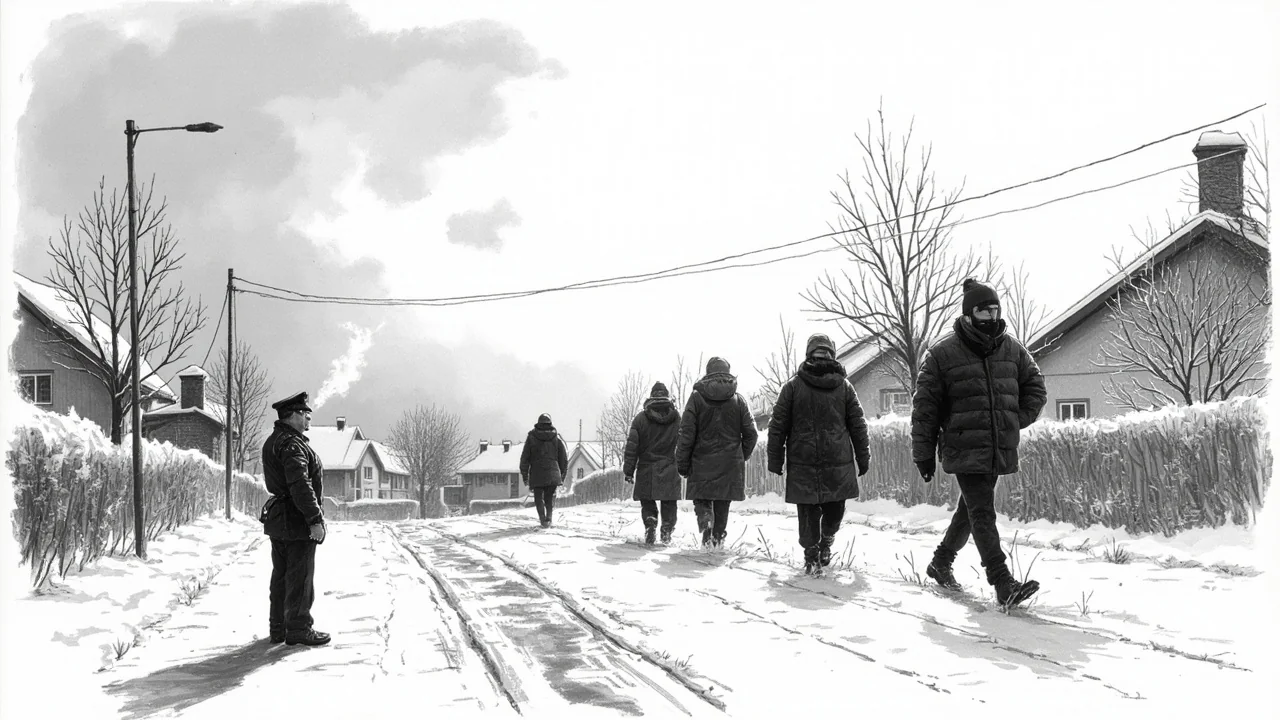
Danish police are urging commuters to add at least 30 minutes to their journeys as a combination of ice and snow grips the country. The warning follows alerts from the Danish Meteorological Institute for slippery conditions across central and southern Jutland, with snow and blowing snow predicted for northern regions. This coordinated safety push highlights a fundamental seasonal shift in Scandinavian life, where public infrastructure and personal responsibility intersect.
The Icy Forecast
DMI issued a formal warning for light icing on Monday morning. The alert specifically covered central and southern Jylland, with a later risk extended to Fyn and Sjælland. Throughout the day, between two and six centimeters of fresh snow was forecast to fall. A separate warning for blowing snow was activated for northern Jylland, potentially reducing visibility and creating hazardous drifts. These conditions represent a typical but dangerous early winter pattern, testing the readiness of both authorities and the public.
Vagtchef Lars Denholt of South Zealand and Lolland-Falster Police stressed proactive preparation. His advice was practical and born from experience. 'It’s better to arrive a little late and safe than to end up in a ditch—especially when more snow is expected during the day,' Denholt said. His statement reflects a core principle of Danish traffic safety: adapting mobility to the environment, not forcing it.
Police Preparations Across Regions
Police districts across Denmark amplified the message with specific guidance. Østjyllands Police took to social media Sunday evening with a detailed list for motorists. They advised people to pack warm, practical clothing, ensure their phone was charged, and carry a blanket, some food and drink, and possibly a shovel. 'If you need vital medicine, make sure to bring that too,' their statement added. This level of granular advice moves beyond generic warnings into actionable community care.
In the Copenhagen area, the immediate impact appeared limited overnight. Vagtchef Lars Guldborg of Copenhagen West Police reported no weather-related traffic accidents during the night. However, he echoed the national caution. 'It is important to drive carefully. Keep your distance and drive according to the conditions,' Guldborg stated. His comment underscores that the absence of immediate incidents does not mean the risk has passed.
A Culture of Readiness
This annual ritual of winter warnings speaks to a deeper societal contract in Denmark. The welfare state provides robust forecasting and road maintenance, yet it expects citizens to exercise informed judgment. The police advice is not merely about avoiding accidents; it’s about ensuring that if you are delayed or stranded, you can maintain your own safety and comfort until help arrives. This reduces the strain on emergency services during widespread weather events.
Lars Denholt’s recommendation to pack extra warm clothes is a direct application of this principle. 'Have some warm clothes with you, so if you are unfortunate enough to have an accident or go off the road, you can keep yourself warm for the time you risk waiting to get the help you need,' he explained. This transforms the car from a simple transport vehicle into a potential survival capsule, a necessary mindset in a country where winter isolation on rural roads is a real possibility.
The Social Contract in Action
From my perspective reporting on Danish society, this interaction reveals the pragmatic heart of the Nordic model. The state, through DMI and police communications, disseminates high-quality, timely information. Citizens are then entrusted—and expected—to act on it responsibly. The mutual accountability is clear. There is no suggestion that authorities will salt every side road before dawn; instead, there is a shared understanding that individuals must adjust their behavior based on the collective data provided.
This system relies heavily on trust in institutions and a high degree of social cohesion. When police advise adding 30 minutes to a commute, most people will comply because they believe the warning is accurate and issued in their best interest. The alternative, seen in some regions with less institutional trust, is chaos where official warnings are ignored until the first major pileup. Denmark’s approach minimizes that reactive phase.
Beyond the Morning Commute
The implications extend beyond the individual driver. Employers have a role, implicitly encouraged by such public warnings, to show flexibility. Schools and childcare institutions monitor these alerts closely. Municipal road crews shift to winter service plans, their work made more effective if fewer cars are on the road during the initial treatment. This is a finely tuned, society-wide response to a natural challenge.
It also highlights a quiet inequality. Not everyone can simply add 30 minutes to their commute. Shift workers, delivery drivers, and those with fixed, early morning appointments face greater pressure. The public advice, while crucial, assumes a degree of personal scheduling control that isn't universal. This is a subtle tension within the otherwise successful model.
Looking Ahead
As the climate changes, the nature of Scandinavian winters is becoming more unpredictable. Periods of mild weather can be abruptly broken by intense cold snaps and snowfall, potentially catching people off guard. The reliability of seasonal patterns is shifting. This makes the existing framework of alerts and personal preparedness more critical than ever. The challenge for authorities will be maintaining public engagement when winter hazards become less consistent but no less dangerous.
The police warnings this Monday morning are a routine piece of Danish winter. Yet they encapsulate a profound and effective relationship between the state and the citizen. It is a relationship built on clear communication, shared responsibility, and practical foresight—a small daily demonstration of the social contract that keeps a society functioning smoothly, even on the iciest of roads. The true test is not in the warning issued, but in the hundreds of thousands of individual decisions made in warm kitchens to pack an extra sweater, leave earlier, and drive a little slower.