
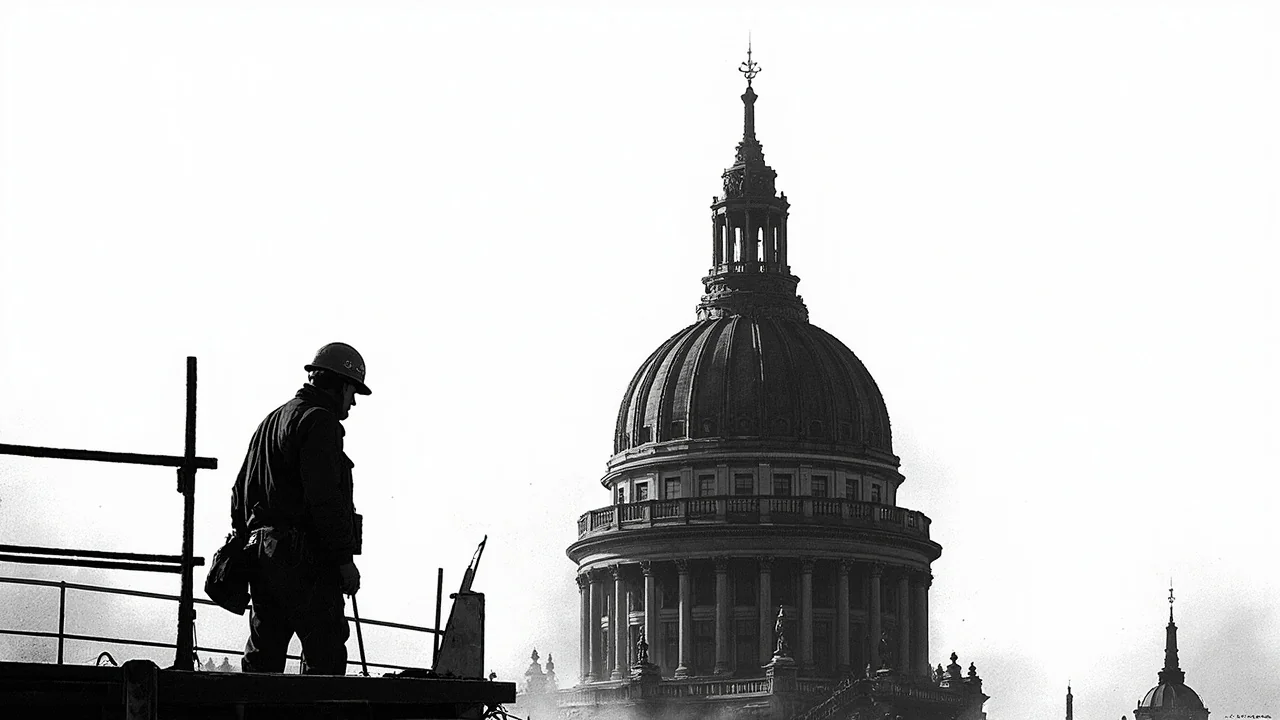
Denmark's historic Rundetårn had its iconic copper dome carefully removed by crane this week. The 17th-century tower's roof began leaking after nearly six decades, prompting a major restoration project that will last several months. This operation marks a significant moment for Copenhagen's architectural heritage and presents complex logistical challenges in the city center.
Watching the dome ascend from its centuries-old perch felt like witnessing a piece of the city's soul being temporarily removed. The Rundetårn is not just a tourist attraction but a living monument to Danish history and scientific ambition. Built by King Christian IV between 1637 and 1642, it served as Europe's oldest functioning astronomical observatory. Its unique spiral ramp, designed for horse-drawn carriages to reach the top, has carried everyone from visiting royalty to daily commuters seeking its panoramic views.
A Delicate Operation in the Urban Heart
The removal required meticulous planning and a 500-ton crane positioned on Købmagergade, one of Copenhagen's busiest pedestrian streets. Specialists from the Danish Agency for Culture and Palaces oversaw the operation, ensuring the 17th-century structure suffered no damage. The copper dome, weighing several tons, was secured with custom rigging before its slow ascent. Traffic in the surrounding streets was rerouted for two days to accommodate the crane's footprint and ensure public safety.
This restoration was triggered by persistent water ingress detected during routine inspections last year. The current copper cladding, installed in 1965, had reached the end of its functional lifespan. Moisture penetrating the roof layers threatened the historic masonry and interior spaces below. "When heritage buildings of this magnitude need care, we must act decisively," a project manager from the Agency for Culture and Palaces said in a statement. The agency has allocated 12 million Danish kroner for the dome's restoration, part of a larger preservation budget for national monuments.
The Tower's Role in Danish Cultural Identity
The Rundetårn's closure affects more than just the 500,000 annual visitors who climb its ramp. It functions as a central meeting point and a quiet refuge in the city's bustle. Local businesses near the tower, particularly cafes and shops, anticipate a dip in foot traffic during the restoration period. For Copenhagen residents, the tower's familiar silhouette against the skyline is a daily touchstone. Its temporary alteration creates a tangible gap in the urban landscape.
This project highlights the ongoing tension between preserving historic fabric and implementing modern solutions. Restoration architects face the challenge of making the dome watertight for another half-century while respecting its historic appearance. They will use traditional copper-smithing techniques alongside contemporary waterproofing membranes. The new copper will be left to develop its characteristic green patina naturally, a process that will take 15 to 20 years.
Engineering Heritage in a Modern City
The logistics of such a project in a dense 21st-century city are formidable. Unlike its original construction in the 1600s, today's work must comply with strict noise ordinances, traffic management plans, and modern safety regulations. The project team coordinated with Copenhagen Municipality's technical and environmental departments for months. They developed detailed plans to minimize disruption to residents and the many students attending the University of Copenhagen nearby.
Historical preservation in Denmark operates under the principle of 'authenticity in material and method.' This often makes restoration more expensive and time-consuming than replacement. Yet this approach maintains the cultural value embedded in the original craftsmanship. The Rundetårn's dome is a prime example of this philosophy in action. Its repair uses public funds allocated specifically for protecting Denmark's most significant cultural heritage sites.
What the Restoration Reveals About Priorities
Investing millions in a single historic structure inevitably sparks debate about resource allocation. Some argue these funds could address pressing social needs within Danish society. Others see the preservation of national landmarks as a core duty that transcends immediate utility. This restoration occurs against a backdrop of discussions about how Denmark maintains its physical history while building its future.
The tower itself is a monument to a different kind of investment—the investment in knowledge. Its original purpose as an observatory symbolizes Denmark's historical commitment to science and learning. That legacy continues today with Denmark consistently ranking high in global education and innovation indexes. Protecting the tower is, in a symbolic sense, protecting that enduring value.
Looking Ahead: A Return to the Skyline
The dome is expected to be reinstalled before winter, following repairs to its underlying structure and the application of new copper sheeting. The Rundetårn should reopen to the public in early 2025. Until then, Copenhagen must adjust to its altered skyline. The project offers a rare opportunity for experts to study the tower's upper construction, potentially revealing unknown aspects of its 380-year history.
Such restorations force a community to contemplate what it chooses to preserve. The Rundetårn has survived fires, wars, and countless changes in the city around it. Its continued care signals a collective decision to maintain tangible links to the past. When the dome returns, its renewed copper will shine brightly before slowly blending back into the familiar green hue. That transformation will mirror the city itself—constantly evolving, yet fundamentally anchored by the structures it refuses to let go.