
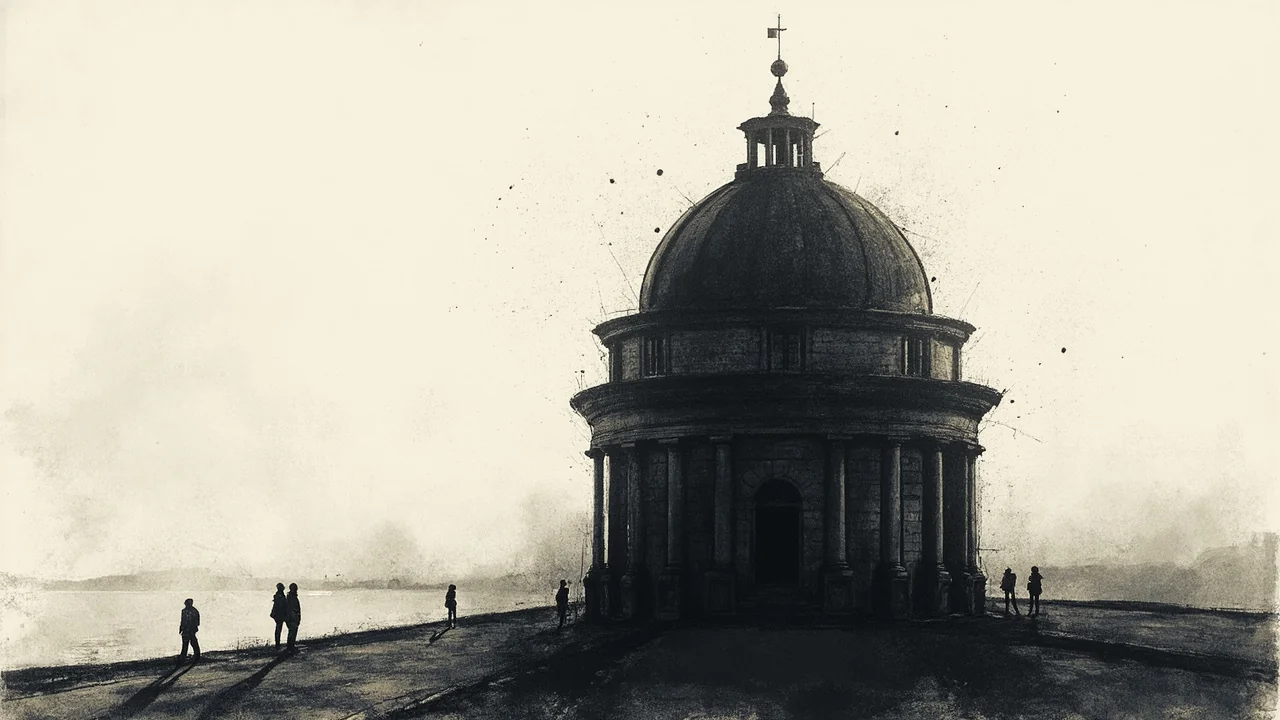
Denmark's iconic Rundetårn in Copenhagen stood strangely bare on Monday morning. A large crane gently lifted its three-ton green copper dome, a defining feature for nearly 60 years, into the air above the city. The carefully orchestrated operation, watched by a small crowd, took less than 15 minutes. This marks the start of a significant restoration project to protect the 17th-century tower, a beloved landmark and the oldest functioning observatory in Europe.
The dome's removal is necessary because its copper cladding has begun to fail after six decades of exposure. Water infiltration threatened the structure beneath. To perform the extensive restoration work safely, including applying new copper sheets, the entire dome had to be taken off-site. This eliminates fire risks associated with hot metalwork on the historic building. The dome is expected to be returned to its perch by spring 2025, gleaming with a fresh coat of its distinctive patina.
A Delicate Operation in the City Heart
Crews prepared for weeks for the brief, critical lift. The dome, a complex half-sphere of aged copper and supporting timber, weighs approximately 3,000 kilograms. Securing it to the crane required meticulous planning to avoid damaging the historic fabric of the tower. The operation closed parts of the surrounding area in the Indre By district, drawing curious onlookers who paused to witness a rare piece of urban surgery. Such public maintenance of national treasures is a common sight in Denmark, where preservation is a visible, active process.
The tower itself will remain open to visitors during much of the restoration. Only the observatory platform at the very top, directly affected by the work, will be inaccessible. The famous spiral ramp, wide enough for a horse and carriage, and the views from the lower platforms continue to draw tourists and locals. This partial access reflects a pragmatic Danish approach to heritage management, balancing necessary work with public enjoyment.
More Than Just a Roof: The Dome's Significance
For Copenhagen residents, the green copper crown is an essential part of the city's skyline and identity. "It's a symbol of continuity," said historical architect Mikkel Bøje, who has consulted on several major Copenhagen restorations. "Rundetårn has witnessed everything from kings and astronomers to modern tourists. Maintaining its physical integrity is about maintaining our collective memory. The dome isn't just a roof; it's the finishing touch on a building that represents Danish scientific curiosity and architectural ambition."
Built by King Christian IV in the 1640s, the tower was conceived as an astronomical observatory. Its stable construction and wide ramp allowed heavy, delicate instruments to be transported to the top. The current copper dome, however, is not the original. It was installed in the 1960s, replacing a previous covering. Each generation inherits the duty to maintain these structures, using the techniques and materials of their time to ensure survival for the next.
Analysis: The Quiet Machinery of Preservation
This project offers a clear window into Denmark's deeply institutionalized culture of preservation. The work is not a reaction to a crisis but part of a scheduled, proactive maintenance cycle funded through state and municipal cultural budgets. "We monitor our listed buildings constantly," explained a project manager from the Danish Agency for Culture and Palaces, speaking on background about standard procedures. "The goal is to intervene before damage becomes severe or irreversible. This dome lift is a textbook example of planned preventative care."
The economic calculus is clear. A full-scale emergency restoration, prompted by significant water damage to the observatory's interior, would be exponentially more costly than this planned renewal. Furthermore, the skills required—coppersmithing, historical timber repair, conservation science—are kept alive through regular public projects. This sustains traditional crafts in a modern economy, a synergy often highlighted in Danish cultural policy.
However, this system faces pressures. Skilled craftspeople are aging, and training new ones is expensive. Municipal budgets for culture can be tight. A project like Rundetårn's restoration, while uncontroversial, still requires justifying its allocation against other social needs. The public fascination with the dome's flight acts as implicit support, showcasing the value citizens place on their physical heritage.
Looking to the Future Skyline
The dome's temporary absence will be noticeable. For the next several months, Copenhagen's oldest observatory will have an uncharacteristically flat head. The scaffolding and work site will become part of the urban landscape. The process underscores that heritage is not static. It is a living record that requires active, sometimes disruptive, stewardship.
The return of the refurbished dome will be a quiet celebration. It will not be accompanied by a major festival, but by a collective sigh of satisfaction that things are back in their rightful place. The renewed copper will shine brightly at first, then slowly weather back to the familiar green patina over the coming years and decades. This cycle of care, decay, and renewal is the unspoken contract a city makes with its history. Rundetårn will be ready for its next chapter of stargazing, its crown secured for another generation to look up to.