
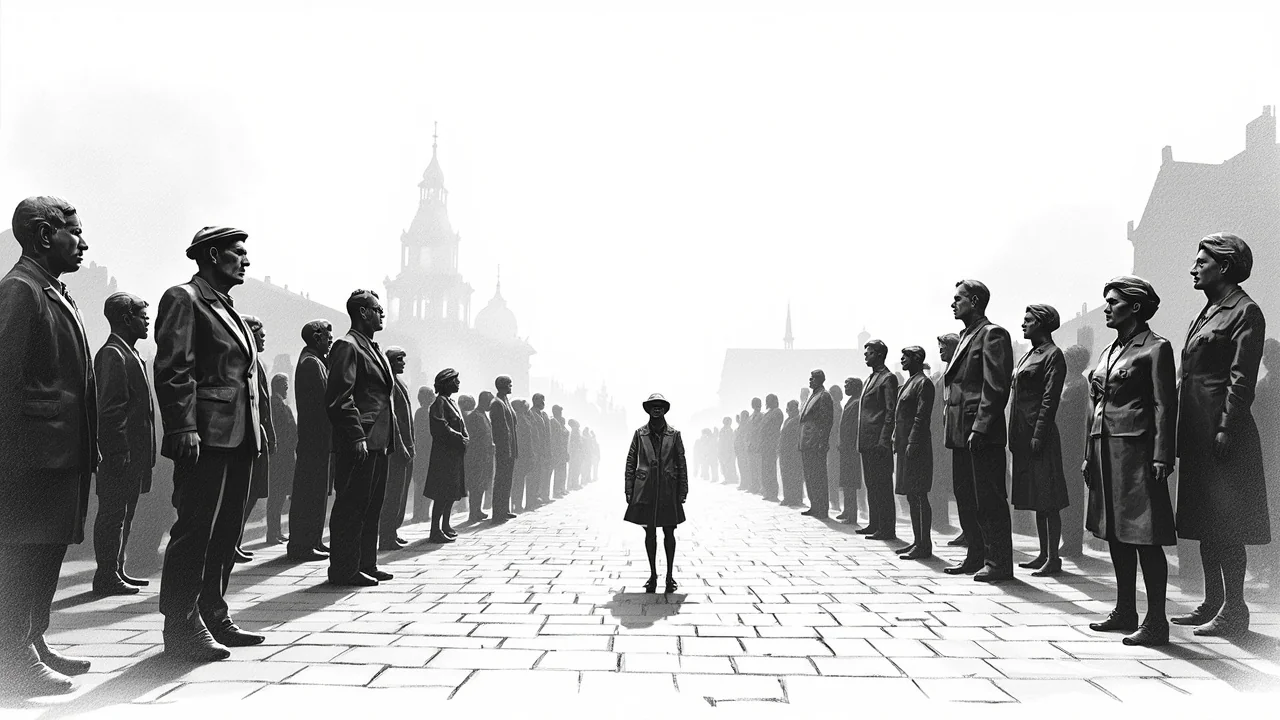
Denmark's public statues overwhelmingly depict clothed men of historical significance. Women are far more often represented nude and anonymously, a disparity the Culture Minister now seeks to change. This imbalance in bronze and stone reflects a deeper narrative about whose contributions Denmark chooses to memorialize in its shared spaces.
The Naked Truth in Bronze
Walk through any Danish city square or park and you will encounter statues of kings, politicians, and artists. These male figures are almost always dressed and their identities and achievements are clearly marked. The female figures present a stark contrast. Statues of women are frequently depicted in the nude, symbolizing abstract ideals like beauty or virtue rather than individual accomplishment. Many of these statues are simply labeled 'woman' or have no plaque at all, leaving their stories untold.
This pattern is not just anecdotal. A 2022 survey by the Danish Arts Foundation found that approximately 92% of statues representing named historical figures in Denmark's public areas are men. When women do appear, they are three times more likely to be anonymous or allegorical figures compared to their male counterparts. This creates a visual public history where male achievement is concrete and female presence is often decorative.
A Minister's Call for Change
Culture Minister Jakob Engel-Schmidt has publicly highlighted this issue. He argues that public art should reflect a more complete and accurate version of Danish history. 'Our squares and parks should tell the stories of the significant women who have shaped our society,' Engel-Schmidt said in a statement. He has pointed to figures like author Karen Blixen, physicist Lise Meitner who worked in Copenhagen, and women's rights activist Natalie Zahle as examples of those deserving recognition.
The minister's comments are not merely rhetorical. They align with a broader parliamentary focus on gender equality in cultural heritage. This includes funding reviews of public monuments and potential grants for new works. The goal is to inspire municipalities, which oversee most local public art, to commission more statues of historically important women.
Historical Roots of the Imbalance
The current landscape has deep historical roots. For centuries, public commemoration was tied to official power structures like the monarchy, military, and government, which were dominated by men. The tradition of neoclassical sculpture, which heavily influenced 19th and early 20th-century monuments, often used the female nude form to represent ideas like liberty, justice, or victory. This artistic convention cemented a pattern where men were individuals and women were concepts.
Furthermore, the process of commissioning a major statue has traditionally been lengthy and expensive. This meant decisions were made by committees that historically lacked gender diversity. The stories taught in schools and celebrated in national discourse also centered on male accomplishments, making it less likely for women's achievements to be proposed for monumental recognition.
Public Discourse and Municipal Action
The minister's focus has sparked a national conversation. Newspapers have run features mapping local statues, and historians have published lists of overlooked women. In Copenhagen, debates have emerged about who should be honored next. Some citizens suggest more contemporary figures, while others advocate for rectifying historical oversights.
Municipal cultural councils in cities like Aarhus and Odense have begun auditing their own collections. Their aim is to identify gaps and plan for future commissions that better represent their communities' full history. This local action is crucial because national policy can only encourage change. The actual decision to erect a new statue typically rests with city councils and often requires private fundraising alongside public funds.
The Path to a More Inclusive Heritage
Changing the physical landscape of memory is a slow process. A single statue can take years from conception to unveiling. The challenge is not only about adding new statues but also about recontextualizing existing ones. Some suggest adding new, informative plaques to anonymous female figures where their history is known. Others advocate for temporary installations or digital projects that can tell these stories faster while permanent monuments are developed.
The conversation extends beyond gender. It also touches on how Denmark memorializes other underrepresented groups in its public spaces. The statue debate becomes a mirror for who holds power and who gets to write the visual story of a nation. As one Copenhagen city councilor noted, 'Our public space is our collective autobiography in bronze and granite. Right now, that autobiography is missing some crucial chapters.'
Ultimately, the goal is a public realm where a child can look up at a statue and see a diverse range of potential heroes. It is about ensuring that the history celebrated in our town squares includes the women who built, led, and innovated alongside the men. The minister's call is a step toward a more honest and inspiring visual heritage for all Danes. The question now is how quickly municipalities and donors will answer it.