
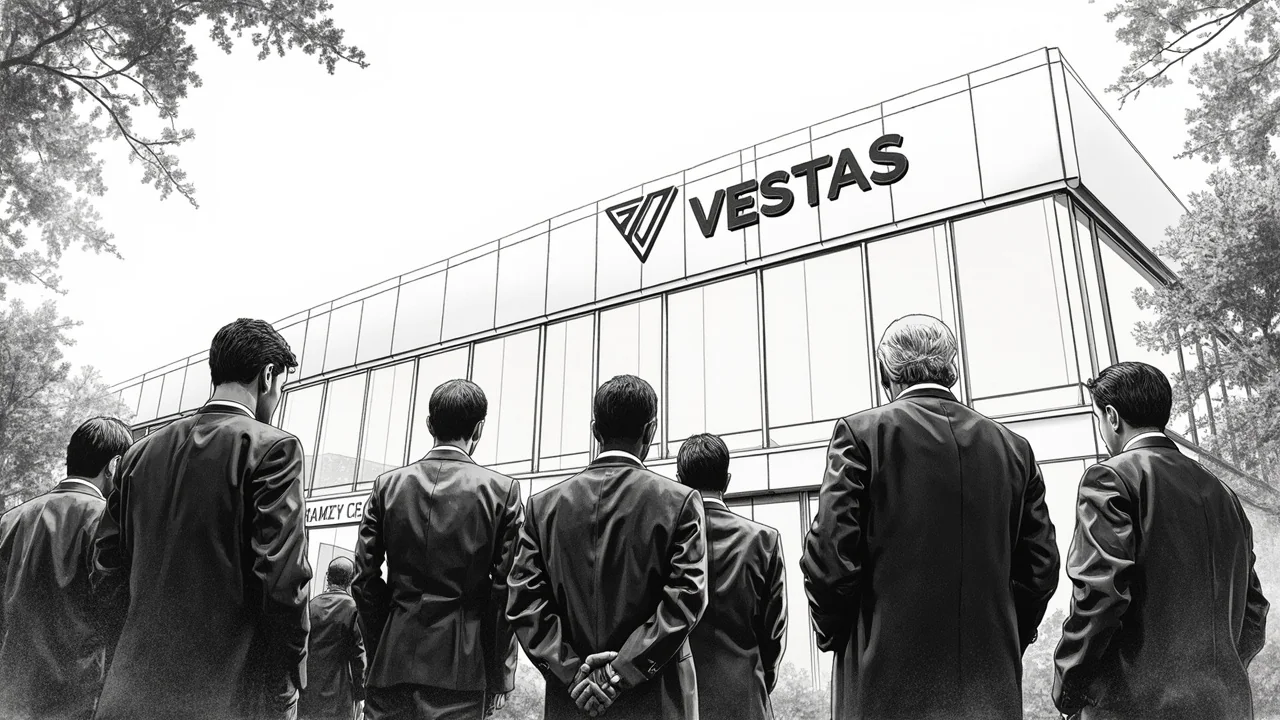
Denmark's wind energy giant Vestas is laying off 70 employees at its nacelle factory in Ringkøbing. The move is part of what the company calls an ongoing adjustment of its global manufacturing network. For the small West Jutland town, the cuts represent a significant blow, impacting roughly one-fifth of the factory's 330-strong workforce. Vestas has stated it will explore options to relocate affected employees to minimize outright dismissals.
This decision arrives amid a complex period for the global wind industry. While demand for renewable energy is soaring, manufacturers like Vestas face intense pressure from supply chain issues, rising costs, and fierce international competition. The Ringkøbing adjustment highlights the delicate balance between maintaining a competitive edge and supporting local communities that have grown with the company. It raises immediate questions about the future stability of green manufacturing jobs in Denmark's regions.
A Strategic Adjustment with Human Cost
Vestas framed the layoffs as a necessary strategic realignment. "We continuously adapt our global network of factories to deliver efficiently to our customers' needs," the company said in a statement. "As part of this, we will adjust activities at our factory in Ringkøbing, which is expected to affect approximately 70 of the factory's 330 employees. It is always difficult to say goodbye to valued colleagues, but we must ensure our organization reflects our global activities."
The factory in Ringkøbing specializes in producing nacelles, the central housings that sit atop wind turbine towers and contain the generator and gearbox. This is a core component, making the scale-back notable. The company emphasized its continued commitment to the Ringkøbing-Skjern municipality, where it still employs over 1,900 people across facilities in Ringkøbing, Lem, and Videbæk. Nationally, Vestas employs more than 7,400 people in Denmark, a figure that includes over 3,800 hourly-waged production and service workers as of the new year—an increase of more than 600 from the previous year.
The Local Impact in West Jutland
Despite the broader positive employment numbers, the loss of 70 jobs in a single factory will be felt deeply in Ringkøbing. Local economies in Denmark's smaller municipalities are often closely tied to one or two major employers. Vestas has been a cornerstone of the industrial landscape in West Jutland for decades. When such a company trims its workforce, the ripple effects extend to local suppliers, service businesses, and community morale.
The promise to seek internal relocations for affected staff is a standard part of Danish redundancy processes, often facilitated through collaboration with union representatives. However, opportunities are not guaranteed and may require employees to move or commute significant distances. The psychological impact of such a restructuring, even with relocation efforts, creates uncertainty for workers and their families. It tests the social contract that has long existed between large Danish corporations and the towns that host them.
Analyzing the Wind Industry's Crosswinds
To understand Vestas's decision, one must look at the global market pressures. The wind industry is in a state of rapid growth but also significant consolidation and cost pressure. Manufacturers are competing globally, not just on technology but on price. Production costs in Denmark are high compared to many other regions, pushing companies to constantly optimize their footprint.
"This is a classic example of the challenges facing high-cost manufacturing nations like Denmark," says a Copenhagen-based analyst specializing in green energy, who spoke on background. "The green transition creates jobs, but they are not immune to global economics. Vestas is streamlining to stay competitive against Chinese and other European manufacturers. The goal is long-term survival, but the short-term pain is localized."
The move could be seen as a strategic prioritization. Vestas maintains other major production facilities in Denmark at Lem, Nakskov, and Lindø. Adjusting capacity in Ringkøbing may allow the company to focus output and investment on other sites deemed more efficient or better suited for upcoming turbine models. This is the reality of a "global network"—facilities are evaluated against each other, not in isolation.
The Danish Model Under Pressure
This event touches on core aspects of the Danish welfare and labor market model. Denmark's flexicurity system is designed to handle economic shifts, providing a safety net for workers while allowing companies flexibility. The high unionization rate in Denmark means the affected employees will have substantial support during negotiations over severance, relocation, and retraining.
However, each round of layoffs in a stable industry like renewables prompts a societal conversation. Are the high-value manufacturing jobs that Denmark covets sustainable, or will they gradually migrate? The government actively promotes Denmark as a green energy hub, but that hub must be cost-competitive. Subsidies and supportive policies can help, but they cannot completely insulate companies from market forces.
Local politicians often find themselves caught between celebrating a company's overall presence and dealing with the acute pain of job cuts. The statement from Vestas carefully notes its "significant presence" of 1,900 employees in the municipality, a reminder of its ongoing importance. This is a standard corporate communication strategy to contextualize bad news within a broader positive narrative of commitment.
Looking Beyond the Headline Numbers
While the headline is 70 jobs lost, the broader employment data from Vestas tells a more nuanced story. The increase of over 600 hourly-worn workers in Denmark year-over-year suggests overall growth in the company's onshore service and maintenance operations, which are less susceptible to offshoring than manufacturing. The future of wind industry employment in Denmark may be shifting gradually from pure production to high-tech R&D, advanced component manufacturing, and the vast service sector maintaining installed turbines.
This evolution requires a skilled workforce. It places a premium on continuous education and vocational training—areas where Denmark typically excels. For the workers in Ringkøbing, the path forward may depend on their ability to adapt their skills to the company's evolving needs, whether within Vestas or elsewhere in the green economy.
The layoffs serve as a reminder that the green transition is not a linear path of endless job creation. It is an economic restructuring with winners, losers, and difficult adjustments. Communities that bet heavily on a single industry, even a future-oriented one, remain vulnerable to corporate decisions made in global boardrooms. Vestas's choice in Ringkøbing is a single data point, but it reflects the complex, often contradictory, forces shaping the future of work in the age of renewable energy. The question for Denmark is whether its model can smooth these bumps in the road or if the road itself is becoming fundamentally rougher for industrial heartlands.