
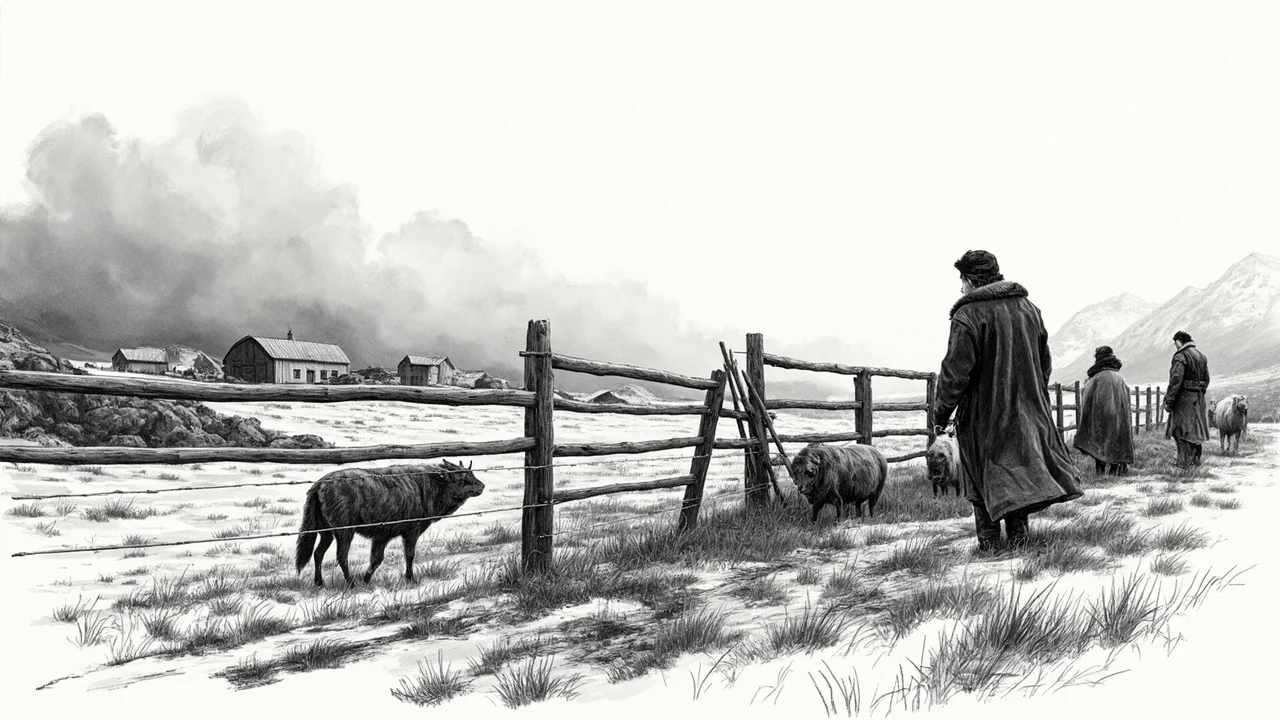
Danish wolf-proof fences may no longer be living up to their name, sparking a debate over livestock protection and conservation policy ahead of a major rule change. From July 1st, it will become legal to shoot wolves that jump over or dig under fences erected to protect sheep and other livestock. Yet experts now argue the fences themselves have become too easy to breach, turning protected pastures into an easy buffet for predators. This core conflict between relaxed fencing standards and intensified control measures sits at the heart of a growing national discussion.
A Barrier Lowered, Attacks Increased
Recent months have seen a significant rise in wolves penetrating enclosures once deemed secure. There have been at least 10 documented cases of wolves breaching fences in areas including Lille Vildmose, Klosterheden, and near Nymindegab. Biologist and nature guide Morten D.D. Hansen directly links this increase to a regulatory change. The top wire on a wolf-proof fence previously needed to be at least 110 centimeters high, but rules were revised so 105 centimeters between posts is now sufficient. 'It's not much that has been relaxed, but it's enough that the fences today are not wolf-proof,' Hansen states. He notes that under the old, strictly enforced criteria, there were only one or two attacks behind wolf-proof fences over a decade. 'Now the number is far greater.'
The 'Easy Prey' Problem and a Wolf's Nature
Anette Reinholdt, who runs the group 'Ulvene i Vendsyssel' (The Wolves in Vendsyssel), uses a stark analogy. 'The wolf goes for the easiest prey. If the refrigerator is standing open, they shouldn't use so many resources to find food,' she says. She argues the fence design itself is at fault and should be reassessed. 'The fences ought to be higher, and there should be bottom protection. Something must be wrong when we suddenly get so many attacks, so one ought to reevaluate and look at what can be done better.' Morten D.D. Hansen emphasizes this point from a biological perspective, explaining that breaching a weak fence is simply instinctual behavior, not a sign of a 'problem wolf.' He points to the inherent vulnerability of sheep. 'I am fond of animals, but a sheep is by God not equipped with the greatest brain, so they are quite easy for the wolf to kill.'
New Lethal Measures and Conservation Fears
The impending July 1st rule change, which permits shooting wolves that breach these fences, introduces a new layer of risk for Denmark's small wolf population. Experts fear it could lead to the deaths of wolves that are merely following their instincts due to inadequate man-made barriers. 'It will be some trouble for the wolf population,' Hansen says. 'It doesn't require a great deal of guardian exam to figure out that it will be more difficult to be a wolf in Denmark.' He stresses that while the goal is to protect livestock, the combination of weaker fences and lethal solutions could have severe unintended consequences. It remains uncertain whether these regulatory shifts could ultimately lead to the wolf being eradicated in Denmark once again, a fate the species only recently returned from after centuries of absence.
A Call for Stronger Solutions Before the Shooting Starts
The consensus among the cited experts is that the primary solution lies not in more shooting, but in building better barriers. The hope is for authorities to tighten the requirements for wolf-proof fencing, making it genuinely difficult for wolves to pass them. This preventative approach, they argue, addresses the root cause of the conflict. Stronger fences with proper height and bottom protection would protect livestock more effectively and reduce the perceived need to cull wolves. This would align Denmark's wolf management more closely with the conservation principles that guided the species' natural return to the country, balancing the needs of agriculture with ecological responsibility. The coming months will test whether policy responds to these calls for improved prevention or relies predominantly on lethal control, setting a precedent for Danish wildlife coexistence.
The Broader Context of Danish Wildlife Policy
This fencing debate occurs within a complex historical and political context. Wolves were hunted to extinction in Denmark in the 19th century and only began to naturally recolonize from neighboring Germany in recent decades. Their return has been met with a mix of public fascination and agricultural sector apprehension. Danish wildlife policy has since attempted to navigate a middle path, allowing the protected species to exist while managing conflicts, primarily through compensation for killed livestock and funding for protective fencing. The current controversy underscores the practical challenges of this compromise. It reveals how a small technical adjustment—a five-centimeter reduction in fence wire height—can have outsized consequences, destabilizing a carefully managed truce between humans and large carnivores. The outcome will signal Denmark's long-term commitment to sharing its landscape with native predators.