
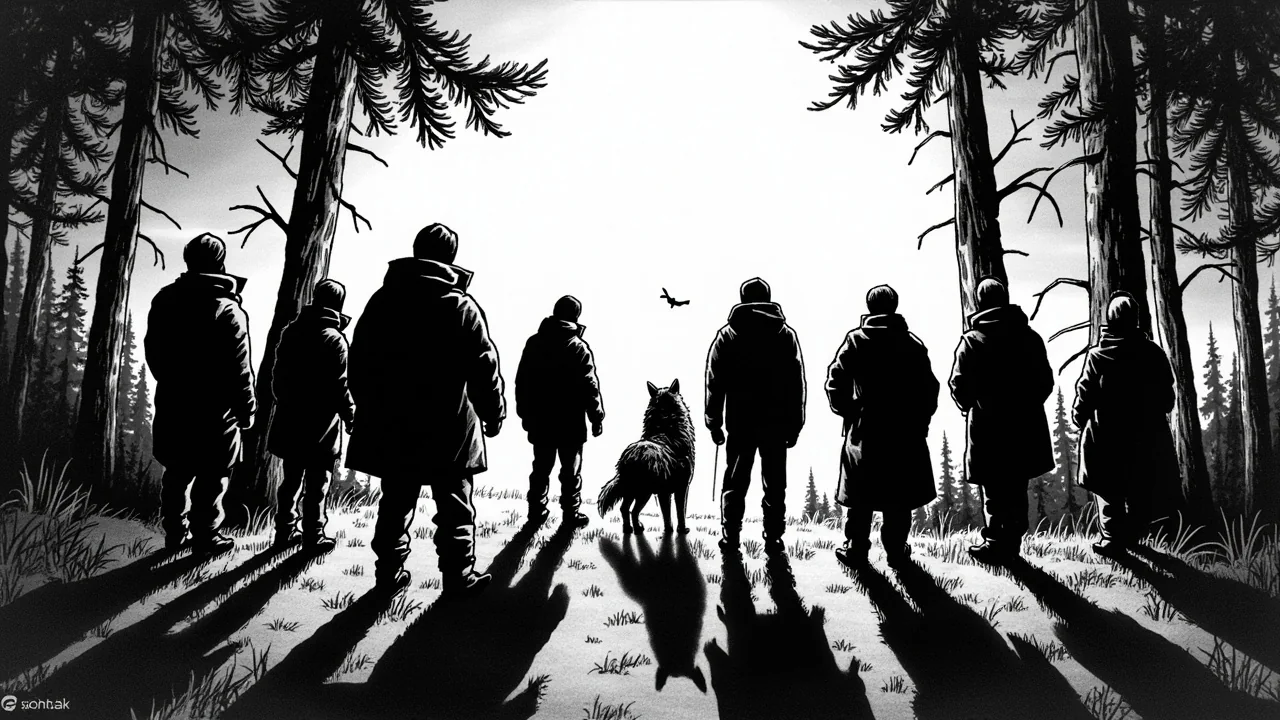
Denmark's Nature Agency will not actively seek out wolves to shoot them, despite receiving a controversial new license to cull animals that approach within ten meters of humans. The decision follows an incident in Oksbøl where a wolf came near a 14-year-old girl, sparking renewed debate about coexistence in a country with an estimated 40-50 wild wolves. Agency Vice Director Mads Jensen clarified the license is a reactive tool, not a hunting mandate, marking a nuanced shift in Denmark's wolf management strategy.
"We will not actively seek out wolves and actively try to get them close," Jensen stated. "It is a reactive opportunity to help citizens who have wolves so close that they feel very insecure about it." The license covers nearly 10,000 hectares of agency-managed land near Oksbøl, but officials stress their primary focus remains on non-lethal deterrents. This development highlights the persistent tension between public safety concerns and conservation efforts in Scandinavia's evolving natural landscape.
A Reactive Measure, Not a Hunt
The newly granted license authorizes the Nature Agency to regulate—a term encompassing lethal control—wolves on its properties near Oksbøl. Crucially, it applies only to wolves that come within ten meters of a person and do not retreat when attempts are made to scare them away. Jensen was emphatic that this does not equate to a proactive culling operation. The agency's stance reflects a careful balancing act, attempting to address public anxiety while adhering to the wolf's protected status under the Bern Convention.
"It is still our assessment that the wolf did not pose an actual danger," Jensen said, referencing the Oksbøl incident. "But the permit expresses that we prefer to avoid wolves coming so close to people. It is not appropriate behavior." This distinction between perceived threat and actual danger sits at the heart of the policy. The agency's position suggests the license is intended more as a psychological safety net for the public than a frequently used instrument.
The Incident That Prompted Action
The catalyst for the license was an event on a Friday evening in Oksbøl, where a wolf approached a teenage girl. While experts and the agency later concluded the girl was not in immediate physical danger, the psychological impact and community alarm were significant. Such close encounters, though rare, generate intense media coverage and public fear, often disproportionate to the statistical risk wolves pose compared to other wildlife or domestic dogs.
In response, the local wolf protection group installed 'foxlights'—flashing devices designed to deter wolves from entering urban fringes. The Nature Agency has complemented this by setting up surveillance cameras along the forest border near the town. "What we actively do is try to keep the wolf out of the city in cooperation with the Wolf Guard," Jensen explained. "That is an enormously important effort for us." These steps underscore a preference for preventative, non-lethal coexistence measures.
The Limits of Lethal Control
The geographic scope of the license is limited to the Nature Agency's own vast holdings. "We have access to do something on the areas we manage," Jensen noted. "We原则上 cannot do that in the city or other private areas." This limitation reveals a practical constraint; wolves do not respect property boundaries. A wolf that behaves fearfully on agency land might act differently on adjacent private farmland or near a residential garden, where the license does not apply.
This creates a patchwork enforcement reality. If a jogger or dog walker on agency land encounters a persistent wolf within the ten-meter threshold, the license can be activated. "Yes, correct," Jensen confirmed. However, the same scenario playing out a few hundred meters away on private property would fall outside the permit's immediate scope, potentially requiring a new bureaucratic process. This inconsistency is a source of frustration for some rural residents.
Public Guidance and Protocol
Official guidance from the Danish environmental authorities remains clear: if a person feels immediately threatened by a wolf, they should call the emergency number 112. For encounters with wolves that are close and not easily scared off, the public is instructed to document the event carefully. This documentation is vital for authorities to assess patterns of behavior and make informed management decisions.
The protocol highlights a communication challenge. Authorities must educate the public on appropriate, calm behavior during an encounter—such as making oneself appear larger and backing away slowly—while also providing a clear emergency pathway for genuine crises. The new ten-meter rule attempts to quantify a trigger point for intervention, moving the response from subjective fear to an observable measurement.
A Broader Scandinavian Context
Denmark's cautious approach mirrors a wider Nordic struggle. Sweden and Norway both permit licensed wolf culls to manage population targets and protect livestock, decisions often contested by the European Union and conservation groups. Finland also grapples with wolf conflicts in reindeer herding areas. Denmark, with its smaller wolf population and more fragmented habitats, faces a unique version of this challenge, where every individual wolf's movements are closely monitored and heavily debated.
The Danish model currently emphasizes deterrence and monitoring. The collaboration with volunteer groups like the Wolf Guard is presented as a cornerstone of this strategy. These groups often build local trust and provide rapid on-the-ground responses that government agencies cannot match. The investment in foxlights and cameras is a tangible, albeit imperfect, commitment to keeping wolves in forests and out of headlines.
Analysis: Safety, Perception, and Coexistence
This policy development is less about ecology and more about human psychology and political management. The Nature Agency is navigating a narrow path between demonstrating decisive action to a worried public and avoiding a full-scale return to persecution that would violate international obligations. The ten-meter rule is a bureaucratic compromise, creating a defined, justifiable line for lethal action that officials hope will rarely, if ever, be crossed.
Expert perspectives in wildlife management often point out that habituated wolves—those losing their natural fear of humans—do pose a potential long-term risk. The proactive use of deterrents like foxlights is considered best practice to prevent habituation from starting. From this viewpoint, the Danish strategy is logically sequenced: first, deploy lights and cameras to discourage approach; second, have a clear, stringent rule for the worst-case scenario where deterrence fails.
However, critics from conservation circles argue that even creating a lethal option can set a dangerous precedent. They worry it could normalize the idea of shooting wolves for being wolves, shifting the burden of coexistence entirely onto the animals. They advocate for intensified public education, better livestock protection schemes for farmers, and a societal acceptance that sharing landscapes with apex predators requires adaptation.
The Road Ahead for Danish Wolves
The coming months around Oksbøl will serve as a real-world test. Will the combination of non-lethal deterrents and the looming, rarely-used license be enough to calm local nerves and modify wolf behavior? The success of this model could influence policy in other Danish regions where wolves establish territories. A failure, marked by more close encounters or, conversely, by the triggering of the license, would reignite a fierce national debate.
The fundamental question remains: Can a modern, densely populated country like Denmark sustainably host a population of large carnivores? The answer depends on defining 'sustainable'—is it purely biological, or does it necessarily include a level of public tolerance? The new policy attempts to engineer that tolerance by offering a safety valve. Its ultimate legacy will be determined not by how often it is used, but by whether its mere existence allows Danes and wolves to share the landscape a little more peacefully.
For now, the message from the Nature Agency is one of restrained capability. They possess a tool they do not wish to use, focusing instead on lights, cameras, and cooperation. In the delicate dance between human expansion and wildlife return, Denmark has taken a small, deliberate, and controversial step, choosing to define the breaking point of coexistence as a distance of ten meters.