
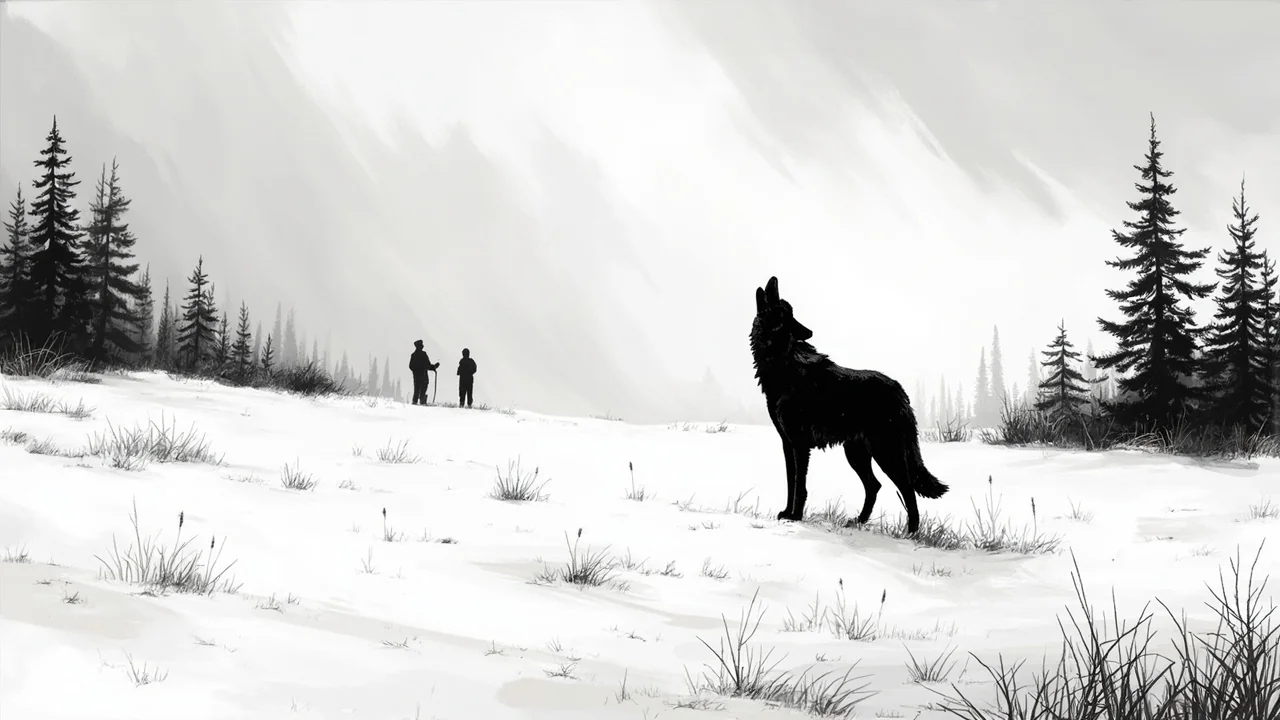
Denmark's wildlife authorities are investigating an illegal wolf shooting that left the animal suffering for up to twelve days before its death. The young male wolf was found dead in the Klosterheden forest area of Vestjylland shortly after the new year, with a broken hind leg. A recent autopsy by Copenhagen University has confirmed the wolf was shot unlawfully, surviving initially but succumbing to blood poisoning days later. This case highlights tensions in Danish society over protected species and enforcement of environmental laws.
A Grim Discovery in Klosterheden
The wolf's body was discovered in early January, lying in a remote part of the Klosterheden forest. Local authorities alerted the Styrelsen for Grøn Arealomlægning og Vandmiljø, Denmark's agency for green area and water environment, which oversees wildlife protection. Veterinarian Anne Sofie Hammer, who performed the autopsy, stated in a press release that the animal had been shot but initially survived. She estimated the wolf died earliest two to three days after the shooting, and possibly up to ten to twelve days later. This prolonged suffering has sparked outrage among conservation groups and raised questions about monitoring in rural municipalities.
Autopsy Reveals a Painful Timeline
The autopsy findings paint a distressing picture of the wolf's final days. Anne Sofie Hammer explained that the most likely cause of death was blood poisoning resulting from the gunshot wound. The wolf, a protected species under Danish law, was not categorized as a so-called problem wolf, which would have permitted regulated shooting. Instead, this incident represents a clear violation of the artsfredningsbekendtgørelse, the species protection executive order. Jens Skovager Østergaard, a department head at the agency, emphasized the seriousness of such fauna crimes. He noted that authorities can only permit the regulation of problem wolves in well-defined situations, and any other shooting is treated with great severity.
Legal Framework and Enforcement Challenges
In Denmark, wolves are a protected art, meaning they can only be shot if officially deemed a problem and with explicit permission from authorities. This system is part of broader Danish social policy that balances conservation with rural community concerns. However, the illegal shooting in Klosterheden suggests gaps in enforcement or public compliance. The Styrelsen for Grøn Arealomlægning og Vandmiljø is now leading the investigation, but no suspects have been identified publicly. This case echoes past incidents where protected animals have been targeted, reflecting ongoing debates about wildlife integration into Danish landscapes. For instance, wolves have slowly returned to Denmark after being extinct for centuries, leading to occasional conflicts with farmers and hunters.
Broader Context of Wolf Deaths in Denmark
The autopsy of this wolf was part of a larger examination of five dead wolves by Copenhagen University. Results showed one wolf was legally shot, while three others were killed in traffic accidents. These statistics underscore the various threats facing Denmark's small wolf population, estimated to be around thirty individuals. Traffic deaths are a common issue, often linked to habitat fragmentation near urban areas like Copenhagen. However, illegal shootings remain a significant concern, as they directly undermine conservation efforts. Danish municipalities and social centers sometimes host discussions on coexistence with wildlife, but this case suggests more public education is needed. The welfare system's role in environmental protection is often overlooked, yet agencies like Styrelsen for Grøn Arealomlægning og Vandmiljø play a crucial part in maintaining ecological balance.
Human Impact and Societal Reflections
As a journalist focused on integration and social policy, I see this story as more than a wildlife crime. It touches on how Danish society values nature and adheres to laws designed for the common good. The wolf's suffering for up to twelve days raises ethical questions about responsibility and compassion. Community leaders in Vestjylland have expressed mixed feelings, with some calling for stricter penalties for fauna crimes, while others highlight the challenges of living near predators. Quotes from officials like Jens Skovager Østergaard stress that such acts are treated with great seriousness, but prevention requires broader societal engagement. In Copenhagen, integration efforts often include environmental awareness, yet rural-urban divides can affect policy implementation.