
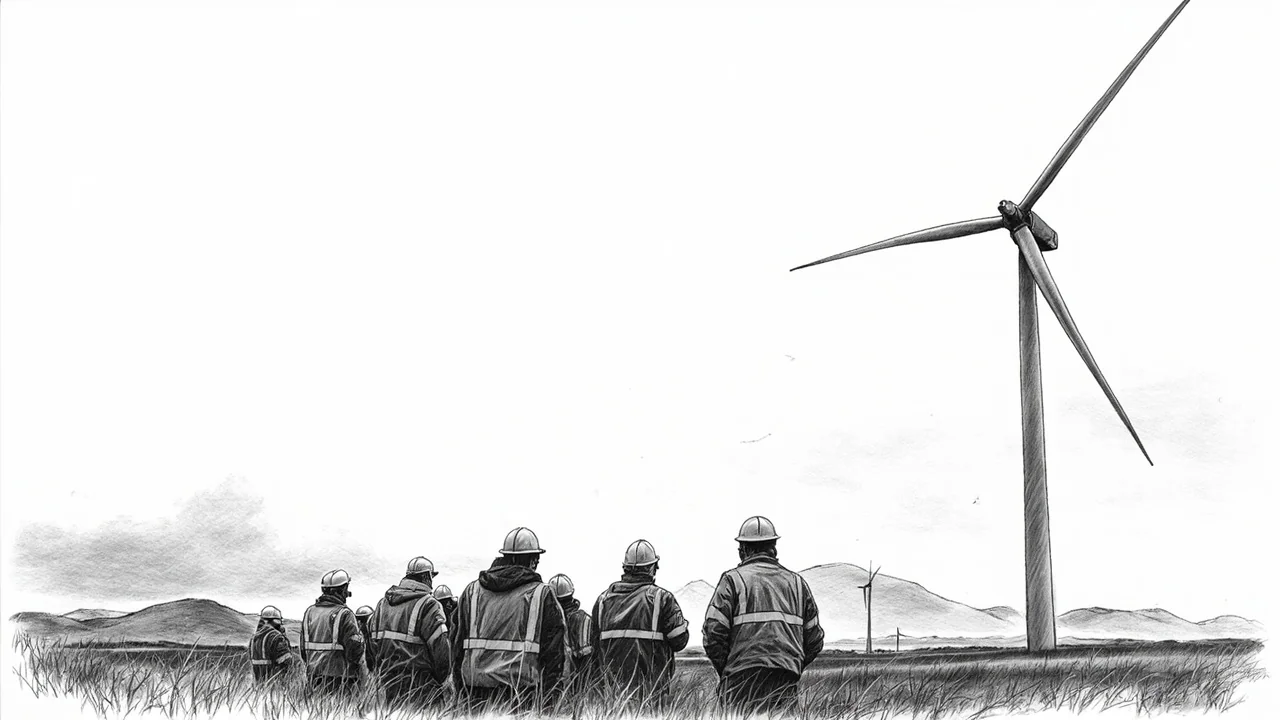
Denmark's wind energy giant Vestas is cutting 70 jobs at its nacelle factory in Ringkøbing, a strategic adjustment impacting over 20% of the plant's workforce. The move, confirmed in a corporate statement, is part of a global restructuring to align the organization with worldwide activities. While the company pledges to explore internal relocation options, the decision sends ripples through the local community in West Jutland and raises questions about the near-term pressures on the renewable energy sector.
A Strategic Pivot in West Jutland
The Vestas factory in Ringkøbing specializes in manufacturing nacelles, the critical housing unit atop a wind turbine that contains the generator, gearbox, and control systems. This facility is a key part of Vestas's substantial industrial footprint in the Ringkøbing-Skjern municipality, where it employs over 1,900 people across sites in Ringkøbing, Lem, and Videbæk. Nationally, Vestas remains a colossal employer with more than 7,400 staff in Denmark, including major production sites in Nakskov on Lolland and Munkebo on Funen. The decision to reduce the Ringkøbing nacelle team from 330 to approximately 260 workers indicates a recalibration of specific production capacities rather than a full-scale retreat.
In its statement, Vestas acknowledged the human cost, noting, "It is always difficult to say goodbye to valued colleagues. But we need to ensure our organization reflects our global activities." This corporate language underscores a tension between necessary business agility and local economic stability. The company has committed to minimizing compulsory redundancies by first seeking to redeploy affected employees within its extensive Danish operations. At the end of last year, Vestas Denmark reported over 3,800 hourly-paid employees, primarily in production and service roles, suggesting potential avenues for internal transfers.
Global Headwinds Hit Local Shores
This localized job cut cannot be viewed in isolation. Vestas operates a global supply and production network with significant facilities in the United States, China, and Brazil. The adjustment in Ringkøbing likely reflects shifting global demand patterns, supply chain reconfigurations, and the intense competitive and cost pressures facing wind turbine manufacturers worldwide. After a period of rapid expansion and high demand, the industry is navigating inflationary pressures, logistical challenges, and uncertain regulatory environments in key markets. Companies are forced to optimize their manufacturing footprints for efficiency, sometimes at the expense of individual sites.
The move presents a paradox. Denmark is a global champion for the green transition, and Vestas is its flagship corporate ambassador. Yet, even leading companies in growth industries face cyclical pressures and tough operational decisions. This layoff round is a stark reminder that the journey to a renewable future is not a straight, uninterrupted upward trajectory. It involves commercial realities that impact real communities, especially in industrial hubs outside the capital region. The economic health of towns like Ringkøbing is deeply tied to the fortunes of such anchor companies.
Community Impact and Economic Ripples
For Ringkøbing and the surrounding area, Vestas is more than an employer; it is a pillar of the regional economy. The loss of 70 skilled manufacturing jobs will have a multiplier effect, affecting local services, housing, and community vitality. While Vestas maintains a "significant presence" there, a reduction of this scale will be felt. The company's pledge to explore relocations offers some hope, but for workers with deep roots in West Jyltand, a move to a facility in Nakskov or Munkebo may not be a viable alternative. This creates a personal and professional dilemma for the affected families.
The Danish model of flexicurity—combining flexible hiring and firing rules with strong social safety nets and active labor market policies—will now be tested for these workers. Their fate will depend on the success of Vestas's internal relocation efforts and the capacity of local job centers to provide retraining or connect them with other opportunities in the region. Other Danish industrial companies, particularly in the cleantech and maritime sectors, may benefit from an influx of skilled manufacturing talent.
Analysis: A Sector in Adjustment
From a business perspective, Vestas's decision is a prudent, if painful, step to maintain competitiveness. The wind industry is in a consolidation phase, where scale and operational excellence determine winners. Streamlining production and ensuring each global facility operates at optimal capacity is essential for long-term survival and profitability. This restructuring is likely a proactive move to strengthen the company's balance sheet against potential market volatility.
However, the human and political dimensions are significant. Denmark has staked its economic future on green tech. Repeated job cuts in the sector could erode public and political support for the energy transition if communities feel they are bearing the brunt of corporate globalization. The government in Copenhagen will be watching closely, balancing its support for a national champion with its responsibility to regional development. Further, this event may trigger discussions about state aid or policies to ensure more of the green transition's manufacturing benefits are retained domestically.
The Road Ahead for Vestas and Denmark
The coming months will reveal the full impact of this decision. The effectiveness of Vestas's redeployment efforts will be a key metric. A high rate of successful internal relocation would soften the blow and demonstrate corporate responsibility. A wave of actual layoffs would intensify scrutiny on the company's Danish commitments.
For Vestas, the challenge is to communicate clearly that this is a tactical adjustment, not a strategic withdrawal from Denmark. The country remains its home base, R&D heart, and a center of advanced manufacturing. For Denmark, the episode is a cautionary tale about the vulnerabilities of hosting global champions. It highlights the need for continuous innovation, workforce upskilling, and policies that make Danish factories the most competitive and advanced in the Vestas network, thus insulating them from future cuts.
Ultimately, the story of 70 jobs in Ringkøbing is a microcosm of a larger global story. The green energy transition, for all its promise, is subject to the same harsh economic winds as any other industry. The true test for Denmark and Vestas is navigating these winds without losing sight of the long-term destination: a sustainable and prosperous future that benefits both shareholders and local communities. The path forward requires not just technological brilliance, but strategic foresight and social responsibility.