
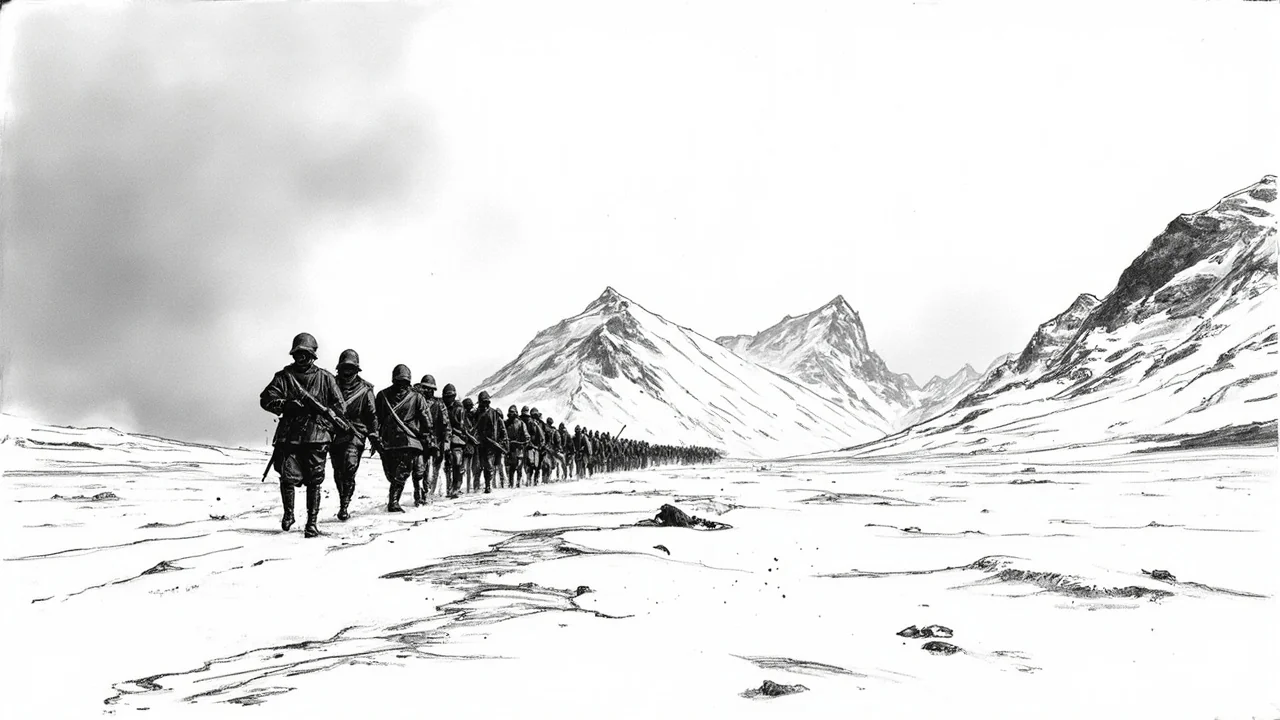
Greenland saw the arrival of troops from France, Germany, Norway, and Sweden on January 15, 2026, for joint military exercises with Denmark. This deployment follows public threats from US President Donald Trump to annex the Arctic island, drawing immediate media coverage across the Nordic region. The move represents a significant show of European solidarity and a reinforcement of Danish sovereignty over its self-governing territory. CNN reported the deployment involves several NATO countries sending small numbers of military personnel to the region. The arrival of European forces marks a direct response to the escalating geopolitical situation in the Arctic, an area of growing strategic importance due to melting ice and resource competition.
A Show of Force and Sovereignty
The joint military exercises were planned as a demonstration of Denmark's commitment to Greenland's defense and the integrity of the Kingdom of Denmark. This coordinated action by multiple European nations underscores a shared concern over stability in the North Atlantic. The Danish government has consistently rejected any notion of selling or ceding Greenland, emphasizing its status within the realm. The presence of French, German, Norwegian, and Swedish troops physically underscores this political stance on the ground. It sends a clear message of multinational support for existing territorial arrangements and international law.
The Context of US Threats
The catalyst for this military activity was a series of statements from former and potentially future US President Donald Trump regarding Greenland. Trump has repeatedly expressed interest in the island, framing a potential acquisition as a real estate deal. These comments have been met with firm rebuttals from both Copenhagen and Nuuk. NPR confirmed the troop arrivals occurred after recent talks between Danish, Greenlandic, and US officials highlighted a fundamental disagreement on the issue. The Nordic Foreign Ministers had already preemptively issued a joint statement concerning Greenland on January 6, 2026, signaling regional alignment before the deployment.
Greenland's Central Role
Critically, Greenland itself is not a passive territory in these discussions. It has its own elected government with broad self-rule authority over domestic affairs, including resource management. Any discussion about its future must involve the Greenlandic people and their elected representatives in Nuuk. The arrival of foreign troops, even as part of a defensive exercise with Denmark, is a sensitive domestic issue. It touches on questions of sovereignty, post-colonial relationships, and Greenland's own foreign policy aspirations. The Greenlandic perspective is paramount, balancing the need for security with the desire for full independence, a goal endorsed by the Danish constitution.
Regional and Alliance Implications
This situation creates a complex dilemma within the NATO alliance, pitting a key member, the United States, against several of its European partners and Denmark, a founding member. The deployment avoids direct confrontation but establishes a tangible European military footprint in response to political pressure from a partner. It tests the resilience of transatlantic bonds when national interests diverge sharply. The involvement of non-NATO member Sweden, alongside NATO allies, further illustrates how this issue has mobilized broader European defense cooperation beyond traditional structures. The Arctic is becoming a focal point where alliance politics and national sovereignty intersect with high stakes.
Analyzing the Strategic Calculus
The decision to deploy troops is a multifaceted political and strategic signal. Militarily, the numbers involved are likely symbolic, but their presence is potent. It demonstrates Denmark's capability and will to defend all parts of its kingdom with allied support. Politically, it reassures the Greenlandic public of Denmark's commitment while showing Washington that the status quo is non-negotiable. For Europe, it asserts a collective interest in Arctic stability and a rules-based order. The exercises likely focus on areas like surveillance, reconnaissance, and rapid response—capabilities relevant to asserting sovereignty in vast, remote regions. This is about deterrence through demonstrated commitment rather than preparation for imminent conflict.
The Path Forward
The immediate future hinges on American political developments and the continuity of US policy. The Danish and Greenlandic governments have stated their position unequivocally. The European troops' presence is a temporary but powerful reinforcement of that stance. Long-term, this episode may accelerate discussions within Denmark and Greenland about enhanced defense investments in the Arctic. It may also push Greenland to further define its own international security relationships. The lasting impact will be measured by whether this show of unity permanently discourages annexation rhetoric and reinforces peaceful dialogue as the only acceptable path for discussing Greenland's future.
Ultimately, the landing of European troops in Greenland is more than a military exercise. It is a geopolitical statement written in snow and ice. It affirms that the island's destiny lies firmly in the hands of its people and the Kingdom of Denmark, backed by a chorus of European voices. This episode will undoubtedly shape Arctic diplomacy and Denmark's relationship with both Greenland and its allies for years to come, highlighting how local identities and global power politics are inextricably linked in the high north.