
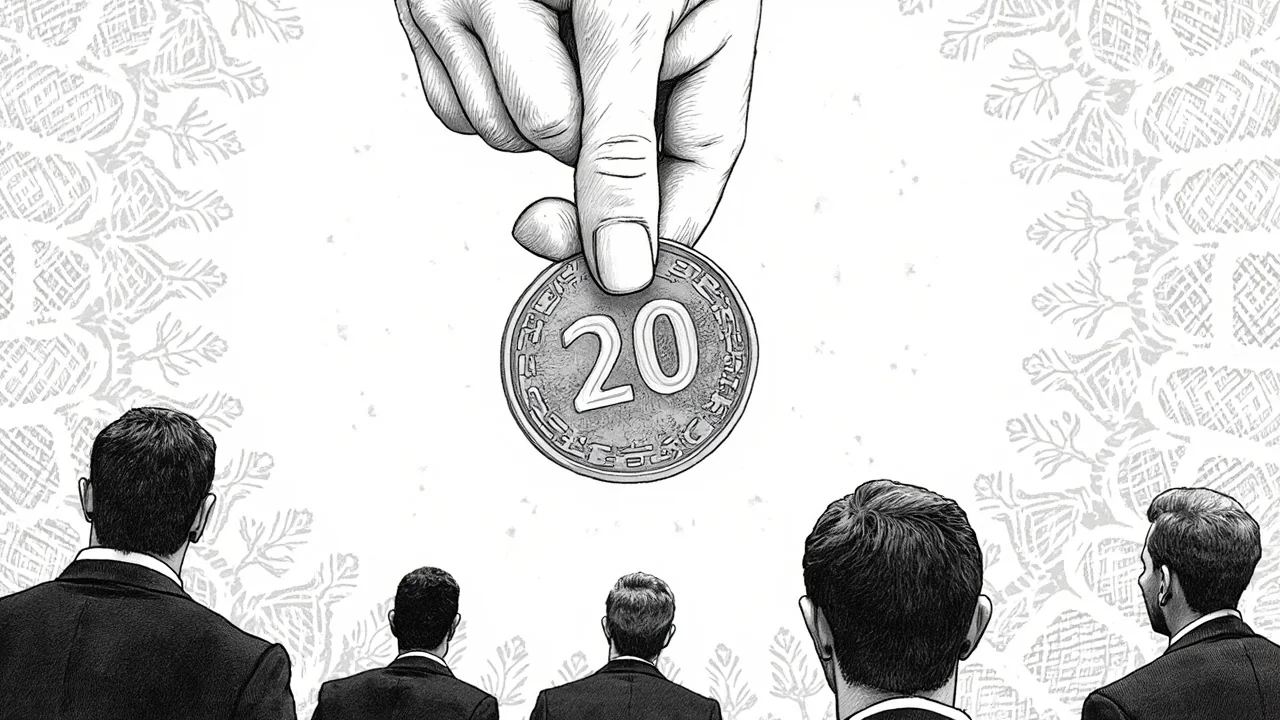
Danish police warn counterfeit 20-krone coins dated 2021 are now circulating nationwide. This alert shifts the typical focus from forged banknotes to a less common threat in the cash system. Authorities urge the public and businesses to inspect their change more carefully.
Police Issue Nationwide Alert
Rigspolitiet confirmed the fake coins are appearing in multiple regions. This is not an isolated incident. In December, police in Southeast Jutland investigated counterfeit 20-kroner coins at a shopping center in Vejle. That same month, a 36-year-old man in Hillerød was remanded in custody. He was caught trying to use a fake 20-krone coin in a shop. A subsequent search of his address uncovered around 40,000 kroner in counterfeit coins.
A Small But Significant Problem
The National Bank of Denmark aims to reassure the public about the overall integrity of Danish currency. Niels Kaas, Head Cashier and Chief of Cash and Risk Management, stated counterfeiting remains a minor issue in Denmark. He said it happens only occasionally and is at a relatively modest level compared to other countries. However, he emphasized that awareness is crucial when it does occur. Kaas noted it is good that attention is drawn to these cases so people look more closely at the coins in their pockets.
How to Spot a Fake 20-Krone Coin
The National Bank provides detailed guides for spotting fake banknotes, but coin forgery is less discussed. The specific coins in question feature a portrait of the late Queen Margrethe II. Experts point to two small details around this portrait that can reveal a forgery. The finer points around the mouth and nose can appear less detailed and more flat on a fake coin. On the reverse side, which features a coat of arms, inspectors should examine the royal crown. The gems in the crown can appear more flat and expressionless on counterfeit versions.
Examining the Edge and Wear
A genuine 20-krone coin has what is called an interrupted milled edge, meaning small grooves are cut into the coin's side. Counterfeit coins may also have these ridges, but they are often not as sharp or deep. Another telltale sign can be the coin's general condition. While a brand-new, shiny coin is pleasing, it can also be a red flag. Coins typically live turbulent lives, acquiring many nicks and scratches. Most genuine coins dated 2021 would have been in circulation for several years and should show some signs of wear. An overly pristine 2021 coin warrants a second look.
The Practical Impact on Daily Life
For small businesses, market vendors, and individual citizens, this alert introduces a new layer of caution. Accepting cash, particularly in coin form, is usually considered routine and safe. This news disrupts that assumption, requiring a moment of inspection that was previously reserved for larger banknotes. The psychological impact of currency forgery, even on a small scale, can erode the implicit trust in everyday transactions. It forces a re-evaluation of the most mundane financial interactions.
A Historical Context of Currency Trust
Denmark's krone has historically enjoyed a high degree of public trust and low levels of counterfeiting. This makes such police alerts particularly noteworthy. They are rare enough to capture attention but significant enough to prompt official warnings. The system relies heavily on public vigilance, as it is impossible for authorities to screen every single coin in circulation. Therefore, educating the public on detection becomes the first line of defense against these forgeries.
What To Do If You Find a Fake
If you suspect you have received a counterfeit coin, the advice is clear. Do not try to pass it on. You should contact the police to report the incident. Attempting to use a coin you know to be fake is a criminal offense. Businesses should train staff, especially those handling cash registers, on the basic identification features. A simple magnifying glass kept at the till can be a practical tool for checking suspicious coins on the spot.
A Reminder in a Digital Age
This episode serves as a reminder that physical currency, while declining in use, remains a target for fraud. In an increasingly digital economy, the tangible nature of coins and notes can create a false sense of security. People may pay less attention to physical money, assuming forgery is a problem of the past. This alert from the police and the National Bank contradicts that assumption, underscoring the need for ongoing awareness regardless of payment trends.
Moving Forward with Confidence
The key takeaway is not to distrust Danish coins but to be observant. The National Bank stresses that the currency system is robust. Occasional forgeries are an inevitable challenge in any economy. By knowing what to look for—the flat details on the portrait, the dull gems in the crown, the soft edge milling, and the unnatural shine—anyone can help protect the integrity of the krone. This shared responsibility between authorities and the public is what ultimately keeps the problem contained. Will you check the change in your pocket tonight?