
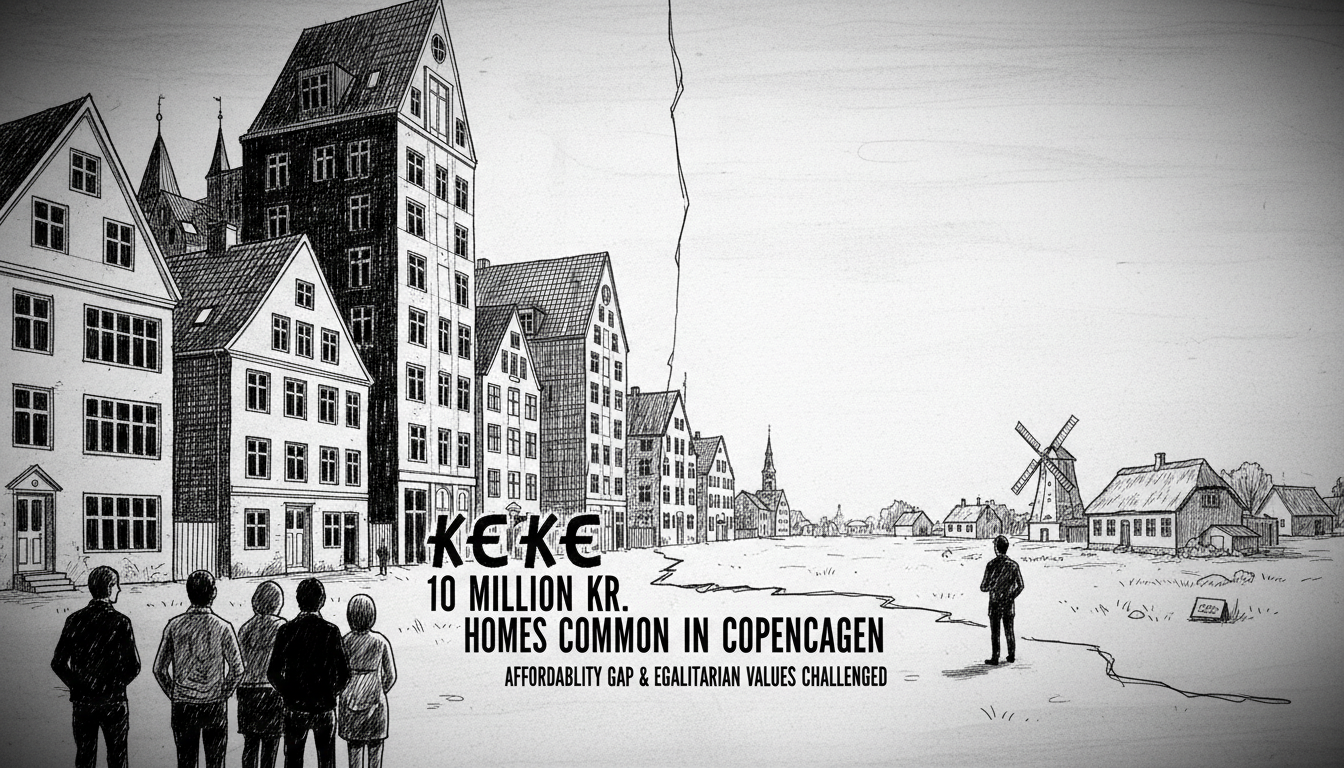
Copenhagen's housing market has transformed dramatically over the past decade. What was once considered extraordinary has now become commonplace in Denmark's capital region. Properties selling for ten million kroner or more no longer raise eyebrows among real estate professionals.
Birgit Daetz, a housing economist, explains this shift in market perceptions. She notes that substantial price increases over ten years have redefined normal expectations. The numbers reveal this transformation clearly.
Only 291 properties sold for ten million kroner or more ten years ago. Recent data shows 1,719 properties have already reached that price threshold this year. This represents a staggering 490 percent increase in high-end property transactions.
While price appreciation over time remains expected, current increases appear particularly strong. Daetz describes witnessing especially powerful growth patterns in certain segments. The market dynamics show distinct variations across property types and regions.
Villas and owner-apartments demonstrate the most dramatic price surges. Nearly 999 villas have sold for ten million kroner or more this year. That compares to just 205 villas reaching that price level during the entire year ten years earlier.
Apartments show even more remarkable development. Only 68 apartments sold for ten million kroner or more ten years ago. Current figures show 537 apartments already reaching that price category this year.
Daetz observes that apartment prices maintain strong momentum. The upper limits for what buyers will pay, particularly in the capital region, continue shifting upward constantly. This reflects Copenhagen's growing status as a global city with corresponding real estate values.
The regional disparities within Denmark remain striking. Copenhagen homebuyers paid an average eight million kroner for houses recently. Meanwhile, West Jutland buyers paid just 1.7 million kroner on average.
This geographical divide highlights Denmark's economic concentration. The capital region's housing market operates differently from provincial areas. Frederiksberg, located within Copenhagen, demonstrates this premium clearly.
Average sales prices there reach 73,036 kroner per square meter. An 80-square-meter apartment costs approximately 5.8 million kroner at these rates. Some currently listed properties exceed 100,000 kroner per square meter.
This housing market evolution carries important social implications. As Copenhagen integration challenges continue, housing affordability becomes increasingly crucial. The Danish welfare system traditionally emphasized accessible housing as a social good.
Current Denmark immigration policy and social integration efforts face complications from these market trends. Newcomers to Danish society encounter substantial barriers when entering the housing market. Community centers and municipal services must adapt to these changing realities.
The concentration of high-value properties in Copenhagen affects Denmark social policy considerations. Municipal governments balance tax revenue benefits against social cohesion concerns. As housing becomes less affordable, traditional Danish egalitarian values face new tests.
These market developments reflect broader global urban trends but carry distinct Nordic characteristics. The Danish model combines market mechanisms with strong social safety nets. Current housing price patterns challenge this balance significantly.
What does this mean for Copenhagen's future development? The city risks becoming increasingly exclusive as property values escalate. This could impact workforce availability, demographic diversity, and social mobility. Danish municipalities must consider these factors in long-term planning.
The transformation from rare luxury to commonplace reality for million-krone homes signals deeper economic shifts. It reflects Copenhagen's successful urban development but also presents new social challenges. How Denmark addresses these competing priorities will shape its society for years to come.