
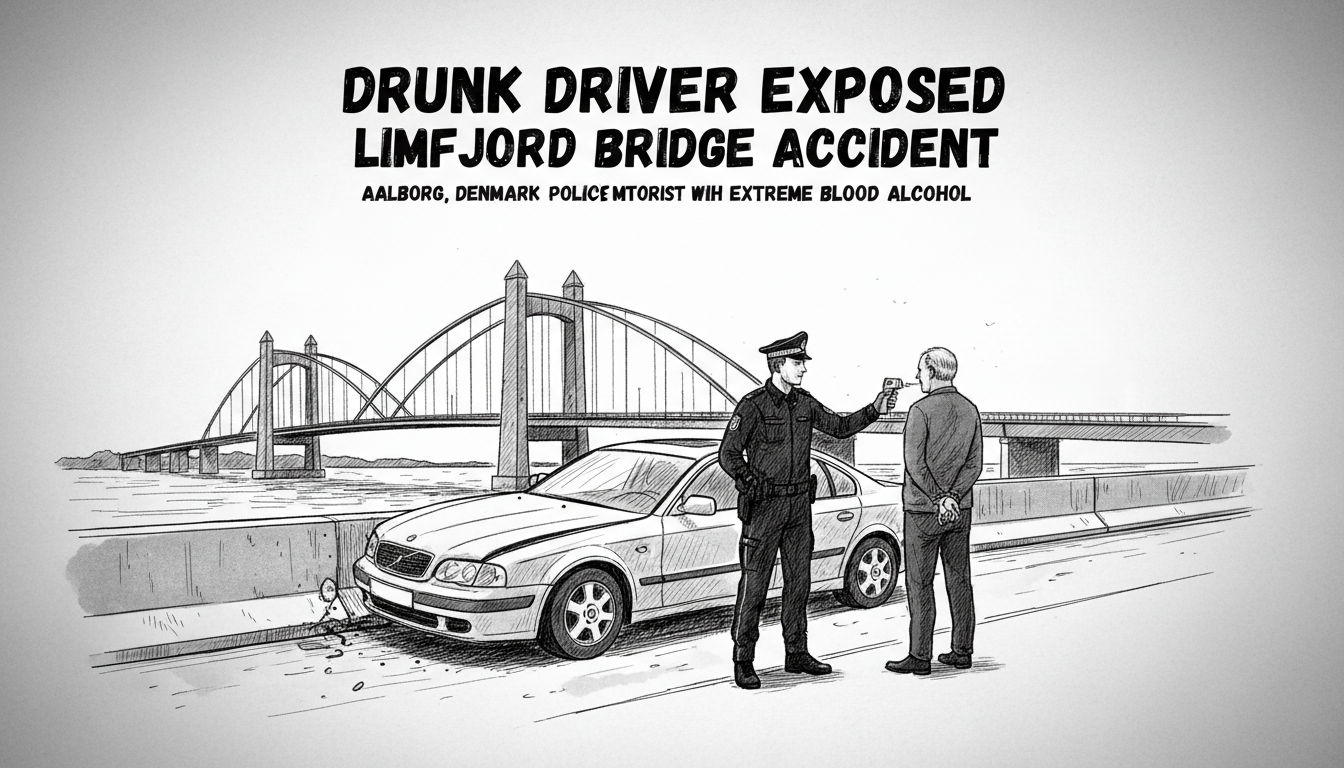
A traffic collision on the Limfjord Bridge in Aalborg revealed a serious drunk driving case during Saturday afternoon rush hour. A 56-year-old man escaped injury when another motorist rear-ended his vehicle around 4:30 PM. The crash occurred as northbound traffic slowed during peak travel times.
Police quickly identified an unexpected violation during their investigation. The initially rear-ended driver, though not at fault for the collision, showed alcohol levels far exceeding legal limits. Officers arrested the man immediately and transported him for blood testing.
Christian Tilsted, police supervisor for North Jutland, described the incident. "A driver behind failed to notice slowing traffic and hit the vehicle ahead," he said. "Then we discovered the front driver had extremely high blood alcohol content."
The accident created substantial delays for northbound travelers heading toward Nørresundby. Cleanup operations required 10-15 minutes, causing temporary congestion on this vital transportation link.
Denmark maintains strict drunk driving laws with severe penalties for violations. The legal blood alcohol limit stands at 0.05 percent, roughly one drink for most adults. This case demonstrates how routine traffic enforcement can uncover more serious offenses.
Limfjord Bridge serves as a crucial connection between Aalborg and Nørresundby, carrying approximately 40,000 vehicles daily. Such incidents highlight ongoing challenges with impaired driving in Denmark despite decades of public awareness campaigns.
Drunk driving detection during minor accidents represents a common pattern in Nordic traffic enforcement. Police often discover alcohol violations when responding to seemingly routine collisions. This case shows how standard traffic stops can reveal deeper public safety issues.
The arrested driver faces potential license suspension, substantial fines, and possible imprisonment under Danish law. Repeat offenders or extreme blood alcohol levels typically receive harsher penalties. This incident serves as another reminder that alcohol and driving remain dangerously incompatible.
Nordic countries generally maintain lower drunk driving rates than many other regions, but persistent cases like this indicate the problem continues. Denmark's comprehensive approach combines strict enforcement with public education, yet some drivers still risk lives by driving impaired.