
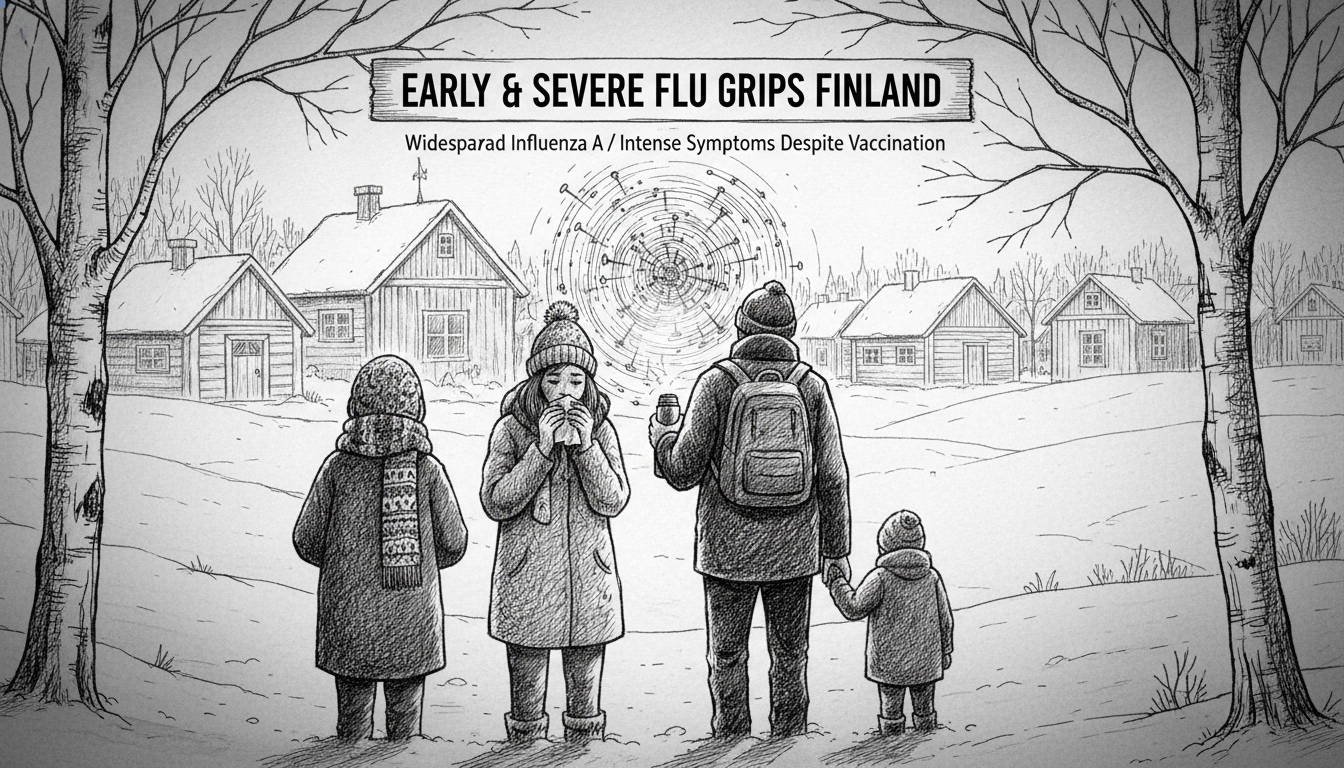
Finland faces an unusually aggressive influenza outbreak that arrived earlier than normal seasonal patterns. The National Institute for Health and Welfare confirms influenza A cases are spreading rapidly across all regions. Many residents report experiencing more severe symptoms than in previous years despite receiving annual vaccinations.
Helsinki resident Aino Ollikainen described her experience with the current strain. She developed a fever reaching 40 degrees Celsius alongside persistent coughing and nasal congestion. Her symptoms began just two weeks after receiving her influenza vaccination. The vaccine typically requires fourteen days to develop full protection according to health authorities.
European disease prevention officials recommend immediate vaccination for high-risk groups. These include elderly citizens and individuals with underlying health conditions. The current outbreak demonstrates vaccine effectiveness can vary against different influenza strains.
Tampere resident Ella Kalliokoski also contracted the illness after her partner showed symptoms first. Neither individual developed high fever but experienced intense coughing and throat pain. Home testing confirmed influenza A infection in several cases reported to health services.
Finland's healthcare system monitors influenza spread through national infection registries. The early onset suggests this season could strain medical resources if cases continue rising. Health centers across Helsinki report increased patient visits for respiratory symptoms.
Vaccination remains the primary defense against severe complications according to public health guidance. The Finnish healthcare system provides free influenza vaccines to risk groups through municipal health services. Private clinics also offer vaccinations for working-age adults seeking protection.
Current data shows influenza activity spreading from urban centers to rural communities. Schools and workplaces report higher than normal absentee rates due to respiratory illnesses. Public health officials urge hand hygiene and staying home when symptoms appear.
This early outbreak pattern resembles influenza seasons from the past decade that saw severe waves. The intensity suggests possible strain mutation or reduced population immunity following mild previous seasons. Laboratory analysis continues to identify the specific influenza variants circulating in Finland.
Healthcare professionals note even vaccinated individuals can experience breakthrough infections. These cases typically involve milder symptoms and shorter duration according to clinical observations. The vaccination still provides crucial protection against hospitalization and severe outcomes.
Finnish authorities coordinate with European health agencies to monitor cross-border transmission patterns. Similar early influenza activity appears in neighboring Sweden and Norway according to latest surveillance reports. This regional pattern suggests broader northern European transmission trends.
Workplaces across Finland implement remote work options where possible to reduce office transmission. Public transportation authorities reinforce cleaning protocols on buses and trains during peak commuter hours. These measures aim to slow community spread while vaccination coverage increases.
Pharmacies report high demand for over-the-counter flu medications and home test kits. Supply chains maintain adequate stock of fever reducers and cough suppressants according to retail associations. Consumers should purchase reasonable quantities for personal use without excessive stockpiling.
The Finnish education ministry issues guidelines for schools managing student absences. Teachers receive instructions for supporting students who miss classes due to illness. Digital learning platforms help maintain educational continuity during peak infection periods.
This influenza season's early intensity serves as a reminder that respiratory viruses remain unpredictable. Public health coordination between municipalities ensures consistent messaging about prevention strategies. Individual responsibility combined with systemic support creates the most effective defense against seasonal outbreaks.