
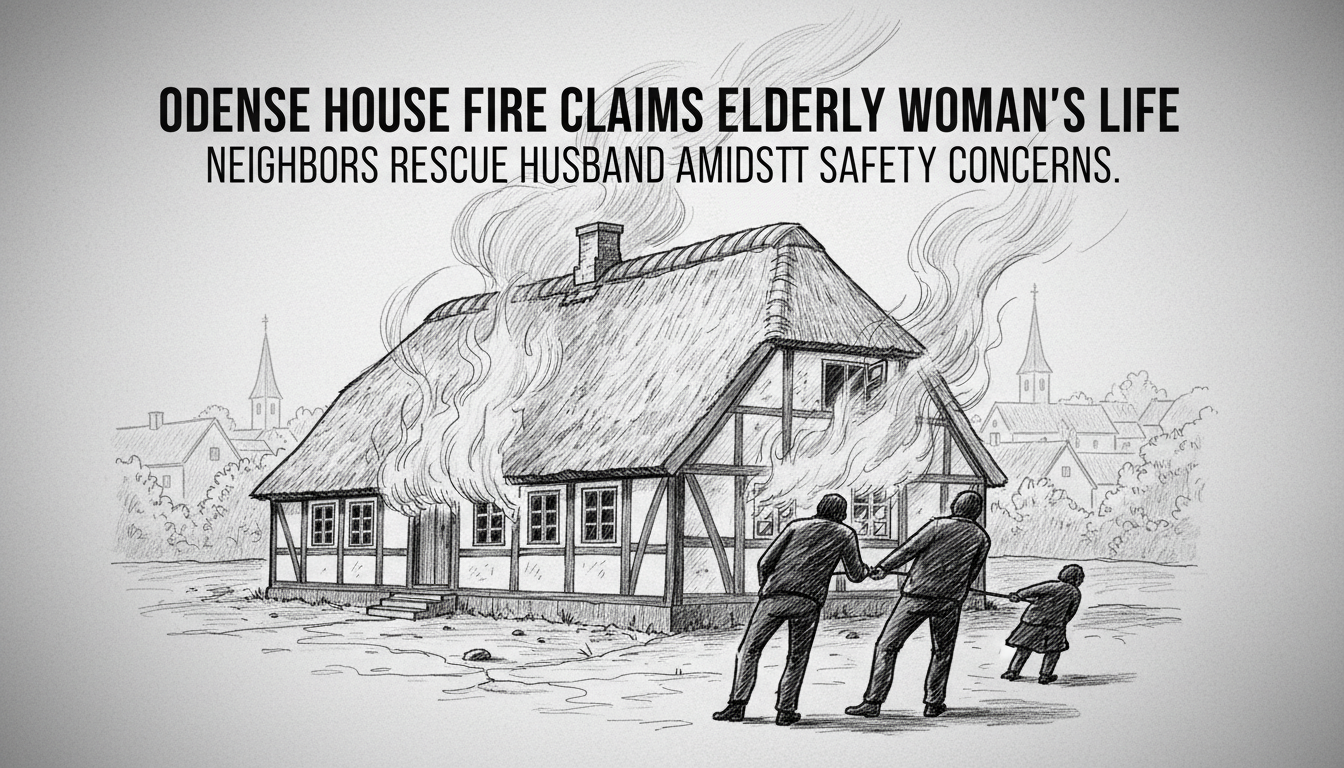
An 81-year-old woman has died following a house fire in central Odense, while neighbors successfully rescued her husband from the burning villa. Police confirmed the tragic incident occurred on Johannevej in the third quarter. The emergency services received the alarm at 8:43 PM when neighbors dialed emergency services.
Neighbors acted quickly upon noticing the fire, alerting authorities and helping the woman's husband escape the dangerous situation. Police officials praised the community response while confirming the victim matched the resident normally living at the address. Formal identification through dental records and DNA analysis will provide final confirmation, though family members have already been notified.
Authorities currently have no reason to suspect criminal activity behind the blaze. Investigation teams continue examining the property despite police having concluded their initial onsite presence. The cause remains undetermined as forensic specialists work to understand what sparked this fatal incident.
This tragedy highlights both the vulnerabilities elderly residents face and the crucial role community vigilance plays in emergency situations. Odense has seen several residential fires in recent years, raising questions about fire safety awareness among senior citizens living independently. Denmark's aging population presents ongoing challenges for municipal safety programs.
Local social services typically conduct regular welfare checks on elderly residents, particularly those living alone. The Danish welfare system provides extensive support networks, yet incidents like this reveal potential gaps in community safety nets. Integration between municipal services and neighborhood watch systems becomes increasingly important as demographic shifts continue.
Fire department representatives emphasize the importance of working smoke detectors and emergency planning for all households. They recommend regular safety inspections, especially for older adults living in single-family homes. Community centers across Danish municipalities offer free fire safety workshops that could prevent similar tragedies.
What does this mean for Denmark's approach to elderly care and community safety? The incident raises legitimate questions about how well protection systems serve vulnerable populations. While Denmark's social policies remain comprehensive, practical implementation at the neighborhood level requires constant attention and community participation.
The response demonstrates how local initiative can complement formal emergency services. Neighbors acting as first responders made a crucial difference in this case, saving one life despite the tragic outcome. This community dynamic reflects broader Danish social values where collective responsibility remains fundamental to public safety.
Municipal authorities will likely review this case to identify potential improvements to elder care protocols. Social centers in Copenhagen and other cities have developed innovative programs connecting isolated seniors with community volunteers. Perhaps Odense will consider similar initiatives following this devastating event.