
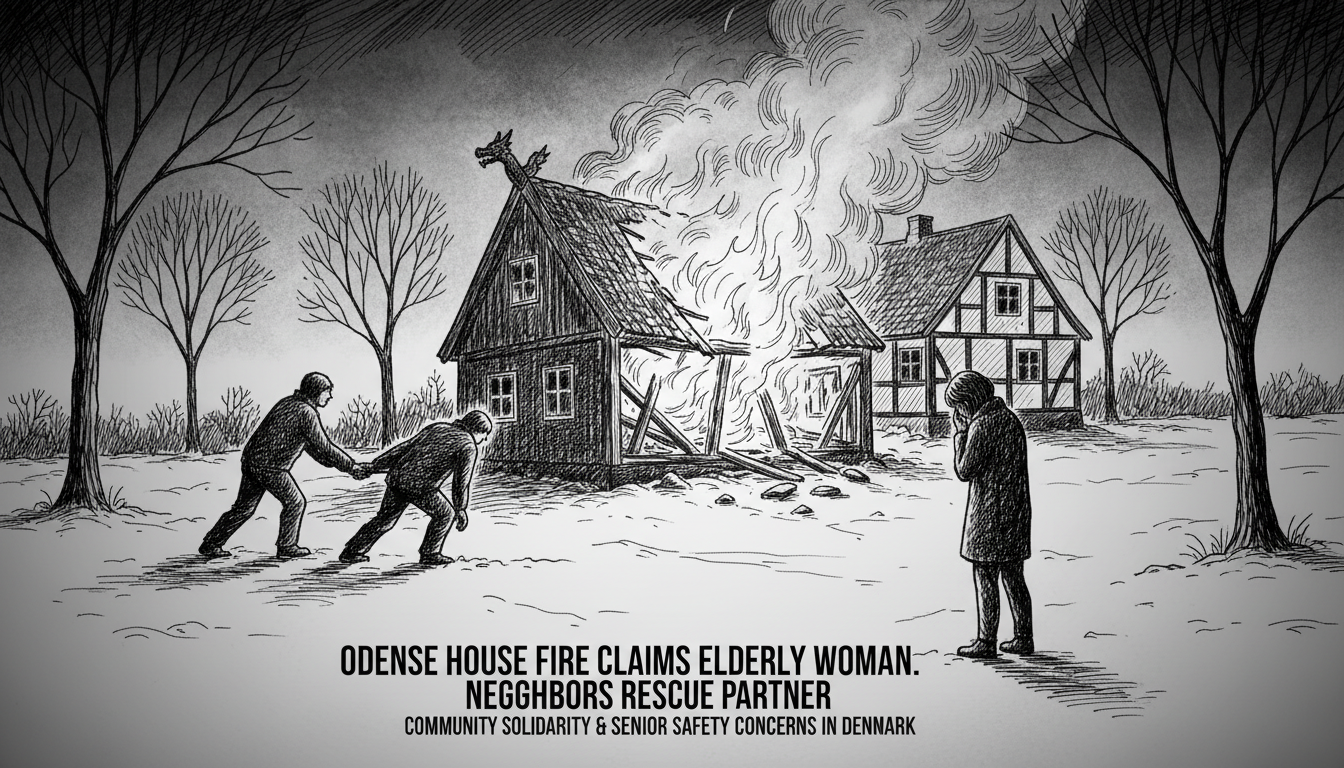
A tragic house fire in central Odense has claimed the life of an 81-year-old woman while neighbors heroically rescued her male partner from the burning villa. The incident occurred on Johannevej in the heart of the city, highlighting both community solidarity and the vulnerabilities facing elderly residents in Danish society.
Police received the emergency call at 8:43 PM when neighbors dialed 112 to report the blaze. Acting quickly, nearby residents managed to extract the woman's partner from the dangerous situation. Police officials confirmed the woman was found deceased at the scene, though formal identification through dental records and DNA analysis remains pending.
Vigilant neighbors play crucial roles in community safety networks across Danish municipalities. This tragedy underscores how local social bonds can mean the difference between life and death in emergency situations. Copenhagen integration efforts often emphasize building strong neighborhood connections for exactly this type of community resilience.
Authorities currently have no reason to suspect criminal activity behind the blaze. Investigators continue examining the property to determine the fire's origin. Such thorough investigations are standard procedure in Denmark's meticulous approach to public safety incidents.
The deceased woman's relatives have been notified of her passing. This loss resonates deeply within Odense's community fabric, particularly among elderly residents who comprise a growing segment of Denmark's population.
Denmark social policy prioritizes elder care through its comprehensive welfare system. Yet this incident raises questions about fire safety measures for senior citizens living independently. Many Danish municipalities operate social centers that provide safety checks and community support for elderly residents.
Fire prevention represents an ongoing challenge within Denmark immigration policy discussions too. New residents often require education about local safety standards and emergency procedures. Integration programs frequently include fire safety components to protect all community members.
This tragedy follows similar incidents in recent years where elderly Danes faced heightened risks during residential fires. The pattern suggests room for improvement in safety outreach to senior citizens across the Danish welfare system.
What additional protections might prevent similar tragedies? Municipal authorities could enhance fire safety inspections for elderly residents' homes. Community organizations might expand volunteer programs checking on vulnerable neighbors. Such measures would strengthen the social safety net that defines Danish society.
The investigation continues as Odense mourns this loss. The community's quick response demonstrates the strength of Danish neighborhood bonds, even as the outcome reminds us of life's fragility.