
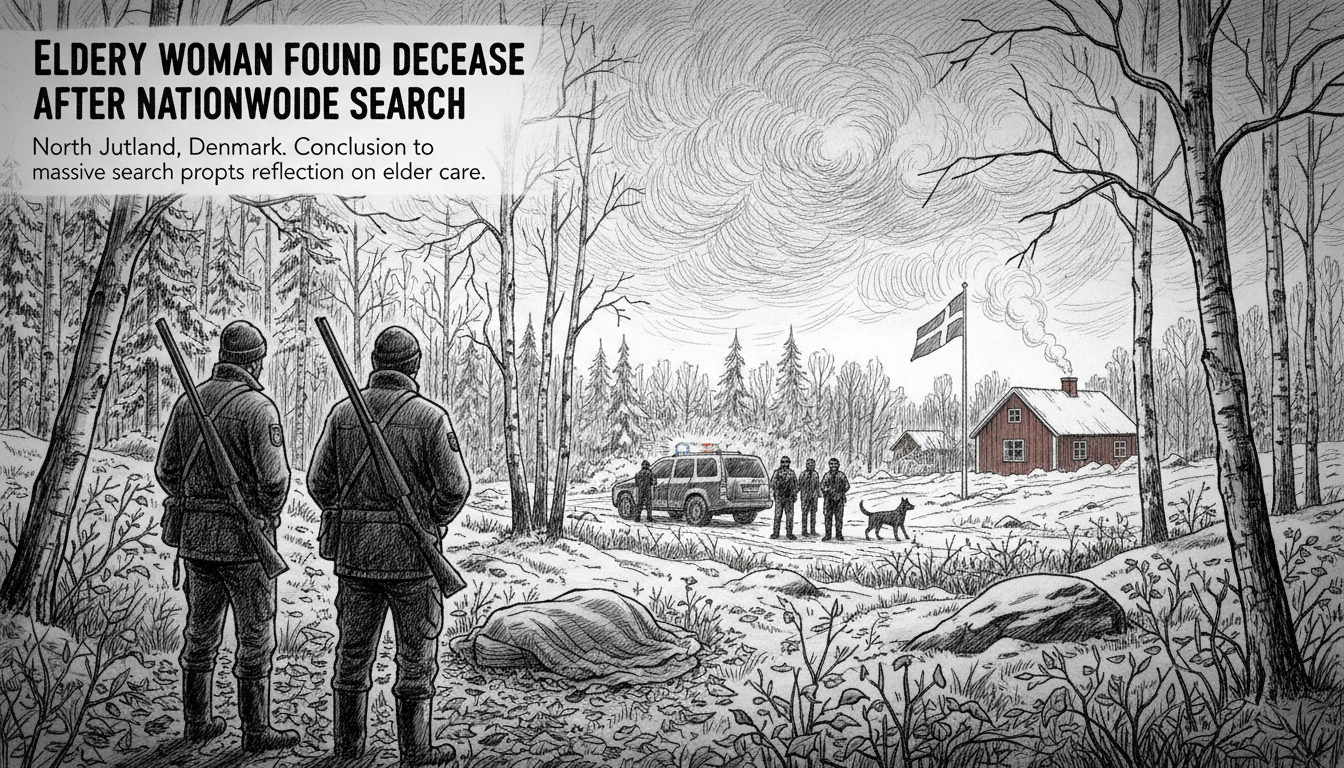
A nationwide search for a missing elderly woman in Denmark has ended in tragedy. Hunters discovered a body in a water-filled ditch north of Vognsild on Sunday. Police later confirmed the deceased was the 76-year-old woman reported missing from her home in early November. The case highlights the community mobilization efforts that define Danish social response systems. It also raises quiet questions about support structures for the aging population within the famed welfare model.
Jesper Konttorp-Fredsgaard, a police commissioner in North Jutland, expressed gratitude for the extensive search efforts. He said in a statement that police, emergency services, local volunteers, and organizations had all participated. The search operation was described as quite massive. The woman's next of kin were contacted and identified her on Sunday. She had left her home on November 2, prompting a local search that escalated to a nationwide alert on November 21.
This incident, while a personal tragedy, opens a window into the Danish social fabric. The immediate and coordinated response involving official and civilian resources is a hallmark of the system. Danish municipalities and social centers often act as first points of contact for vulnerable citizens. The integration of local volunteers with police operations shows a high level of social trust and communal responsibility. It is a strength of Danish society news that often goes unremarked.
Yet, the story also touches on less visible pressures. Denmark's aging demographic presents ongoing challenges for its social policy. The welfare system is designed for security, but individual cases can slip through. How does a 76-year-old come to be missing for weeks? The answer is rarely simple. It may involve isolated living, gaps in family or municipal check-in systems, or undisclosed personal struggles. Copenhagen integration debates often focus on new arrivals, but the integration and care of long-term residents into old age is a parallel concern.
Statistics on integration and elder care sometimes exist in separate silos. However, they are connected by the same principle of social cohesion. The Danish welfare system promises dignity for all life stages. This promise is tested in real-time by cases like this. The community's collective search effort reaffirms the societal commitment. The outcome, however, forces a sober reflection on prevention. Officials consistently do their duty within existing frameworks. The broader question for Danish social policy is whether those frameworks need adapting for an increasingly older and potentially lonelier population.
What happens next? Police will complete their investigation, though foul play is not indicated. The community will mourn. For policymakers and social workers, the case becomes another data point. It underscores the need for robust, proactive outreach to elderly citizens living alone. Many Danish municipalities already have programs, but coverage and intensity can vary. This tragedy, amid the compassionate response, is a stark reminder. Even the most admired systems must constantly evolve to meet human need.