
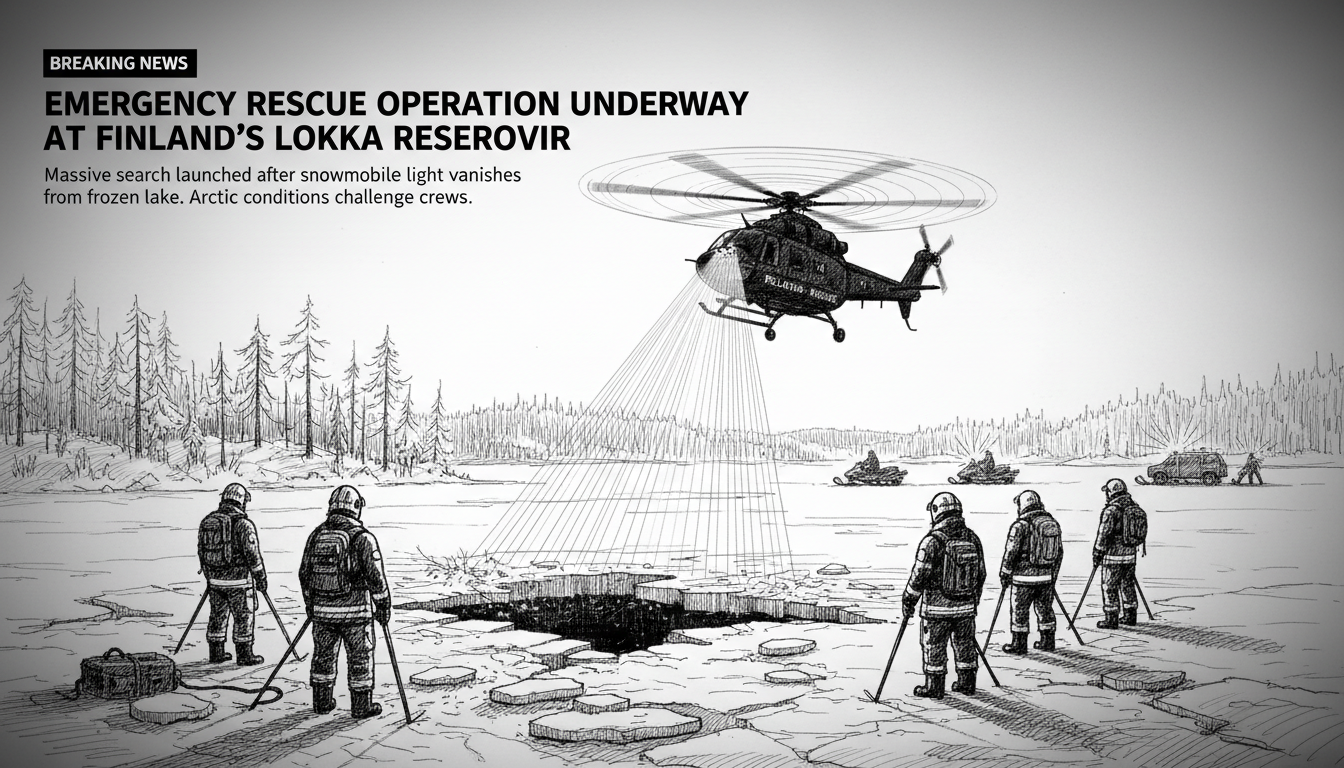
A major rescue operation is unfolding at Lokka Reservoir in Finnish Lapland after a snowmobile light visible for hours suddenly disappeared from the frozen lake surface. Lapland Rescue Department received the emergency alert on Saturday afternoon when the bright light that had been consistently visible on the icy expanse vanished without warning.
The rescue mission involves seven separate rescue units working in coordination. Timo Nyholm, the on-duty fire chief, confirmed authorities still do not know how many people might require rescue. The sun set in Sodankylä at 1:41 PM, creating challenging low-light conditions for search operations.
Lokka Reservoir represents a significant piece of Finnish infrastructure history, having been completed in 1967 as Northern Europe's largest artificial lake. This massive engineered water body covers approximately 216 square kilometers in the Sodankylä municipality. Its creation fundamentally transformed the local landscape and ecosystem while providing crucial hydroelectric power for the region.
Winter rescue operations on frozen Nordic waterways present unique challenges that emergency services regularly train for. The extreme cold, limited daylight hours during Arctic winter, and unpredictable ice conditions create hazardous environments even for experienced winter sports enthusiasts. Finnish rescue departments maintain specialized equipment and protocols for ice-related emergencies.
This incident highlights the inherent risks of winter activities in Lapland's wilderness areas. Despite extensive safety campaigns, ice-related accidents remain a concern during the winter months. The region attracts thousands of tourists annually for snowmobiling and other winter sports, creating additional demands on local emergency services.
Rescue officials promised additional information would be available after 6:00 PM as the operation continues. The coming hours will be critical for determining the scope of this emergency and whether all individuals involved can be safely recovered. The remote location and fading light complicate an already difficult rescue scenario.
Local authorities have not yet released details about the circumstances leading to the disappearance of the light. Standard procedure in such cases involves both ground teams and potentially aerial support when weather conditions permit. The coordination between multiple rescue units suggests this is being treated as a high-priority incident.
Artificial reservoirs like Lokka present particular ice safety challenges due to fluctuating water levels and changing currents beneath the surface. Even thick ice can develop weak spots that pose dangers to winter travelers. This reality requires constant vigilance from both recreational users and emergency response teams throughout the winter season.