
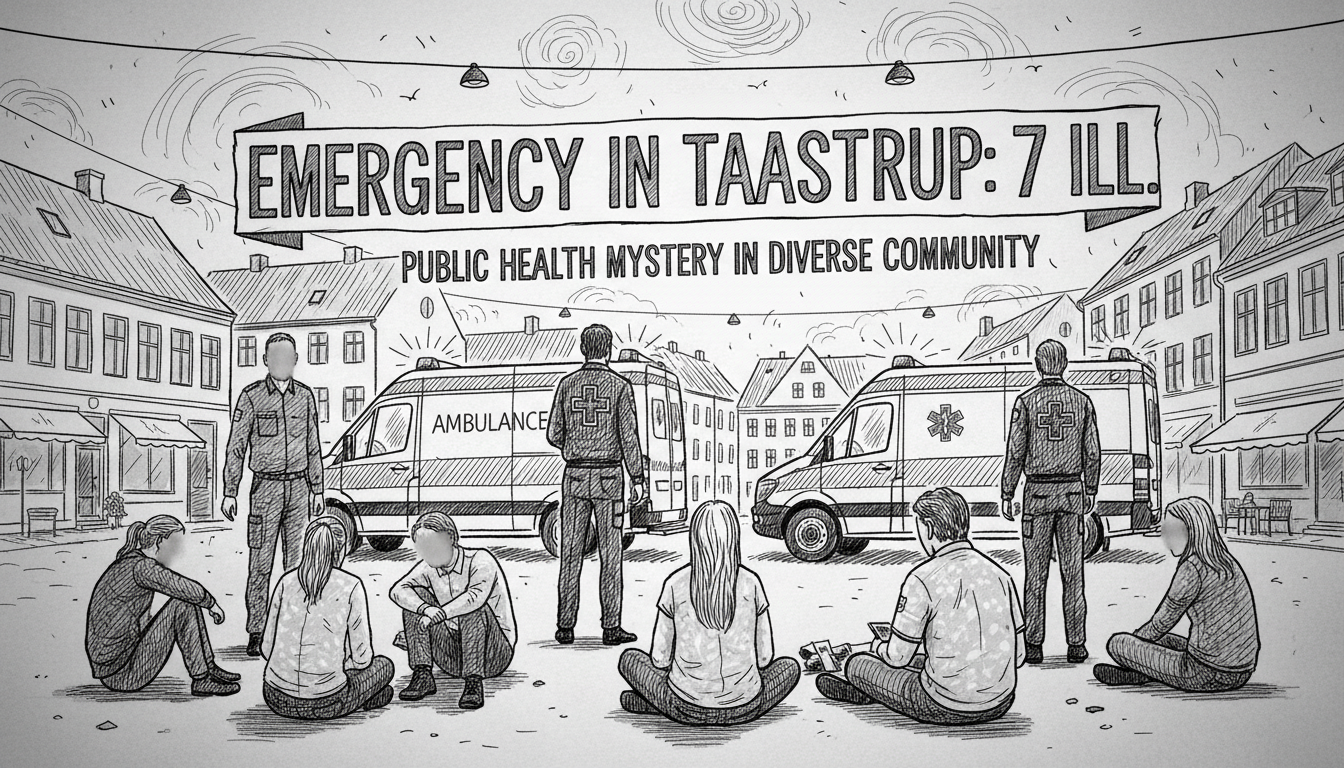
Emergency vehicles filled Sankt Mikkels Alle in Taastrup on Wednesday evening as police, ambulances, and fire services responded to a medical emergency. Authorities confirmed seven individuals required medical attention after falling ill under unclear circumstances. The situation prompted multiple calls to emergency dispatch centers across the Copenhagen area.
Police officials stated they could not immediately determine what caused the seven people to become sick. Emergency responders established a perimeter around the affected area while medical teams assessed each individual. Such coordinated responses demonstrate Denmark's integrated emergency management system in action.
This incident occurs within Taastrup's diverse urban community northwest of Copenhagen. The neighborhood represents the complex integration challenges facing many Danish municipalities. Local social centers often serve as crucial community hubs in these mixed residential areas.
Danish welfare systems typically respond efficiently to public health incidents. The country's universal healthcare model ensures medical care reaches all residents regardless of background. This approach reflects Denmark's commitment to social welfare principles that prioritize citizen wellbeing.
Integration statistics from recent quarters show varying health outcomes across different community groups in greater Copenhagen. Educational access and language barriers can sometimes affect how different populations navigate healthcare systems. Municipal integration programs work to bridge these gaps through community outreach.
Local community leaders have emphasized the importance of transparent communication during public health incidents. They note that clear information helps maintain public trust across all community segments. Such trust-building remains essential for effective social policy implementation.
The Copenhagen integration model faces ongoing tests as the metropolitan area continues diversifying. Public health responses provide one measure of how well systems serve all residents. Wednesday's coordinated emergency effort demonstrates the infrastructure supporting these communities.
What broader implications might this incident hold for public health planning in diverse urban areas? Municipal authorities continually adapt their approaches based on such real-world situations. The response in Taastrup offers another data point for evaluating community support systems.
Danish social policy prioritizes equal access to emergency services across all municipalities. This commitment reflects the welfare state's foundational principles. The system aims to protect every resident's health and security regardless of personal circumstances.
As investigations continue, the priority remains understanding what caused seven people to require emergency medical care. The incident's resolution will likely inform future public health planning in similar community settings across Denmark.