
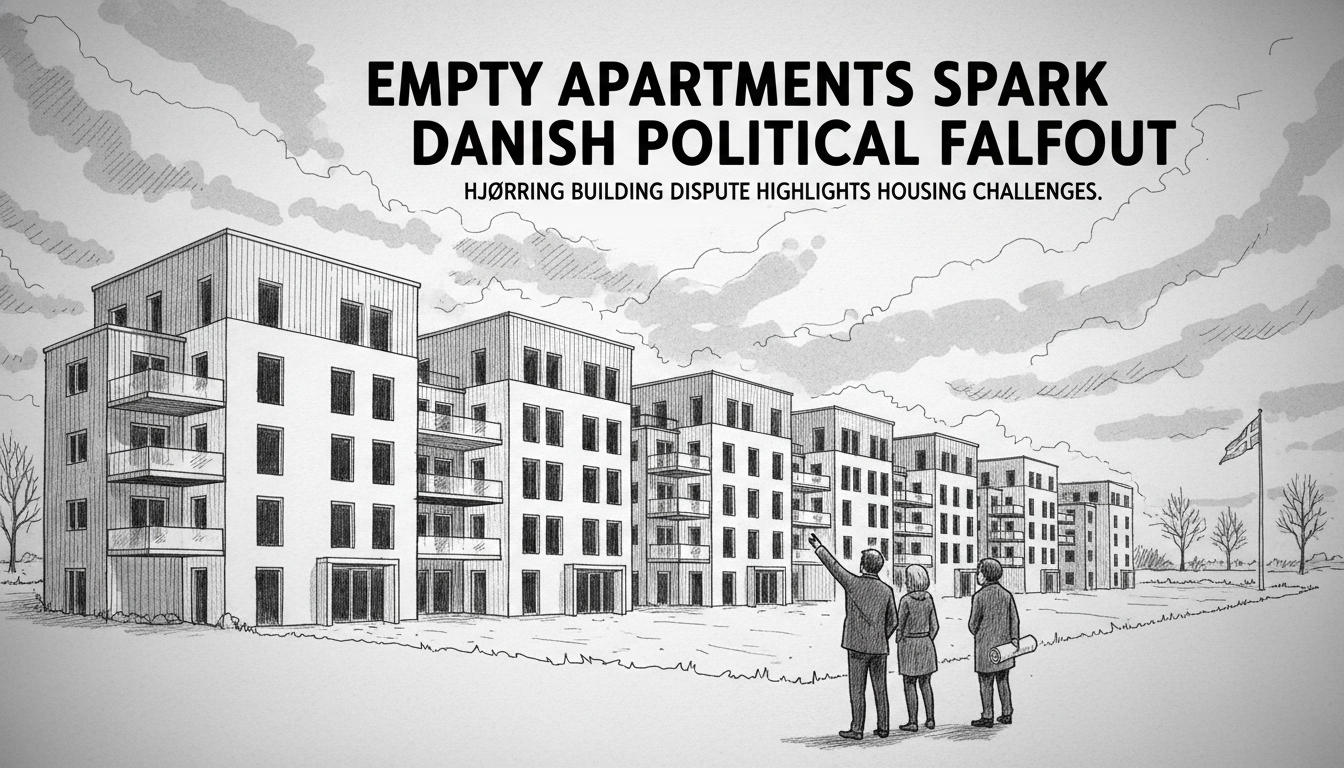
A stalled construction project in Hjørring has left fifteen luxury apartments completely empty years after completion. The development called Central Park Living now faces political consequences following building regulation violations. Local officials confirm the structure exceeded boundary lines by thirty centimeters, creating legal complications that prevent occupancy.
Former mayor Per Bødker Andersen expressed frustration about the situation. He stated the construction should have been halted immediately when violations were discovered. The political aftermath continues unfolding as municipal authorities determine next steps.
This case highlights broader challenges within Danish housing policy and urban development regulations. Municipal planning departments face increasing pressure to balance development needs with strict zoning requirements. The empty units represent significant financial losses for investors who anticipated rental income from the prime location.
Integration specialists note such housing shortages affect newcomer settlement patterns across Danish municipalities. When modern apartments remain vacant due to bureaucratic disputes, it strains already tight housing markets. Social centers report longer waiting periods for families seeking accommodation in popular urban areas.
Statistics Denmark data shows integration outcomes improve dramatically when newcomers access stable housing quickly. Educational attainment and employment rates both climb with secure living situations. The Hjørring situation demonstrates how administrative delays can inadvertently impact social cohesion.
Local community leaders have called for faster resolution processes when building violations occur. They argue empty homes benefit nobody while housing needs grow throughout the region. The welfare system faces additional pressure when available units sit unoccupied during approval processes.
Construction industry representatives acknowledge occasional boundary miscalculations happen in complex urban projects. They emphasize most developers work diligently to comply with all regulations. The current case represents an exception rather than common practice in Danish building standards.
Municipal planning committees now review approval procedures to prevent similar situations. They examine whether earlier intervention could have minimized financial losses and housing shortages. The debate continues about balancing regulatory enforcement with practical housing needs.
This specific dispute involves fifty-nine total apartments with fifteen remaining empty. Investors have lost millions in potential rental income during the two-year standoff. The case shows how minor technical violations can create major consequences for housing availability.
Danish immigration policy increasingly connects housing access to successful integration outcomes. When buildings remain empty due to administrative disputes, it affects broader social goals. The Hjørring situation illustrates systemic challenges within current approval processes.
Copenhagen integration specialists observe similar patterns in larger urban centers. They note housing availability directly impacts how quickly newcomers establish community connections. Vacant properties in central locations represent missed opportunities for social development.
Local officials continue working toward resolution while examining procedural improvements. The case has sparked broader discussion about regulatory efficiency within Danish municipal operations. The outcome may influence how future building violations get addressed across different regions.