
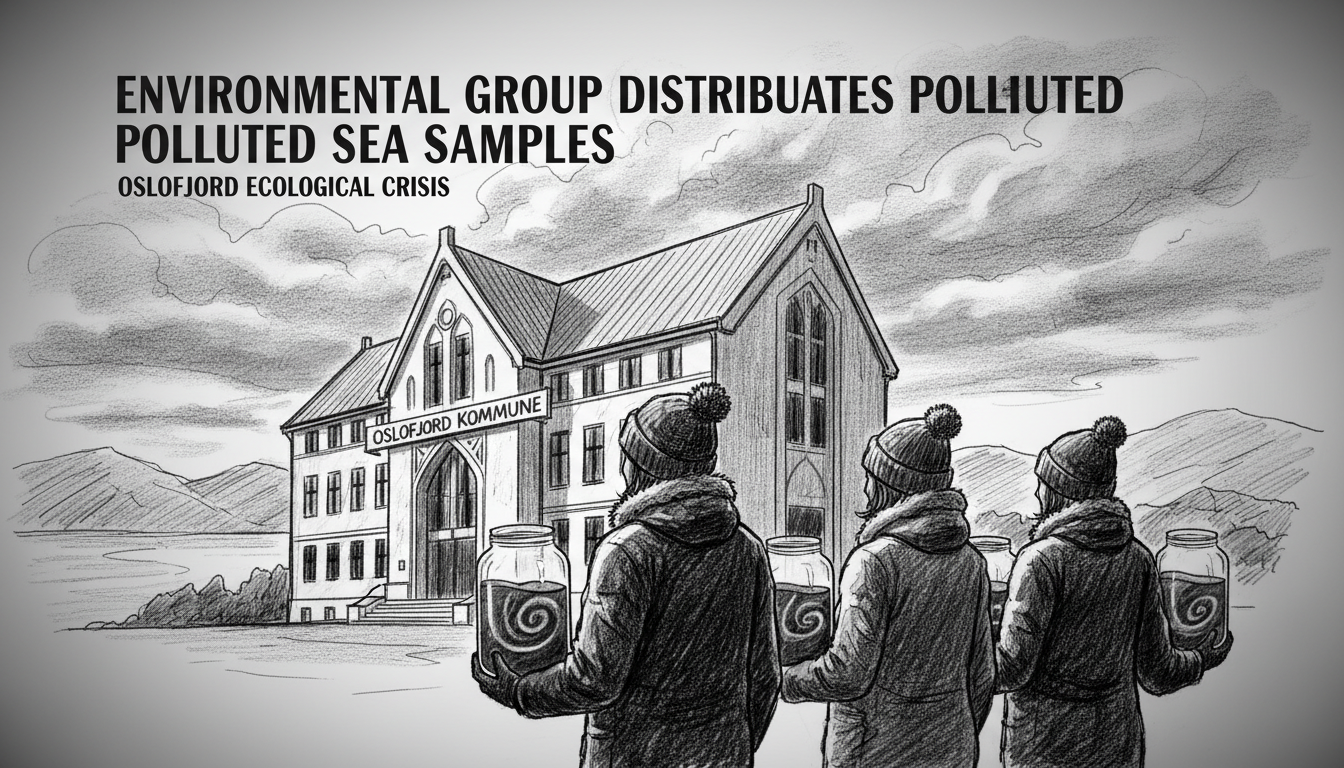
An environmental organization is delivering jars of contaminated seawater to Norwegian municipalities they say are polluting the Oslofjord. The dark brown liquid contains what locals call "lurv" - a grayish-brown sludge choking marine life.
The Norwegian Society for Nature Conservation claims agricultural runoff from inland communities is causing ecological crisis in the fjord. They're visiting municipalities including Gjøvik, Lillehammer and Øyer with their unusual gifts.
"It's time municipalities take responsibility," said project manager Tuva Løkse. "The Oslofjord isn't just an Oslo problem."
The sludge consists of thread algae that spreads across the seabed, suffocating plants and animals. Experts say nitrogen from farming feeds this growth, with contaminants eventually reaching the fjord through rivers and streams.
During their tour, the group visited a freshly fertilized field in Øyer that slopes directly toward the Lågen River. Any excess fertilizer has a short path to watercourses that ultimately flow into the Oslofjord.
"I believe much of the environmental damage inland isn't due to bad intentions but simply lack of awareness," Løkse noted.
The Oslofjord serves as the coastal fjord for nearly two million people and faces severe environmental pressure. Nitrogen pollution leads to overgrowth and oxygen depletion that kills marine life.
Of 46 municipalities in Innlandet county, 44 lie within the Oslofjord's watershed. These areas contribute to one of three main problems: pollution from agriculture, sewage and industry.
Truls Gulowsen, head of the conservation society, emphasized that wider buffer zones along waterways could capture nitrogen and phosphorus before they reach the fjord.
"This lack of comprehensive understanding is why the Oslofjord now has a massive over-fertilization and nitrogen problem," Gulowsen stated.
While national politicians have launched measures to save the fjord, implementation at municipal level remains inadequate. Many communities haven't reported any conservation actions despite regulations.
The group also visited the County Governor's office, where water management chief Tore Pedersen acknowledged low reporting rates from municipalities.
Environmental campaigners are clearly frustrated with the slow pace of change, using dramatic tactics to highlight how inland activities affect coastal waters hundreds of kilometers away.