
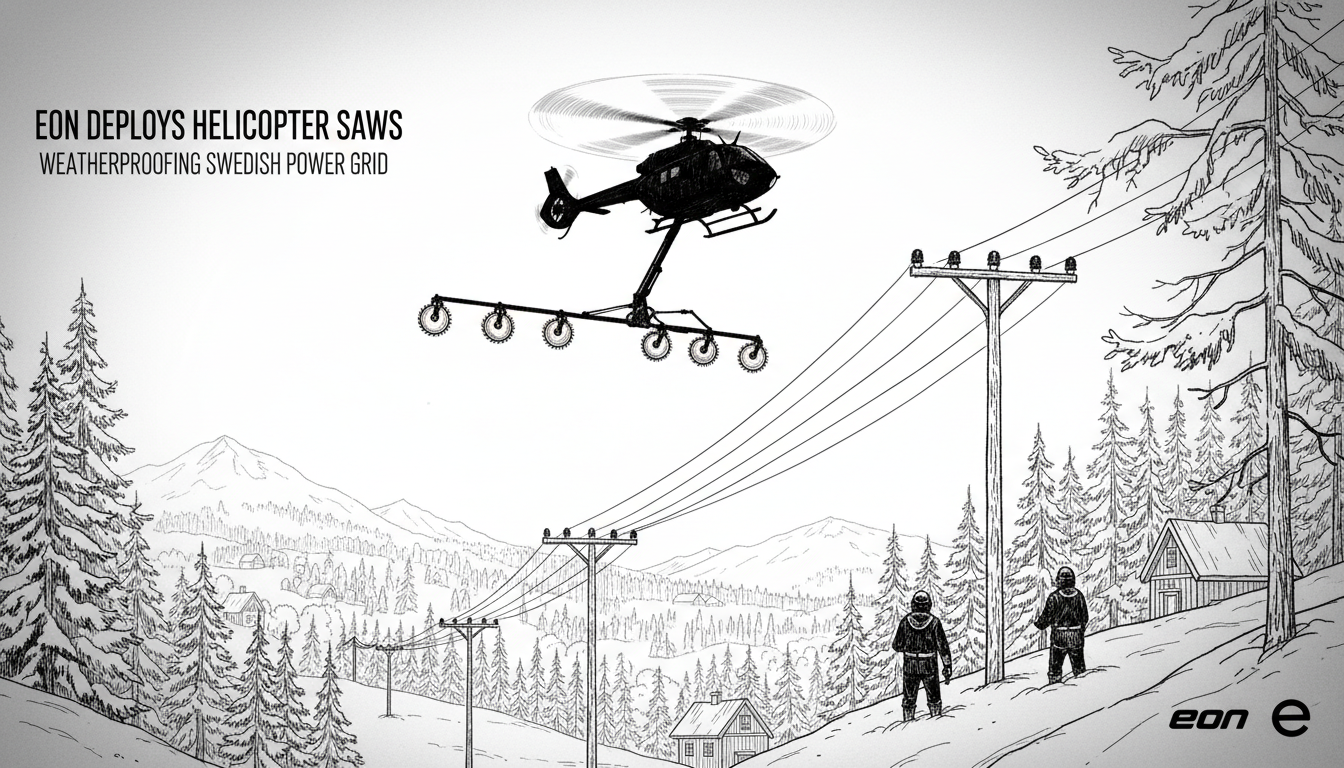
Swedish energy giant Eon is using helicopter-mounted saws to protect its power network in northern Sweden. The operation targets trees near power lines in Ragunda, Jämtland County. This method aims to prevent weather-related outages that have plagued the region.
Victoria Söderlund is a forestry maintenance engineer for Eon. She explained the strategy in a recent briefing. Using helicopters saves significant time compared to ground crews. The primary goal is not speed but minimizing environmental damage. Heavy forestry machinery causes greater ground disturbance. It often requires removing more trees to create access routes.
Weather-related power failures are a recurring issue in northern Jämtland. Eon has invested millions in grid hardening over recent years. Projects include clearing vegetation, installing tree-resistant line insulation, and burying cables where feasible. Söderlund stated these investments have improved reliability. She also acknowledged a persistent challenge. Not all problems can be completely engineered away in such a vast, forested landscape.
The shift to aerial trimming reflects a broader trend in Nordic infrastructure management. Utilities balance reliability mandates with strict environmental regulations. Sweden's Right of Public Access, or 'Allemansrätten', complicates ground-based work in sensitive areas. This context makes innovative, low-impact solutions financially and legally necessary.
For the local business community, consistent power is critical. Jämtland hosts data centers and manufacturing that require stable electricity. Prolonged outages can halt production and disrupt digital services. Eon's efforts directly support regional economic stability. The company's investment also signals confidence in northern Sweden's growth potential.
The helicopter initiative shows how traditional industries adopt new technologies. It blends forestry, aviation, and energy engineering. This cross-sector approach is a hallmark of the Nordic innovation model. Solutions often emerge from adapting existing tools to new, complex challenges.
Looking ahead, climate change may increase storm frequency and intensity. This puts more pressure on aging grid infrastructure. Eon's proactive vegetation management is a preventative measure. It is likely cheaper than constant emergency repairs after major storms. The strategy represents a calculated shift from reactive to predictive maintenance.
Other Nordic utilities will watch this project's results. If successful, similar methods could spread across forest-rich regions in Norway and Finland. The ultimate test will be the reduction in customer outage minutes during the coming winter storm season. For residents and businesses in Ragunda, that metric matters most.