
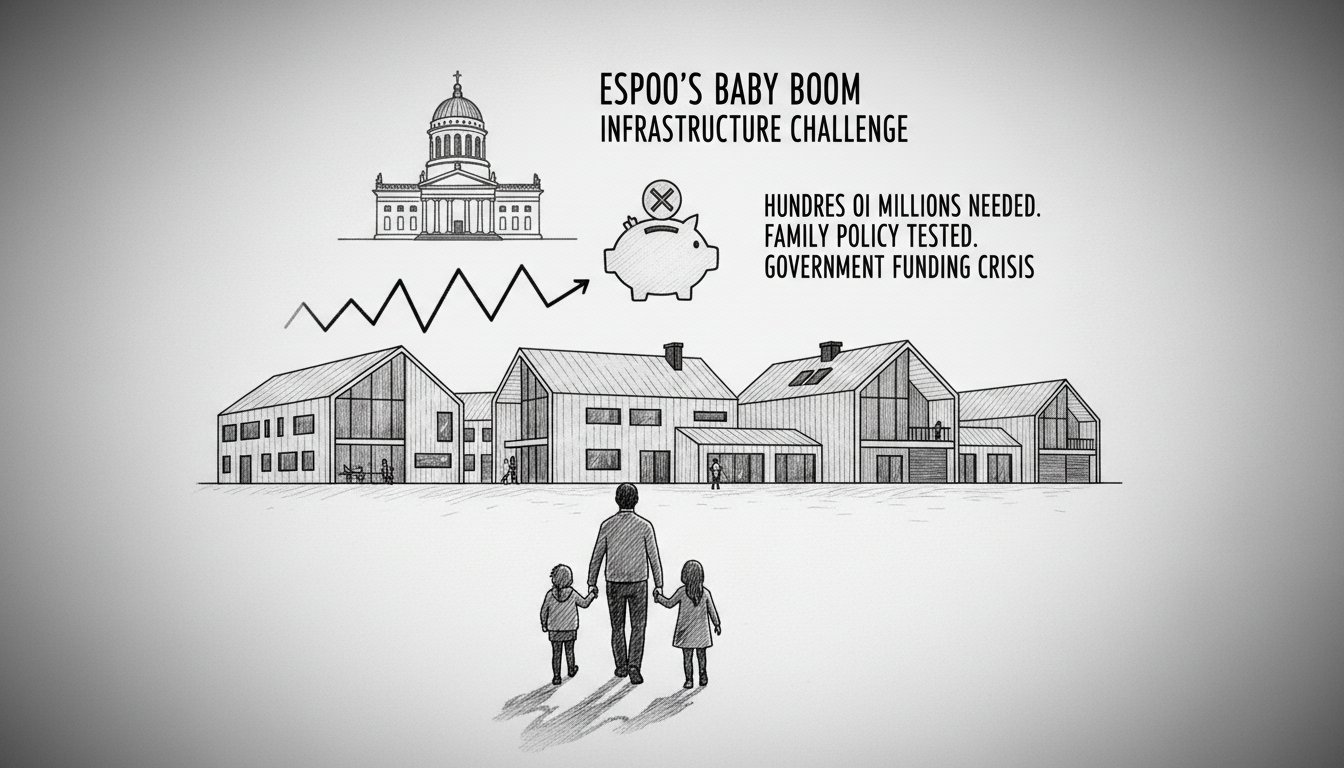
The city of Espoo faces an exceptional demographic challenge as it becomes Finland's unofficial baby factory. Children are arriving in such high numbers that local officials describe the situation as them coming through the doors and windows. This sustained population surge now demands hundreds of millions in new funding for kindergartens, schools, maternity clinics, and staff. The pressure falls directly on the Helsinki government district to allocate resources and manage a nationwide trend of urban concentration. This is not just a local Espoo issue but a test of Finland's family policy and municipal financing model.
In the Kauklahti district, the reality is visible on every street. Nearly 11 percent of Kauklahti residents are under seven years old, the highest proportion in all of Espoo. Families like the Laines, who moved from Helsinki's Kumpula district just before their daughter Lia was born, exemplify the trend. Mother Khira Laine states she is proudly a stay-at-home parent and that the family lives traditionally. Her son Eino has no shortage of playmates. The community feeling is strong, with parents coordinating closely, like when Eino waits at the bottom of a hill to cross the road together with his mother and sleeping sister.
Despite the logistical strain, many mothers in Kauklahti report being satisfied and confident. The social infrastructure, while stretched, is a point of pride. This creates a complex political equation for the Finnish government. High birth rates are a stated national goal, yet the concentrated cost burdens specific growing municipalities. The Eduskunta must reconcile pro-family rhetoric with the hard budgetary arithmetic required to build the necessary schools and hire nurses. Past governments have struggled with similar regional disparities, often leading to protracted negotiations over state subsidies to cities.
The situation in Espoo has direct implications for Finland's relationship with the European Union. EU cohesion funds and directives on social rights, childcare, and gender equality all intersect with this domestic challenge. Finland's ability to provide high-quality universal services, a cornerstone of its Nordic model, is under practical stress. If a wealthy city like Espoo struggles, it raises questions about the system's resilience. International observers and potential immigrants often cite Finland's support for families as a key attraction. A failure to manage this boom effectively could tarnish that reputation.
The core issue is one of planning and investment lagging behind demographic reality. New buildings and trained staff cannot materialize overnight. The hundreds of millions needed will compete with other national priorities like defense, healthcare for an aging population, and the green transition. Finance Ministry officials must make difficult choices. Some analysts suggest this requires a fundamental review of how municipal tax revenue is shared and how state grants for population growth are calculated. The coming parliamentary term will likely see intense debate on this topic, with parties like the National Coalition and the Social Democrats offering different visions for funding local services.
For now, life in Kauklahti continues, filled with the sounds of children. The long-term solution, however, must come from a collaborative effort between Espoo's city council, the Finnish government in Helsinki, and possibly EU frameworks designed to support sustainable urban development. The children in those strollers today will need classrooms tomorrow. How Finland meets that need will be a clear measure of its policy effectiveness.