
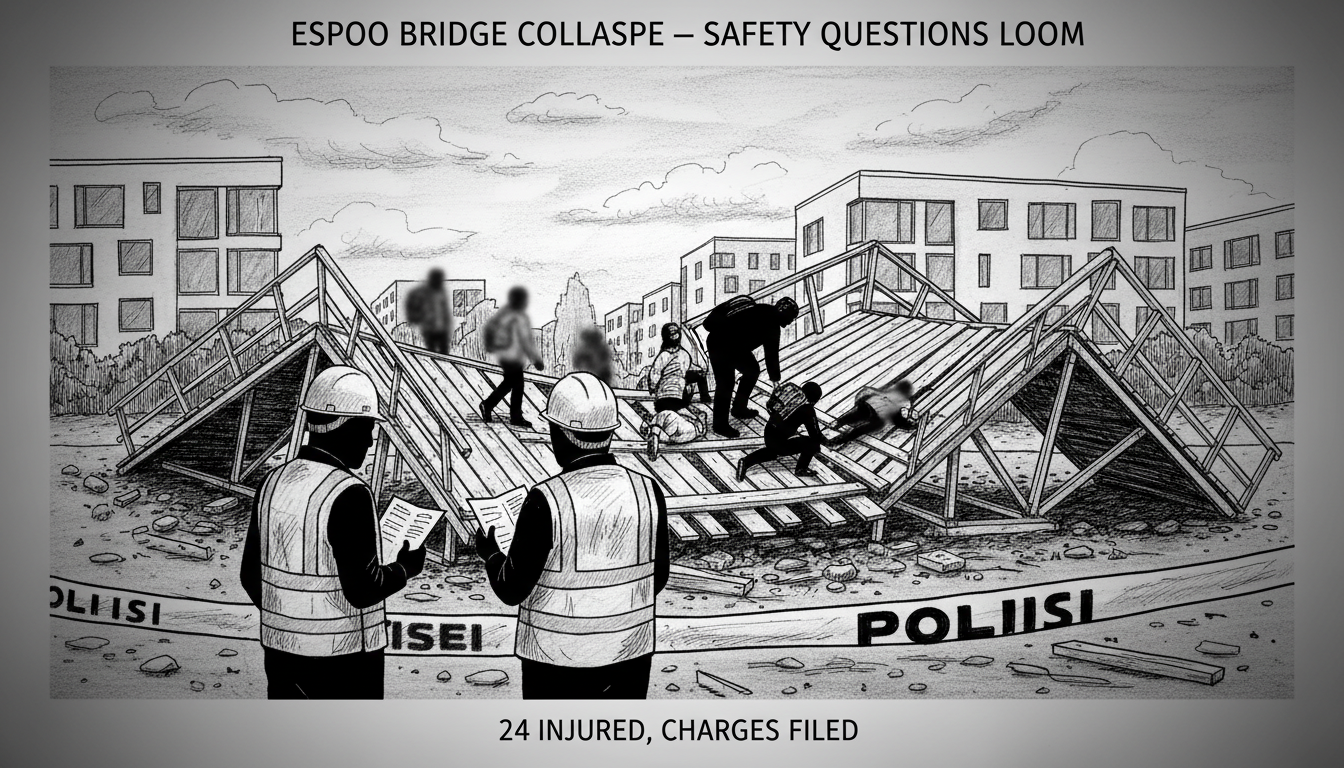
A temporary pedestrian bridge collapsed in Espoo's Tapiola district during morning hours, sending a teacher and 23 children plummeting approximately five meters to the street below. Seven victims required surgical intervention for their injuries following the structural failure that occurred as a Helsinki school group traveled to an art museum. The incident involved thirty-eight eighth-grade students and six adults, creating chaotic scenes described by witnesses as complete pandemonium with rising dust clouds and screaming children.
One teacher participating in the excursion recalled the moment with vivid clarity, stating the structure gave way beneath their feet in what felt like slow motion. The educator slid feet-first toward the bridge's center section before landing on a pile of plywood debris. That teacher later described thinking life had ended during the terrifying descent. Another teacher who had already crossed the bridge heard a loud bang and turned to see an enormous dust cloud where students and colleagues had been walking moments earlier.
School assistants acted quickly to rescue one student found hanging from a metal bar along the bridge's side. That assistant told investigators the child actually prevented their own fall by grabbing onto them during the rescue operation. All other students and one teacher lay scattered among plywood sheets and construction debris, crying in pain and shock according to witness statements. The bridge had been inspected just days before the collapse, with visual examination concluding everything appeared in proper condition.
Western Uusimaa Police initially suspected eight employees from both Espoo city and construction company Renta Oy of criminal activity. Prosecutors ultimately filed charges against only two Renta employees, a 37-year-old project manager and 39-year-old work supervisor. The project manager designed the bridge, oversaw construction, and certified inspection reports while the work supervisor conducted weekly visual assessments. Both men deny allegations of endangerment and aggravated assault through negligence.
This incident raises serious questions about temporary structure safety protocols in Finnish municipalities. Bridge collapses remain rare in Finland, which maintains generally high construction standards, making this event particularly shocking for local residents. The case now moves to Western Uusimaa District Court for resolution, with prosecutors seeking conditional prison sentences for both accused individuals. Temporary pedestrian bridges serve numerous Finnish communities during construction projects, making this case relevant for municipal planners nationwide. The emotional and physical impact on injured students and teachers will likely continue long after legal proceedings conclude.