
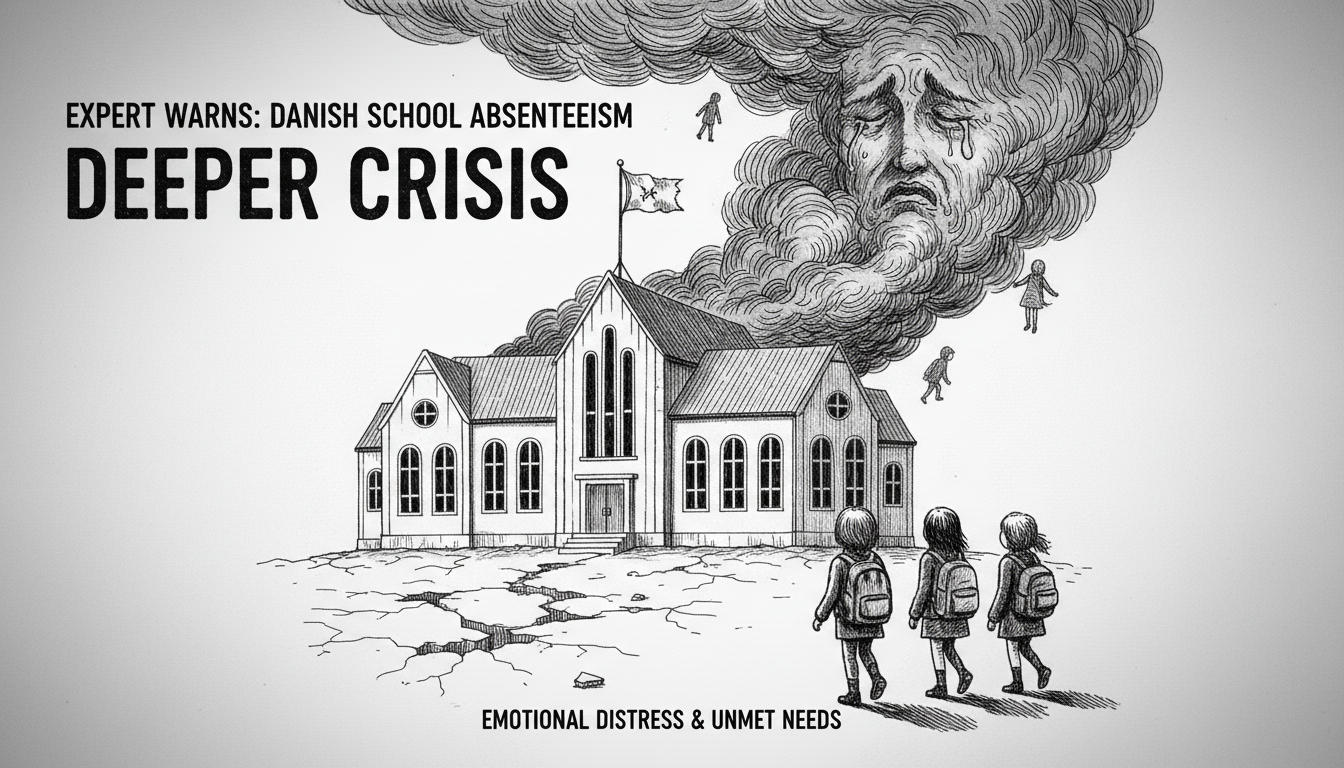
Thousands of Danish children remain home from school not by choice but because they feel too unwell to attend classes. School absenteeism expert Anne Vestergaard says children with early signs of distress receive help too late. Schools lack both knowledge and time to create safe learning environments.
In every single municipality across Denmark, children sit at home instead of attending school. They want to learn but cannot manage the emotional burden. Long-term school absence increases year after year. Recent data shows 25,000 children missed at least 40 school days last academic year. Nearly one in five children missed more than 20 school days total.
This crisis in Danish education reflects broader challenges within the welfare system. The integration of mental health support into schools has not kept pace with student needs. Copenhagen integration efforts face particular strain as diverse student populations require specialized approaches.
Denmark social policy traditionally emphasizes early intervention, yet the system appears overwhelmed. Municipal authorities struggle to provide adequate resources for identifying and supporting at-risk students. Many teachers report feeling unprepared to address complex psychological issues among their pupils.
Community centers across Danish municipalities could play a stronger role in bridging this gap. These local institutions already serve as social hubs where families seek support. Expanding their mental health services might reach children before school absence becomes chronic.
The Danish welfare system faces a critical test in addressing this invisible crisis. Education officials acknowledge the problem but solutions require coordinated action across multiple government levels. Without intervention, thousands of young people risk falling behind academically and socially.
What does this mean for Denmark's future? A generation struggling with school attendance today becomes tomorrow's workforce. The economic and social implications extend far beyond classroom walls. Denmark must confront this challenge directly to maintain its reputation for quality education and social support.
Local governments need clearer strategies for identifying at-risk students earlier. Teacher training programs should incorporate more mental health recognition skills. Parents require better access to resources when their children struggle. These steps could help reverse the troubling trend of school absence.