
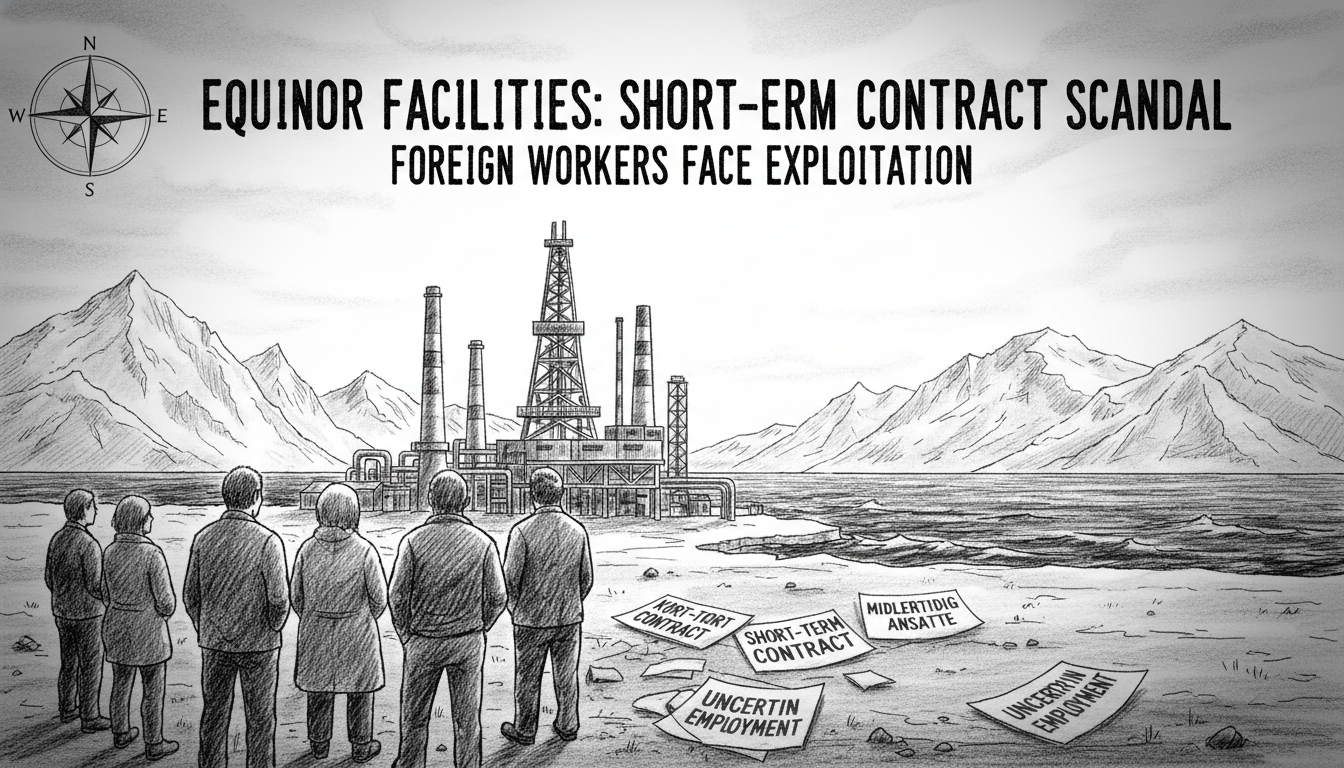
Norwegian energy facilities are using temporary contracts as short as five weeks for foreign workers, according to legal experts who say the practice violates labor laws. Workers report positions with as little as 20% guaranteed hours and months without pay.
Legal professionals examining the contracts describe the situation as "completely chaotic" and potentially illegal. Dozens of contracts reviewed show Eastern European workers receiving repeated five-week contracts rather than permanent positions.
One lawyer stated, "If this goes unnoticed without anyone raising concerns, it's absolutely incredible." The practice appears to systematically use lower guaranteed hours than companies actually need.
Workers at Equinor facilities around Norway, including the Melkøya plant near Hammerfest, face uncertain employment conditions. Many fear losing their jobs if they speak out about their situation.
Legal experts identified three main concerns with the contracts. First, workers receive temporary contracts for what appears to be permanent work. Second, companies use artificially low guaranteed hours. Third, workers go unpaid between assignments despite having employment contracts.
One Polish worker, Piotr Podmagórski, worked at the Melkøya facility from February 2024 until June 2025. His 50% position contract promised approximately 17,000 Norwegian kroner monthly, but payments stopped when he was no longer needed at the project.
Legal analysis confirms workers have rights to both work and pay as long as they're not legally dismissed. The situation creates zero risk for employers but significant risk for employees who must remain compliant to receive new contracts.
Several staffing companies involved include Global Work, JJS ProsjektPartner, Yabimo, Workshop Bemanning & Kompetanse, and RTC Offshore. Together these companies generated about 1.5 billion kroner in revenue last year and employed over 2,500 people.
Global Work defends its practices, stating temporary contracts are used only for specific, time-limited projects. Company representatives say contracts are legal and reject suggestions they exploit foreign workers unfamiliar with their rights.
Equinor states all employment agreements should comply with Norwegian laws. The company requires suppliers to follow regulations but doesn't review specific employment contracts due to privacy concerns unless audits occur.
Norwegian courts have recently ruled against similar practices. In one case, Trøndelag District Court determined staffing companies must pay wages during periods without assignments when no valid averaging agreements exist.
The extensive use of short-term contracts raises serious questions about worker protections in Norway's energy sector. Legal experts find it concerning that such practices continue despite clear labor laws protecting against precisely these situations.