
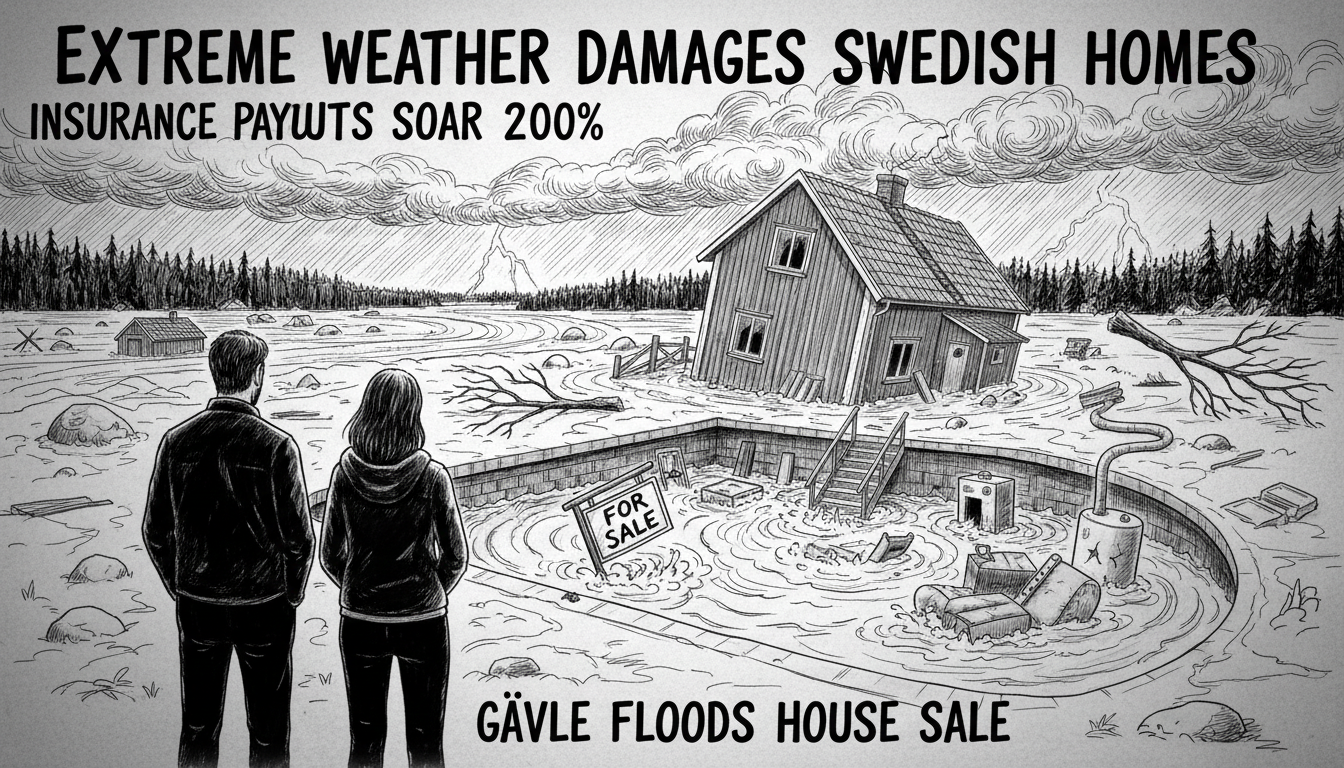
A quiet crisis is unfolding across Sweden's suburbs and countryside. Thousands of homeowners are facing a new reality where the weather itself is a threat to their largest investment. Insurance payouts for weather-related damage to single-family homes have skyrocketed by 200 percent in recent years. The total now stands at a staggering 4.8 billion Swedish kronor. This is not just a statistic. It is a story of flooded basements, canceled viewings, and a growing sense of vulnerability in a nation known for its stable climate.
Ann Stigenberg's experience in Gävle is a stark example. Just three days before a scheduled open house for her villa, a sudden, intense downpour sent water pouring into her basement. The water rose to 80 centimeters high. 'We had to remove everything we had stored down there,' she explained. 'Then we held the viewing, but no one wanted to buy a house with a flooded cellar. So we didn't sell it.' Her story highlights a direct, human cost that goes far beyond insurance forms.
This trend connects to broader Swedish society trends and lifestyle changes. Experts point to two main culprits behind the worst damage. The first is intense, localized cloudbursts that overwhelm drainage systems in areas not built for such volumes. The second is prolonged periods of heavy rain that saturate the ground, leading to basement flooding and landslides. For international readers and expats considering life in Sweden, this is a crucial factor. The classic Swedish villa with a finished basement for a home cinema or guest room now carries a new risk assessment.
The implications ripple through Swedish culture and the housing market. In Stockholm neighborhoods like Bromma or Nacka, or in historic cities like Uppsala and Lund, a home's value is increasingly tied to its drainage and elevation. This shift affects everything from real estate negotiations to municipal planning. Local authorities are now forced to invest heavily in climate adaptation, a cost that will ultimately be borne by taxpayers. It is a clear case of a societal challenge demanding a collective response.
What does this mean for the future of Swedish lifestyle? There is a tangible cultural shift. The traditional summer stuga, or cottage, and the year-round villa are symbols of a connection to nature. Now, that same nature is becoming more unpredictable and destructive. Homeowners are advised to check their insurance policies carefully and consider practical measures like backflow valves and improved yard grading. The era of taking a stable Swedish climate for granted appears to be over. This story is ultimately about adaptation, resilience, and the very real economic and emotional toll of a changing environment on everyday life.