
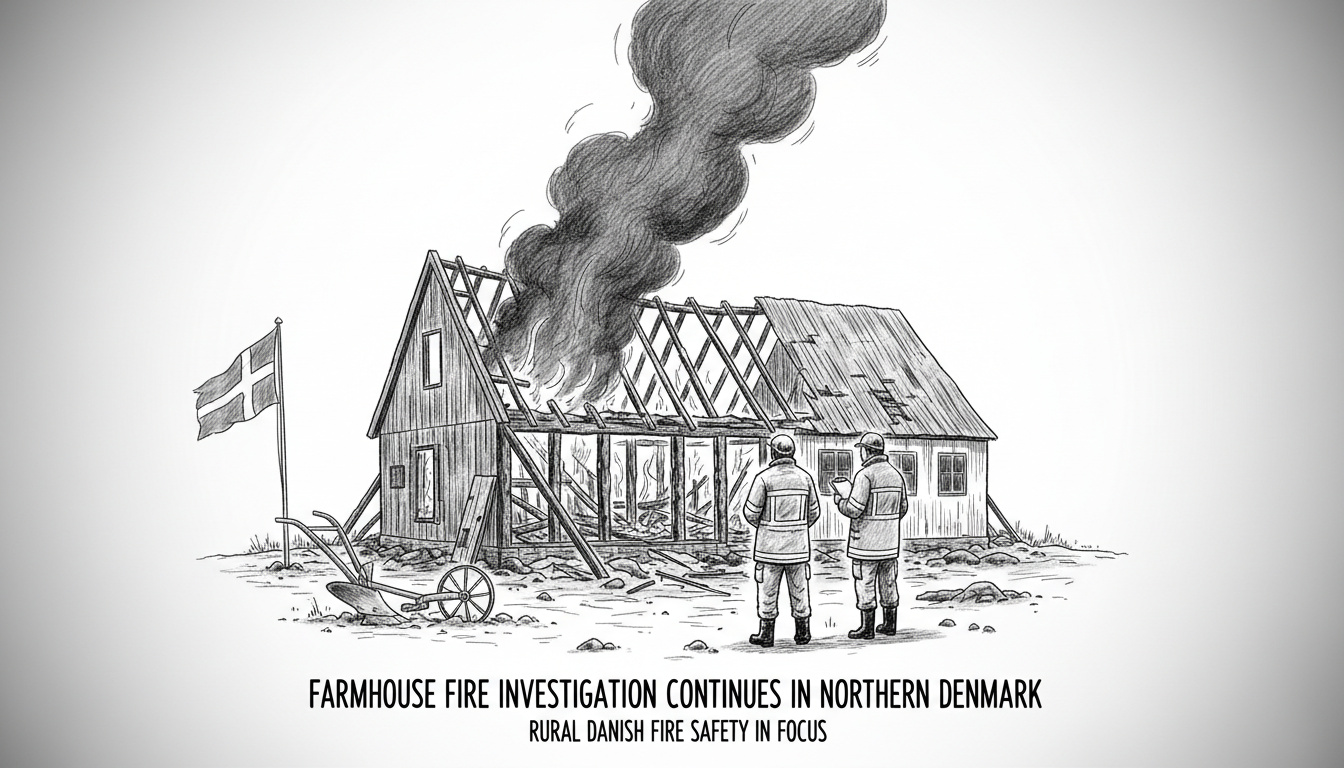
A severe fire destroyed a farmhouse on Vester Hedevej in Hjørring over the weekend. Emergency services contained the blaze by evening but remained on scene until midnight. The damage was limited to the main farmhouse structure. No people or animals suffered injuries during the incident.
Police officials confirmed Monday morning that investigators will examine the fire's cause more thoroughly. The incident represents one of many rural property challenges facing Denmark's agricultural communities. Northern Jutland's emergency response teams demonstrated effective coordination during this crisis.
Farm fires present particular concerns in Denmark's rural integration landscape. Many immigrant families settle in agricultural areas seeking affordable housing. These communities often face unique fire safety challenges. Older farm structures may lack modern safety features that urban buildings typically include.
Danish welfare system protections extend to all residents regardless of background. Emergency response services maintain consistent standards across urban and rural municipalities. This incident highlights how Denmark's social safety net operates in practical terms. Quick intervention prevented what could have become a devastating loss for the property owners.
Local social centers often provide support following such incidents. They help residents navigate insurance claims and temporary housing needs. Copenhagen integration models sometimes differ from rural approaches. Yet the fundamental commitment to resident wellbeing remains consistent nationwide.
Community resilience in northern Denmark reflects broader Danish social policy priorities. Neighbors frequently organize support networks when emergencies strike. This social cohesion represents a cornerstone of Denmark's approach to community welfare. The response to this farm fire demonstrates how systems function during actual crises.
Fire safety education varies across Danish municipalities. Some communities conduct regular safety inspections for older properties. Others focus on public awareness campaigns about prevention measures. These differences sometimes create uneven protection levels across regions.
Denmark immigration policy increasingly considers rural settlement patterns. New residents often choose countryside locations for their affordability and space. This creates opportunities for cultural exchange in traditionally homogeneous areas. It also presents challenges for service delivery in less densely populated regions.
The Hjørring incident concluded without casualties thanks to professional emergency response. The investigation continues while the community assesses the damage. Such events test the durability of Denmark's much-discussed welfare model. They also reveal how systems adapt to protect all residents equally.
Rural property fires raise questions about resource allocation in Denmark's regions. Some argue remote areas receive less attention than urban centers. Others point to consistent emergency response times as evidence of system-wide reliability. This debate continues within Danish society news discussions about regional equity.
What happens next for the affected property owners? Insurance assessments and rebuilding considerations will follow the investigation. The community's response may include volunteer support and municipal assistance programs. Such solidarity reflects the social contract underlying Danish welfare principles.