
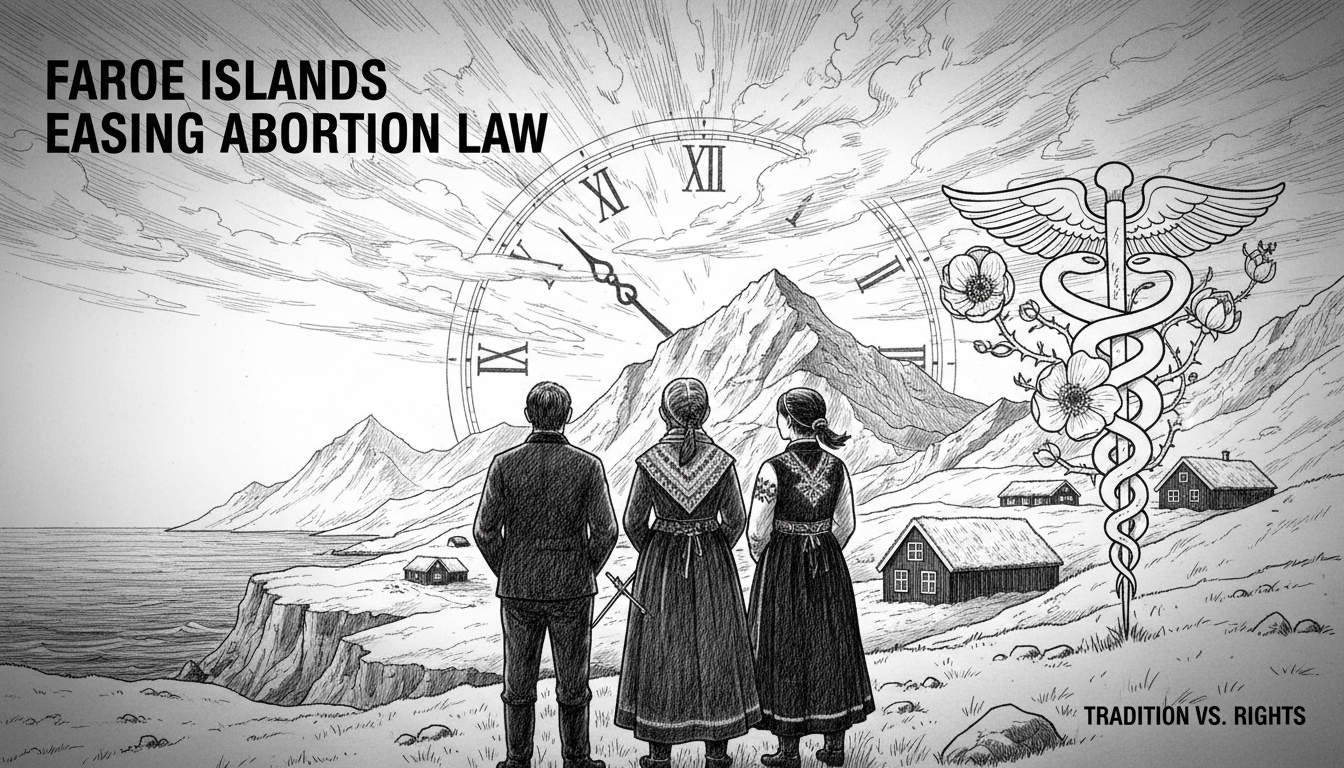
A profound shift is underway in the North Atlantic. The Faroe Islands, a self-governing territory of Denmark, are debating a historic proposal to liberalize one of Europe's most restrictive abortion laws. A bill granting free abortion up to the 12th week of pregnancy is now in its final reading in the Faroese Parliament, known as the Løgting. This move was unthinkable just a few years ago, according to a leading gynecologist and former parliament member in Tórshavn. The doctor stated the time is now ripe for change, reflecting a significant evolution in societal attitudes. This development offers a unique lens into the complex interplay between Danish society news, regional autonomy, and evolving social values within the Nordic realm.
The current Faroese law, which dates back decades, permits abortion only under very limited circumstances, such as serious risk to the mother's health or severe fetal defects. This stands in stark contrast to Denmark's own abortion policy, where the procedure has been broadly accessible on request since the early 1970s. The disparity highlights the distinct cultural and political identity of the Faroe Islands, which manages most of its own domestic affairs, including healthcare and social policy, while Denmark handles defense and foreign policy. The proposed change signals a potential alignment closer to broader Nordic norms on reproductive rights.
What does this mean for the islands' communities? For women, it represents a fundamental shift in bodily autonomy and access to healthcare without the need to travel to mainland Denmark or Iceland. Community health centers in towns like Klaksvík and Tvøroyri would need to adapt their services. The debate touches deep questions of faith, tradition, and modernity in a small, close-knit society. Officials and religious leaders have long been vocal on this issue, and the current parliamentary discussion follows years of advocacy by healthcare professionals and women's rights groups. The vote will test the balance between traditional values and contemporary human rights perspectives.
From a policy analysis standpoint, this is more than a local legislative update. It is a case study in how social change permeates even the most traditional corners of the Nordic welfare model. The Danish welfare system provides a framework, but local implementation varies greatly. Successful integration of new social policies in places like the Faroes often depends on local leadership and public discourse. The outcome will be closely watched as an indicator of social progress in autonomous Nordic regions. It also raises questions about the future of other conservative social policies in similar communities.
The path forward remains uncertain until the final parliamentary vote is cast. If passed, the law would mark a historic turning point for gender equality and healthcare access in the Faroe Islands. It would also redefine the relationship between local values and the progressive social policies often associated with the broader Danish and Nordic sphere. This story is ultimately about a society cautiously negotiating its place between a cherished past and an evolving future.