
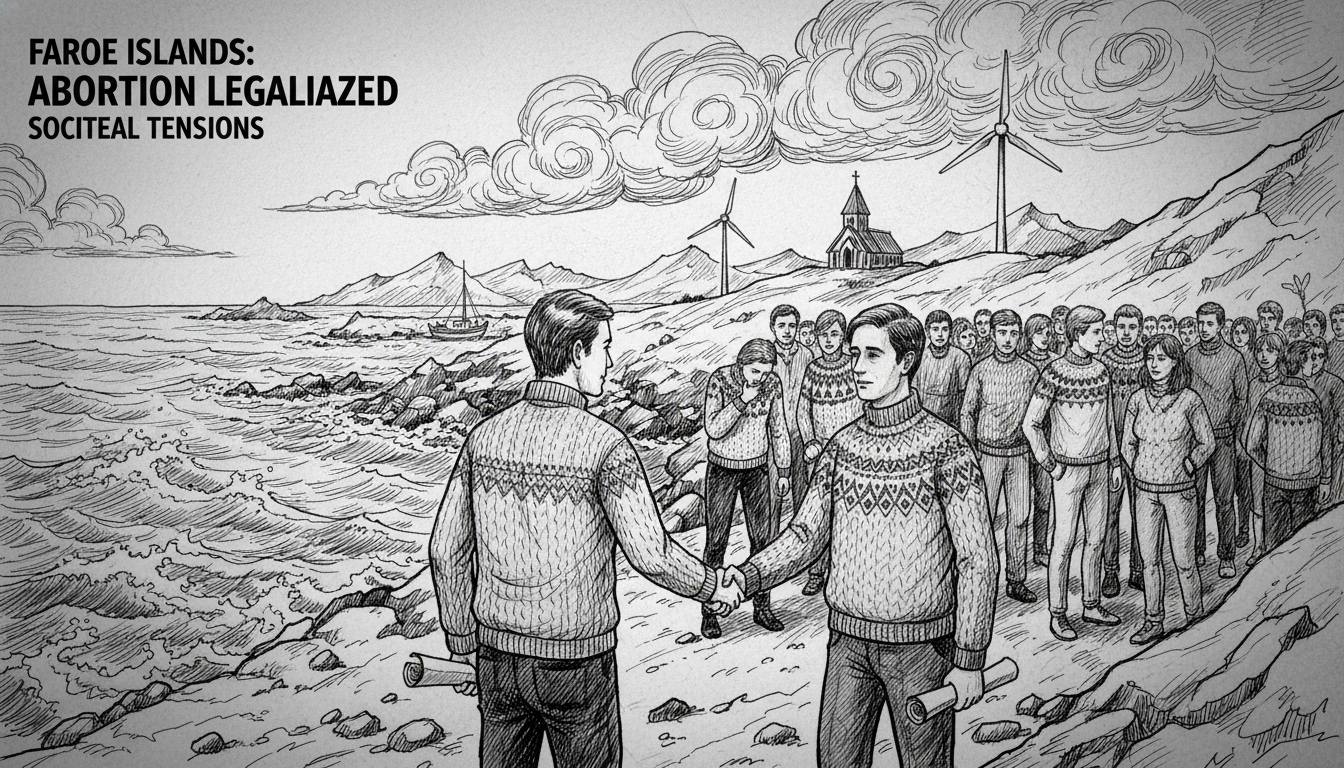
The Faroe Islands have legalized abortion, a landmark decision ending a long-standing ban. This change brings the autonomous Danish territory into closer alignment with mainland Denmark's laws. The new legislation allows abortion on request up to the twelfth week of pregnancy. It also permits later procedures under specific medical or social circumstances. The vote in the Faroese parliament, the Løgting, followed years of intense debate. Supporters celebrated a hard-won victory for women's rights and bodily autonomy. Opponents expressed profound disappointment, framing the decision as a moral defeat. The emotional weight of the change is palpable across the archipelago's close-knit communities. Many residents, regardless of their stance, describe feeling a sense of anxiety about the future. This tension reflects the complex intersection of modern values and deep-rooted cultural traditions in the North Atlantic.
Understanding this shift requires context about the Faroes' unique status. The islands are a self-governing nation within the Kingdom of Denmark. They control most domestic affairs, including health policy, while Denmark handles defense and foreign policy. For decades, the Faroes maintained one of Europe's most restrictive abortion laws. The old statute only permitted abortion if the mother's life was at serious risk. This created situations where women had to travel to Denmark or Iceland for the procedure. The financial and emotional burden of this travel was significant. A local women's rights advocate said the change ends a painful era of secrecy and hardship. She noted that real access to healthcare is now possible at home.
The political journey to this point was neither quick nor easy. Previous attempts to reform the law failed multiple times in the Løgting. Shifting public opinion and advocacy from healthcare professionals created new momentum. Recent surveys indicated growing support for reform, particularly among younger generations. Yet, strong opposition remains, especially within some religious communities. A community leader from a conservative parish expressed concern about societal values. He argued the law change challenges fundamental beliefs held by many islanders. The divide does not cleanly follow political party lines, cutting across traditional alliances. This makes the social integration of the new law a delicate task for local municipalities and social centers.
What does this mean for Danish society and its welfare model? Denmark proper has had liberal abortion laws since the 1970s. The disparity created a two-tier system within the same kingdom. The Faroese decision reduces a notable difference in social policy. It also raises questions about the integration of diverse moral frameworks under a single national umbrella. The Danish welfare system aims to provide equal services, but local autonomy can create gaps. This case shows how self-rule and shared values must constantly be negotiated. For international observers, it highlights the nuanced reality of Nordic societies. They are not monoliths but collections of regions with distinct histories and debates.
The immediate impact will be practical. Faroese healthcare providers must now establish safe, local services. They will need guidelines, training, and resources from the national health authority. The long-term effects are more cultural. The law places individual choice at the center of a communal society. This tension between personal rights and collective norms is a classic Nordic dilemma. It echoes debates happening in Copenhagen and other Danish cities about integration and values. The outcome in the Faroes will be studied as a case in managing social change in a small, interconnected community. The anxiety reported is real, stemming from a genuine transformation of the islands' social contract. The path forward requires dialogue and a commitment to supporting all citizens through this change.