
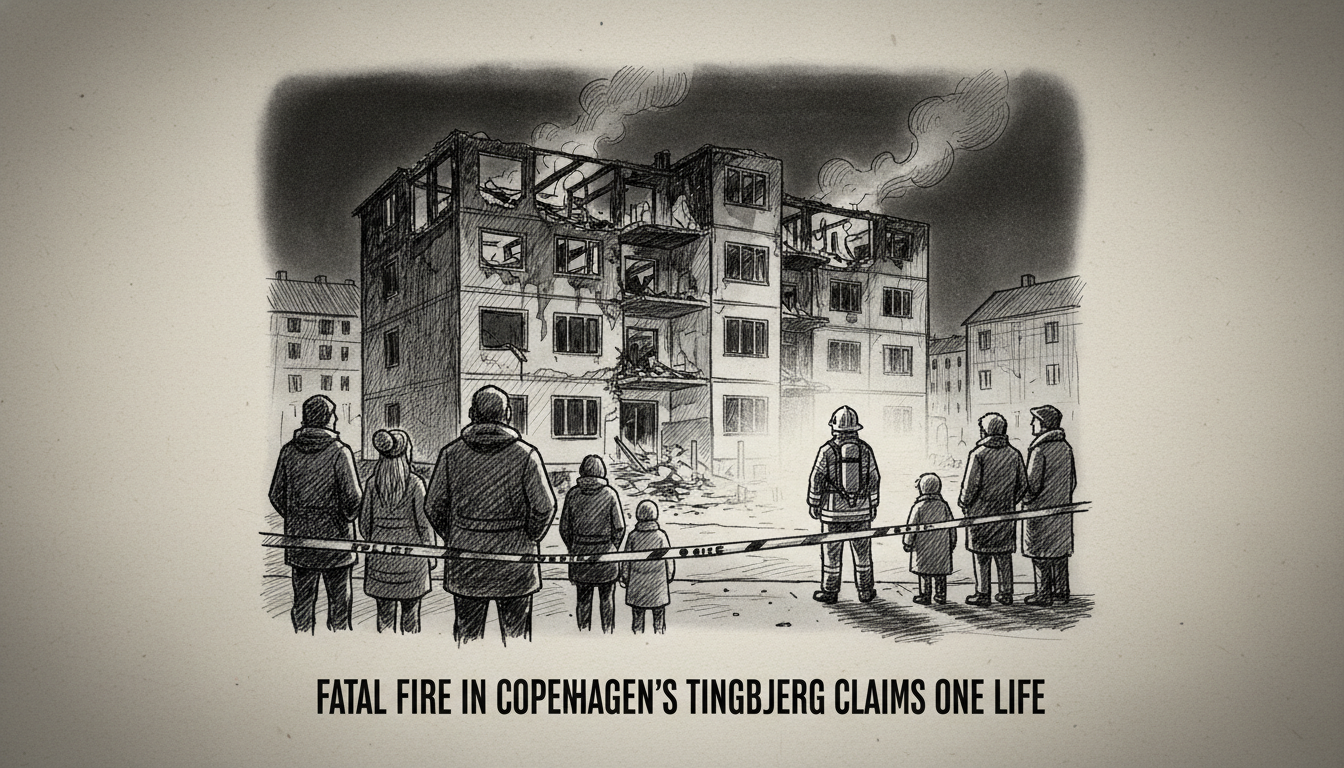
A devastating fire in Copenhagen's Tingbjerg neighborhood has left one person dead and multiple families displaced. Emergency services responded to Virkefeltet address after receiving reports of an explosive blaze that completely engulfed one apartment. Police officials confirmed the tragic discovery of a deceased individual within the burned residence.
Anders Frederiksen, the police operations chief, described the scene as thoroughly burned when first responders arrived. The fire department and Copenhagen Police remain on site investigating the circumstances surrounding the incident. Initial assessments suggest no criminal activity caused the blaze, but authorities continue their examination of the damaged property.
Several surrounding apartments underwent emergency evacuation during the response operation. Fire crews received the initial alarm at 9:44 in the morning, prompting rapid deployment to the residential building. The incident highlights ongoing challenges in Copenhagen integration efforts within diverse urban neighborhoods.
Tingbjerg represents one of many areas where Danish social policy intersects with community safety concerns. The neighborhood has seen various initiatives aimed at improving living conditions and social cohesion. This tragic event raises questions about resource allocation within the Danish welfare system, particularly regarding emergency response capabilities in different municipal districts.
Community centers and social organizations in Copenhagen's outer districts often serve as crucial support networks during such crises. These institutions become particularly important when families face displacement or trauma. Denmark immigration policy has shaped the demographic landscape in areas like Tingbjerg, creating unique challenges for municipal services.
Recent statistics show integration outcomes vary significantly across Copenhagen's neighborhoods. Educational attainment and employment rates differ substantially between districts, influencing community resilience during emergencies. The fire response demonstrates how municipal services must adapt to serve increasingly diverse populations under Denmark's evolving social policies.
Local community leaders have long advocated for increased investment in preventive safety measures and social infrastructure. They argue that proactive approaches could reduce such tragedies while strengthening community bonds. The Danish welfare system faces continuous pressure to balance universal service provision with targeted support for vulnerable areas.
This incident follows similar residential fires in other Nordic urban areas, raising broader questions about housing safety standards and emergency preparedness. As investigations continue, affected residents await answers about what caused the blaze and what support they can expect during recovery.