
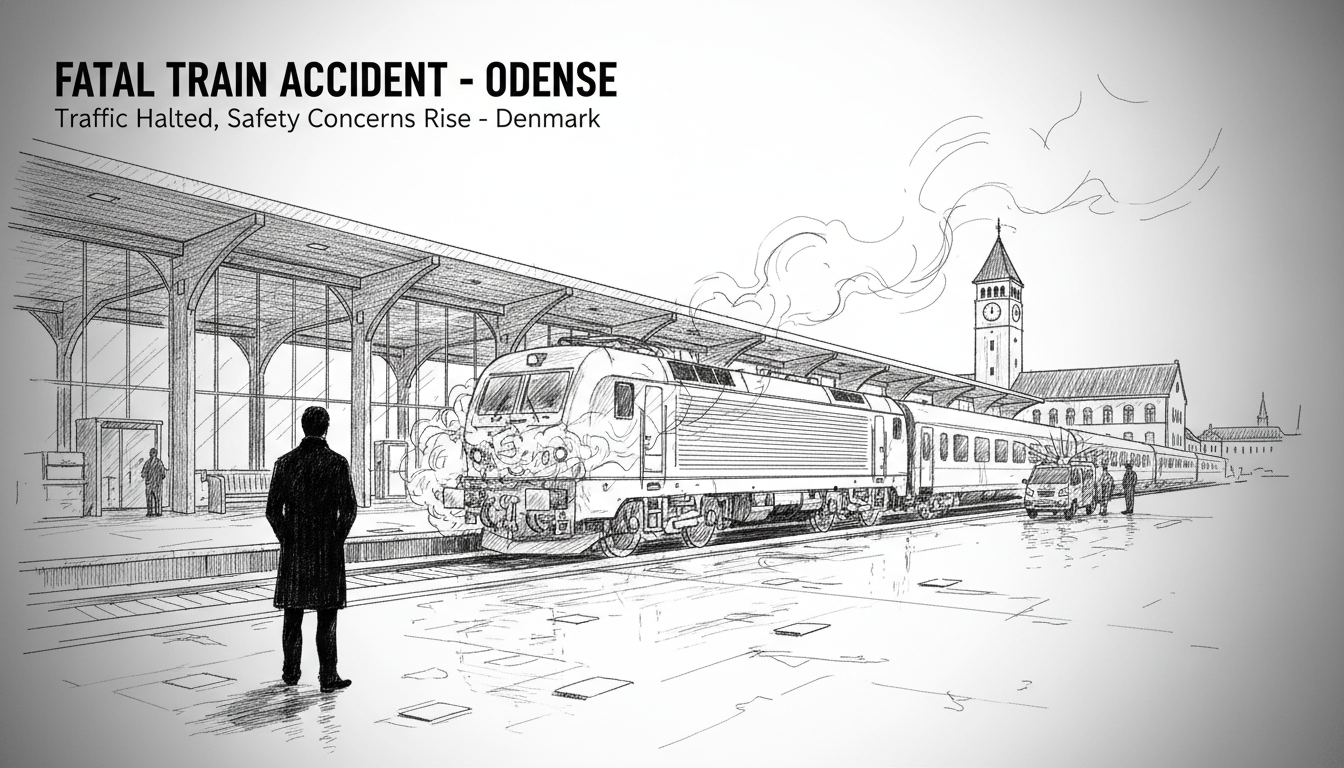
A man has died after being struck by a train at Odense Banegårdscenter on Tuesday afternoon. The incident caused major disruptions for rail passengers traveling across Funen, with all train traffic in both directions suspended. Emergency services and police worked at the scene for several hours. Authorities have confirmed the man's next of kin have been notified. Police also stated there is no suspicion of criminal activity behind the tragic event.
This accident brings a somber focus to Denmark's otherwise highly efficient public transport system. The Danish welfare system prides itself on safety and reliability, making such events particularly jarring for the public consciousness. For international observers, it highlights the human cost that can accompany even the most well-managed infrastructure. The immediate halt of all traffic reflects standard Danish safety protocols, which prioritize incident investigation over convenience.
From a social policy perspective, every fatal accident triggers a review process. Danish municipalities and transport authorities will now examine the circumstances surrounding the Odense incident. They will ask difficult questions about station safety, mental health resources, and prevention strategies. Community leaders in Copenhagen and other major hubs often call for increased support at social centers, arguing that proactive welfare interventions can prevent such tragedies. The conversation inevitably turns to how the Danish welfare system can better identify and assist vulnerable individuals before they reach a crisis point.
Statistics on public safety are a constant part of Danish society news. While Denmark boasts low overall accident rates, each event is met with serious scrutiny. The country's approach to integration and social support is often tested in the aftermath of accidents, examining whether all community members have equal access to help. Officials typically release findings from such investigations, which then inform future policy on everything from physical barriers to public awareness campaigns. The goal is always to learn and improve, a core tenet of the social contract here.
For now, the focus remains on the victim and his family. The disruption serves as a stark reminder of the fragility that exists alongside Denmark's famed order and efficiency. The system worked to clear the scene and inform the public, but it could not prevent the initial loss. This duality is a recurring theme in Danish society news, where high-functioning systems are periodically interrupted by deeply human events. The coming days will see the practical response continue, while the broader questions about safety and community care linger.