
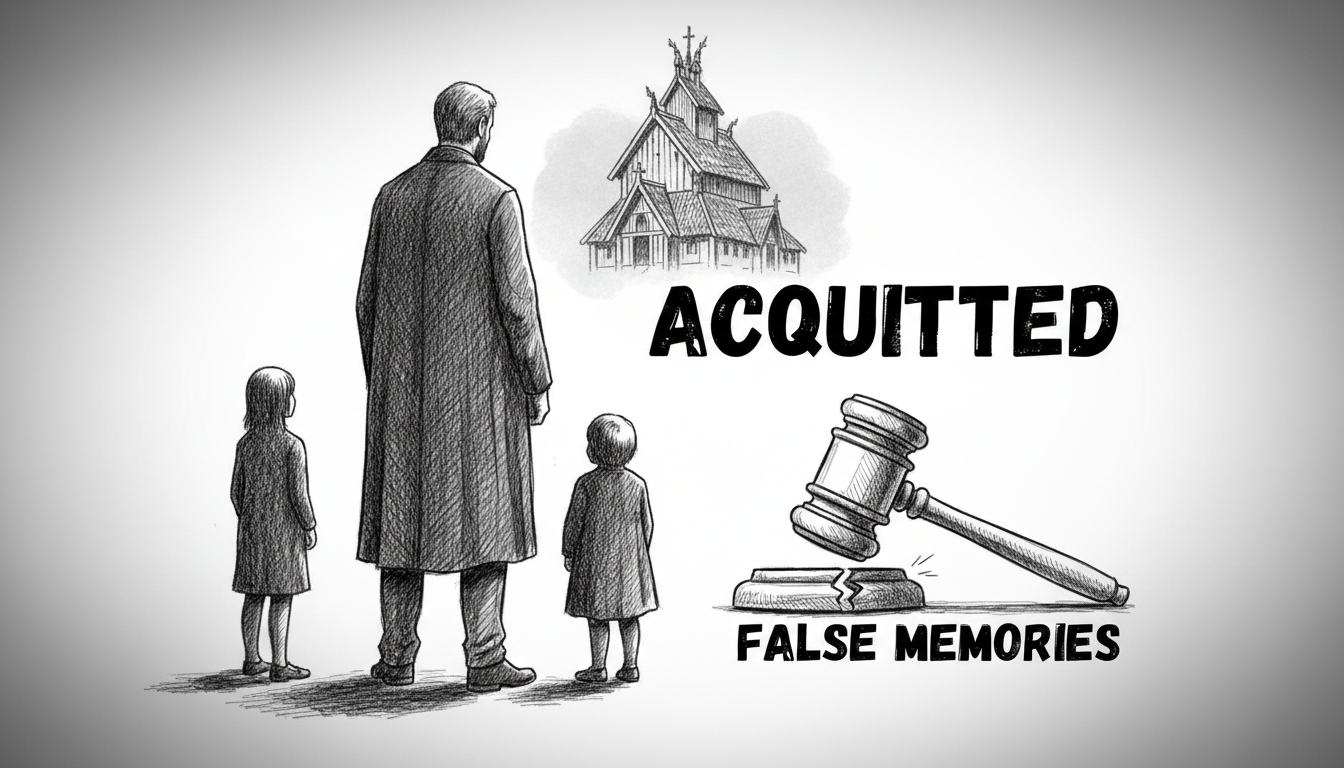
A Norwegian court has fully acquitted a father accused of sexually abusing his own children. The unanimous ruling concluded the children may have developed false memories after being influenced by their mother.
The Vestoppland and Valdres District Court reviewed extensive evidence over ten days. This included 16 witnesses, 2,000 pages of documents, and 17 specially conducted interviews with the children.
Prosecutors initially charged the man with sexually abusing all four of his children and incest. The alleged crimes were said to have occurred over four to five years while the children were under age 10.
During the trial, prosecutors changed their position and requested acquittal. "The prosecution has a duty to be objective," stated prosecutor Jo Christian Jordet. "This means we must ask for acquittal when evidence appears different in court."
The court determined it seemed realistic the children had been influenced by their mother. They faced risk of memory errors and their stories could be false despite being remembered as real experiences.
The case began after the parents separated in 2020. The mother sent multiple concern reports to various agencies. The four children lived primarily with her after the separation.
Police investigated the father twice - first in 2020, then in 2021. Both cases were closed due to insufficient evidence. Child protection services also closed an investigation in 2021 but maintained regular contact with mother and children until 2022.
New information emerged last year that caused prosecutors to reopen the case and file charges. But after seeing evidence presented in court, they reversed course and sought acquittal.
Defense lawyer Hanne Lilleby said the case caused enormous strain on her client for years. "It has been a tremendous burden for an innocent man and father," she stated. "The worst part for him was watching the children's interviews again. We see how much the children have changed in appearance and maturity during the years he missed."
The man now hopes to repair his relationship with his children. His legal team is considering compensation claims for lost work and damages.
The children's legal representative said the victims were disappointed and surprised by the court's decision. They directly rejected the possibility they might have false memories.
This case highlights how difficult child abuse investigations become when evidence relies heavily on children's testimony. The court's decision suggests even well-intentioned parental influence can create unreliable memories in young witnesses.