
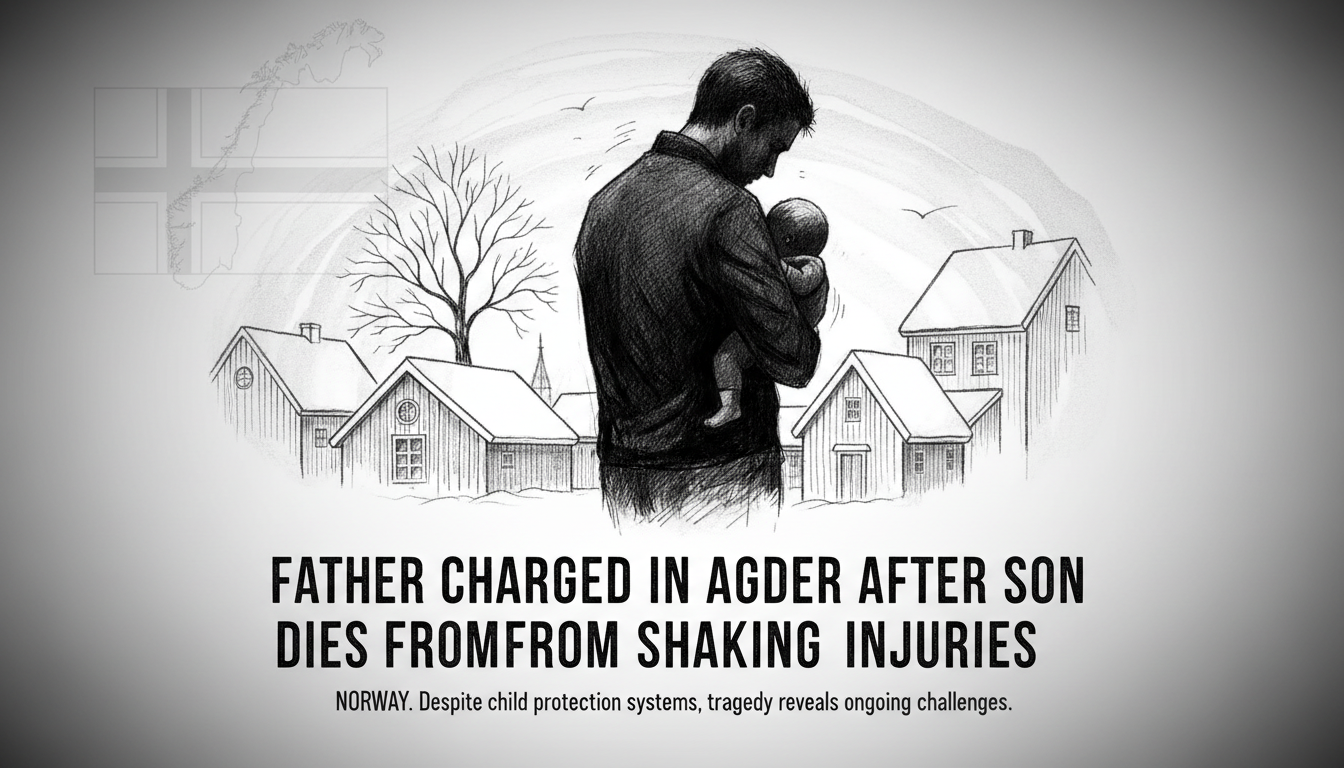
A man from Agder stands accused of causing the death of his infant son through violent shaking. The child suffered catastrophic injuries before dying two days later. This tragic case has sparked renewed scrutiny of Norway's child protection systems and legal responses to domestic violence.
Prosecutors allege the father shook his son with extreme force. The infant sustained extensive brain damage from the assault. Medical reports detail multiple brain hemorrhages and spinal cord bleeding. The child also suffered retinal hemorrhages and detachment in both eyes. These injuries proved fatal within forty-eight hours.
Norwegian law treats such cases under provisions for gross bodily harm. The charge carries a maximum prison sentence of fifteen years. This case will proceed through the Agder district court system. It highlights the severe consequences of violent acts against children.
Norway maintains one of the world's most comprehensive child welfare systems. The Barnevernet agency holds broad authority to intervene in family situations. Critics sometimes question its methods, but its mandate remains clear. The agency must protect children from immediate harm and neglect.
This incident raises difficult questions about prevention and detection. How could such violence occur within a family home? What warning signs might have been present? Neighbors and community members often struggle to recognize domestic abuse. Professionals face challenges in identifying at-risk families before tragedy strikes.
Similar cases have occurred in Norway's recent past. Each prompts public debate about societal safeguards. The country invests heavily in parental support programs and healthcare monitoring. Yet absolute prevention of family violence remains an elusive goal. These tragedies test the limits of any welfare state.
International readers should understand Norway's legal approach. The justice system emphasizes rehabilitation alongside punishment. Sentences for violent crimes often appear lenient by global standards. Norwegian prisons focus on reintegration rather than pure retribution. This philosophy extends to cases involving family violence.
The Agder region now confronts this painful event. Southern Norway's coastal communities pride themselves on close-knit social structures. Such incidents challenge communal self-perceptions. They force examination of whether support networks function as intended.
Child protection experts note shaking injuries present particular challenges. They often leave no external marks visible to outsiders. Perpetrators may claim accidental falls or other explanations. Medical professionals must therefore maintain high suspicion levels. They must recognize the distinctive injury patterns associated with abusive trauma.
Norwegian authorities will likely review this case for systemic lessons. Could healthcare providers have identified risks earlier? Did social services have prior contact with the family? These questions will inform future prevention efforts. They may lead to adjusted protocols for health visitors and general practitioners.
The court process will unfold over coming months. It will determine legal responsibility for this child's death. The outcome will provide some measure of accountability. It cannot restore what was lost, but it may reinforce societal boundaries against violence toward children.
This tragedy serves as a somber reminder. Even nations with strong social safety nets experience family violence. Constant vigilance and supportive intervention remain essential. Norway must balance respect for family autonomy with its duty to protect the most vulnerable.