
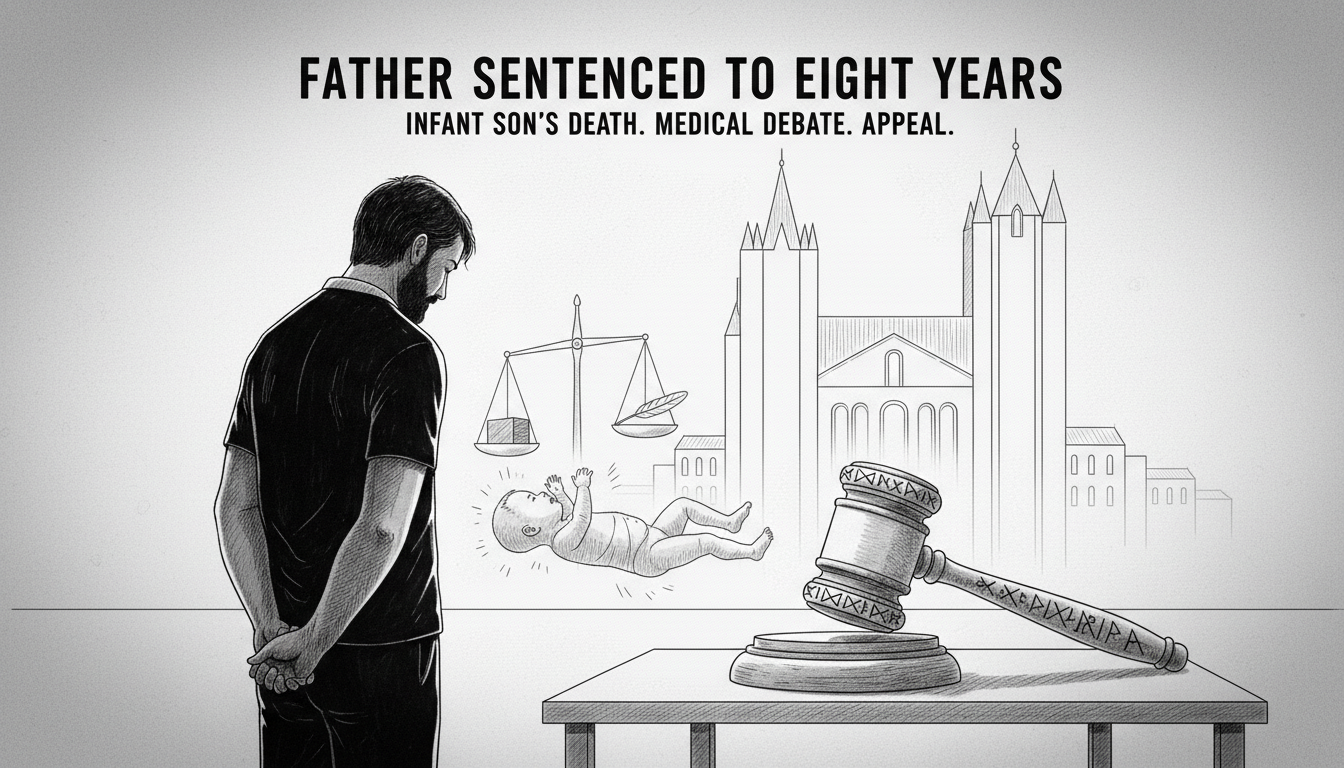
A Norwegian court has sentenced a father to eight years in prison for the death of his three-month-old son. The Romerike and Glåmdal District Court found the man guilty of inflicting fatal injuries by shaking the infant. The tragic incident occurred in late September of last year. The parents brought the lifeless child to an emergency clinic in Jessheim. Medical staff noted the infant was not breathing and had a bluish skin tone. The child was resuscitated and airlifted to the national hospital in Oslo. He died two days later.
Medical examinations revealed hemorrhages in the baby's head and eyes. Prosecutors argued these injuries were typical of violent shaking. The father maintained his innocence throughout the investigation and trial. He claimed his son became seriously ill while they were alone at home. He described the infant turning red in the face and losing consciousness. The court's majority found the evidence sufficient for a conviction. The defense attorneys announced an immediate appeal. They stated their client finds the verdict incomprehensible. They noted he finds support in the minority opinion of the court, which would have acquitted him.
This case touches on a deeply contentious medical and legal issue. The diagnosis of shaken baby syndrome is debated in Norwegian and international medical circles. Several experts argue that injuries like brain damage and retinal hemorrhages can have other causes. These alternative explanations include underlying illness, accidental trauma, or consequences of lifesaving resuscitation efforts. The defense in this case argued the bleeding could have occurred during the emergency revival attempts. The prosecution declined to comment on the sentence, citing the pending appeal process.
Norwegian law treats crimes against children with particular severity. An eight-year sentence for fatal assault reflects this stance. The case highlights the immense pressure on forensic medicine to provide definitive answers in tragic, unclear circumstances. For the Norwegian justice system, it represents another difficult chapter in distinguishing between tragic accident and criminal act. The appeal will likely focus intensely on the conflicting medical testimony. The higher court must weigh the typical markers of abuse against other potential explanations. This process will be watched closely by legal and medical professionals across the Nordic region.
The social implications are profound. Such cases test the public's trust in both parental care and forensic science. They force a conversation about stress, support for new parents, and the limits of medical certainty. Norway's robust welfare state is designed to prevent such tragedies through universal healthcare and parental support. When they occur anyway, the search for accountability becomes a complex legal and moral puzzle. The final word from the appeals court will not bring the child back. It will, however, set a precedent for how similar evidence is interpreted in future cases. The family, the legal system, and the medical community now await that next judgment.