
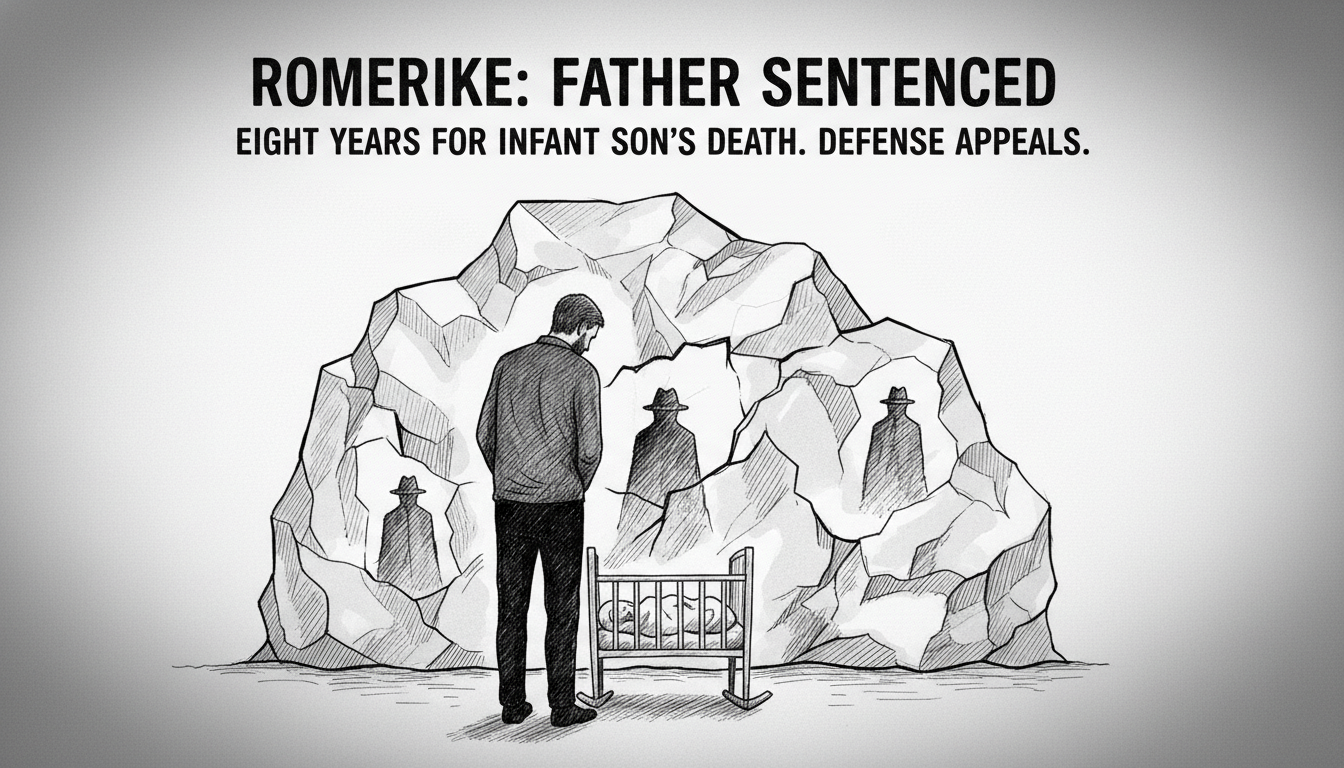
A man in his twenties from the Romerike region has been sentenced to eight years in prison for the aggravated assault of his infant son. The three-month-old baby died in September after sustaining fatal injuries. The father reported to the emergency room in Ullensaker after finding his son lifeless. The child was transported to a hospital but could not be saved and died two days later.
Medical staff determined the baby's injuries were inconsistent with the parents' initial explanation. This led police in Lillestrøm to launch a major investigation. Authorities used covert methods, including bugging the family home and a car, and intercepting phone communications. After nearly two years, charges against the mother were dropped. The father was formally charged with aggravated bodily harm resulting in death on orders from the National Public Prosecutor.
The prosecution argued the father shook his son violently, causing extensive brain damage, multiple brain hemorrhages, and bleeding behind the eyes. In court, the father denied criminal guilt and presented a different account of events. He stated he was alone with his crying son when the infant fainted in his arms. The prosecution sought a nine-year sentence, but the majority in the Romerike and Glåmdal District Court settled on eight years. A minority of the court wished to acquit the father entirely.
His defense lawyers, Henriette Willix and Ole-Kristian Ringnes, stated their client finds the majority's conclusion completely incomprehensible and is disappointed. They confirmed the verdict will be appealed. This tragic case highlights the severe legal consequences of violent acts against children in Norway. The Norwegian justice system treats such crimes with utmost seriousness, as reflected in the substantial prison term sought and delivered.
The case also underscores the rigorous investigative standards applied when child welfare is at stake. The police employed extensive surveillance over a long period to establish the facts. Such methods are not used lightly but demonstrate the priority given to uncovering the truth in suspected fatal child abuse. The dropped charges against the mother show the system's focus on individual culpability based on evidence.
For the international community, this case offers a window into Norway's legal processes and societal values. The country has a strong social welfare framework and laws designed to protect children. Incidents like this, while rare, are met with a full and transparent judicial response. The upcoming appeal will test the robustness of the initial verdict and provide further clarity on the legal thresholds for such grave charges. The final outcome will be closely watched by child protection advocates and legal experts.