
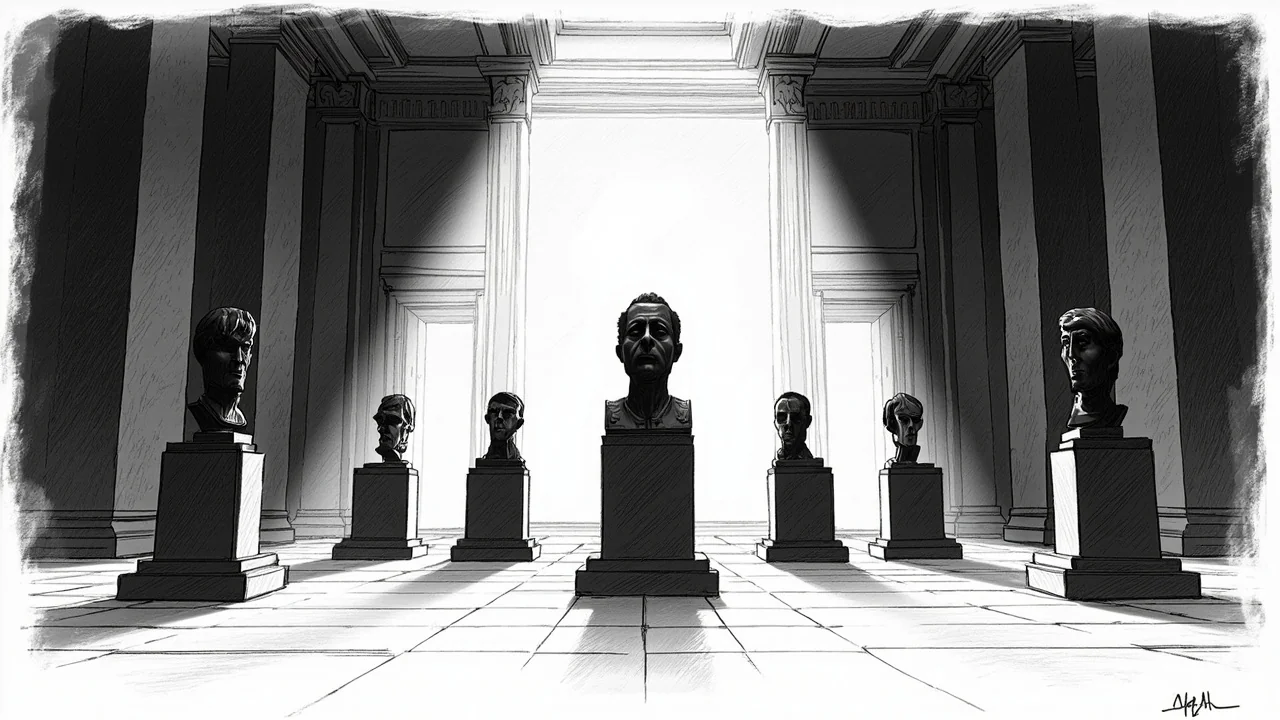
Finland’s President Sauli Niinistö has joined five predecessors in having his portrait bust permanently installed in the Parliament House’s Valtiosali, or State Hall. The bronze sculpture was placed in the ceremonial chamber on Tuesday, a space reserved for the official busts of presidents who also served as Speaker of the Eduskunta. Niinistö held the Speaker's chair from 2007 until his election to the presidency in 2011.
A Hall of Constitutional History
The Valtiosali now displays a total of six presidential busts, each representing a unique link between the legislative and executive branches. The tradition honors presidents whose political careers included leadership of the national parliament. The other statesmen commemorated are the republic’s first president, Kaarlo Juho Ståhlberg, along with Lauri Kristian Relander, Pehr Evind Svinhufvud, Kyösti Kallio, and Urho Kekkonen. Their collective presence underscores the foundational Finnish principle of a strong parliament, a legacy that shapes the country’s political culture.
The placement is a formal state act, not a public unveiling ceremony. It signifies official recognition of Niinistö's service in both high offices. The State Hall serves as a meeting room for the Speaker and party leaders, and as a reception space for distinguished guests of the Eduskunta. The busts provide a constant visual narrative of Finnish constitutional continuity within the heart of the government district in Helsinki.
From Speaker to Statesman
Niinistö’s path from Speaker to President is a modern example of a well-established Finnish political trajectory. His tenure as Speaker coincided with a period of significant coalition governments, requiring mediation and procedural skill. The role is considered crucial for maintaining parliamentary function and political stability, experience viewed as vital preparation for the nation’s highest office. Observers note that this background informs Niinistö’s later approach to consensus-building and his understanding of the limits and powers of different state institutions.
The specific bust now in the Valtiosali is a duplicate of one revealed at the Presidential Palace in November. That original unveiling did generate public discussion about the artwork’s likeness to its subject. The creation of an official state portrait, whether painted or sculpted, often sparks debate regarding artistic interpretation versus accurate representation, a common phenomenon in many democracies.
The Artist Behind the Bronze
The sculptor commissioned for the work is Matti Peltokangas, a recognized Finnish artist known for his realistic portrait sculptures. Peltokangas has created official busts and statues of numerous other prominent national figures. His task involves capturing not just a physical likeness but also an essence of the subject's public persona for a work destined to stand for generations in a historic setting. The decision to use his model for both the Presidential Palace and Parliament versions ensures consistency in the official state portrayal of the outgoing president.
The process from commission to installation in the Valtiosali involves several state bodies, including the Parliament’s administration and likely input from the Office of the President. The timing of the placement, as Niinistö’s second and final term concludes, aligns with the tradition of solidifying a president’s legacy within state buildings after their active service.
A Tradition with Deeper Meaning
The collection in the State Hall is more than decorative. It physically connects different eras of Finnish statehood. Svinhufvud, Kallio, and Kekkonen, for instance, led the nation through the Second World War, post-war reconstruction, and the delicate Cold War policy of neutrality. Ståhlberg and Relander guided the young republic through its formative first decades. Adding Niinistö’s bust links the contemporary era, marked by EU membership and new security realities, to that historical lineage.
This act also highlights the specific constitutional history of Finland, where the presidency has held significant authority, particularly in foreign policy. The requirement of prior service as Speaker for this particular honor creates a distinct subgroup among Finland’s twelve presidents. It visually reinforces the relationship between the parliament that elects the president and the president who often addresses that same chamber on matters of national importance.
Legacy in Bronze and Stone
With the installation complete, the Valtiosali offers a renewed, complete historical tableau. The busts stand as a reminder of the individuals who have shaped the nation's course from the Eduskunta’s podium and later from the Presidential Palace. For visitors and new members of parliament, the hall provides a tangible lesson in Finnish political history and the established paths of national leadership.
The addition of Niinistö’s likeness prompts reflection on his own legacy as his term ends. His years included navigating the European debt crisis, responding to Russian aggression in Ukraine, and steering Finland’s application for NATO membership. These defining events of his presidency will now be associated with his formal, permanent presence in the parliament building where his national political career reached its first major peak. The quiet installation of a bronze bust serves as a final, formal point of connection between a president’s past and his permanent place in the state’s historical narrative.