
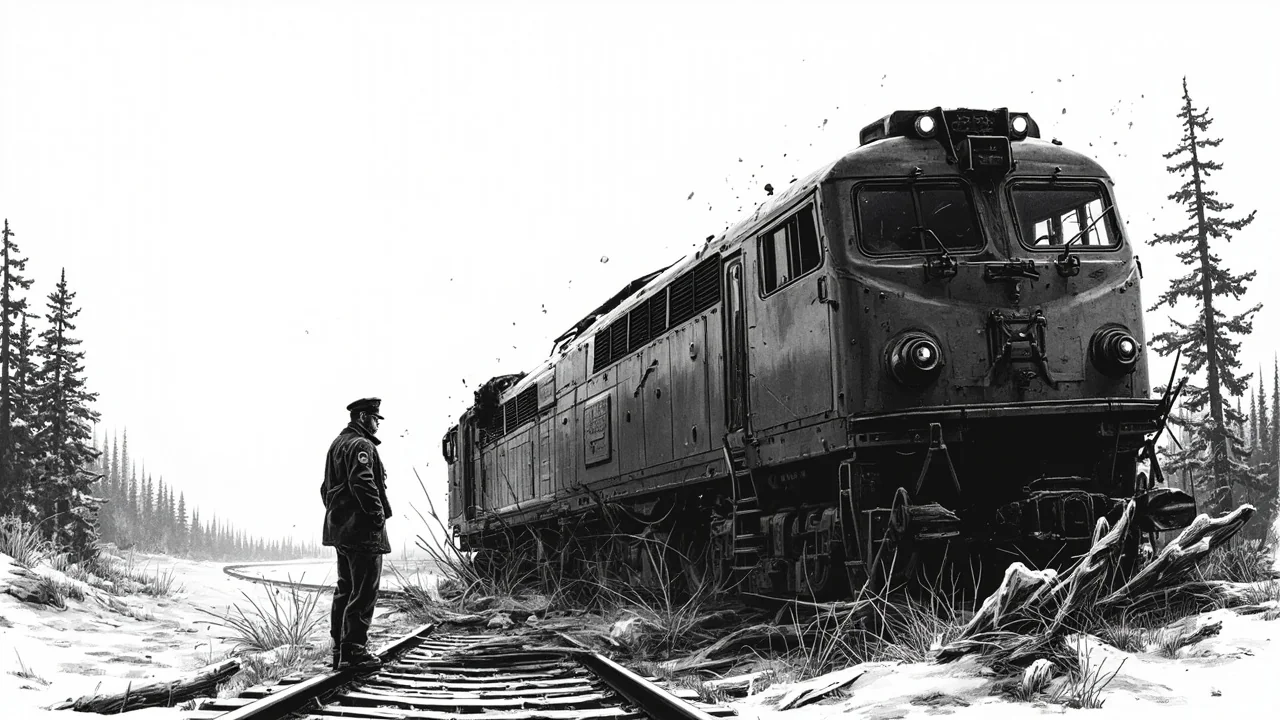
An ambulance driver responding to an emergency call in Finland has been handed a staggering compensation claim exceeding 154,000 euros after his vehicle collided with a freight train at a level crossing last December. The incident occurred in Kannonkoski on the afternoon of December 17, 2024, when the ambulance, carrying two paramedics but no patient, was on its way to a call. The Central Finland District Court has since convicted the driver, an emergency medical technician, for serious endangerment of traffic safety. The case highlights the severe legal and financial repercussions emergency personnel can face even during response missions, with the insurer now seeking to recover the full cost of the damaged ambulance and train.
The Crash at Piispalantie Crossing
According to the court proceedings, the ambulance entered the Piispalantie level crossing and collided with a timber transport train. The two paramedics in the vehicle did not sustain serious injuries, but the ambulance was severely damaged. The train also suffered damage in the impact. The Central Finland District Court found the driver guilty on multiple counts. The prosecution argued the driver neglected his duty to stop and give way, and failed to exercise particular caution to observe rail traffic when approaching the crossing. Furthermore, the driver was cited for speeding, traveling at 62 km/h in a 50 km/h zone, with the court agreeing the speed was excessive to the point that the vehicle could not be stopped before the rails.
Legal Charges and Court Findings
The conviction for serious endangerment of traffic safety is a weighty one in Finnish law. The court's ruling was based on a combination of factors: the failure to adhere to level crossing protocols, the confirmed speeding violation, and the resultant catastrophic collision. The absence of a patient in the ambulance was a noted detail, though it did not mitigate the traffic violations. Finnish traffic law is unequivocal about the obligations at level crossings, requiring drivers to ensure the path is clear before proceeding, regardless of their vehicle type or mission, unless operating under specific, authorized priority that also mandates extreme caution. The court determined the driver's actions collectively constituted a significant deviation from the standard of care required, thus warranting the criminal conviction.
The Insurance Company's Substantial Claim
The financial aftermath of the crash is now unfolding separately from the criminal case. The ambulance's insurance company has filed a civil claim against the driver personally, demanding compensation of over 154,000 euros. This sum is understood to cover the extensive repair or replacement cost of the specialized emergency vehicle and the damages inflicted upon the freight train. In Finland, liability in such situations can extend to the individual driver if negligence is established, as the court has now done. This step by the insurer, while a standard legal procedure to recoup losses, places an extraordinary personal financial burden on the emergency responder, far exceeding typical annual salaries in the public sector and raising questions about the professional risk landscape for first responders.
Protocols for Emergency Responses in Finland
The incident inevitably brings focus to the strict protocols governing emergency drives in Finland. While ambulances and other emergency vehicles are permitted to use privileges like sirens and warning lights to navigate traffic more efficiently, these privileges do not grant absolute right of way. Drivers are still legally bound to exercise what is termed "erityinen varovaisuus" or "particular caution," especially at intersections, pedestrian crossings, and level crossings. Speed limits must be respected unless specific, safe circumstances allow for a minor and justifiable exceedance, which was not found to be the case in Kannonkoski. Training for emergency vehicle operators heavily emphasizes that the mission's urgency never overrides the fundamental responsibility to avoid creating new dangers for the public, colleagues, or oneself.
Broader Implications for Emergency Services
This case sends a stark message through Finland's emergency services sector. For paramedics, firefighters, and police officers behind the wheel, the pressure to reach urgent calls quickly is immense and often emotionally charged. However, the Kannonkoski ruling and the subsequent compensation claim underscore that the legal and financial accountability for a moment's misjudgment can be lifelong and career-ending. It reinforces the critical importance of continuous training on driving under pressure and adherence to procedure. Union representatives for healthcare workers have historically pointed to the immense stress placed on emergency personnel, balancing speed with safety, a balance that, if misjudged, can now lead not just to disciplinary action but to criminal conviction and crippling personal debt.
What Happens Next for the Driver
The driver, now convicted, faces the combined weight of a criminal record and the pending civil lawsuit for 154,000 euros. The criminal penalty for serious endangerment of traffic safety can include a fine or imprisonment, though sentences for first-time offenders often involve conditional discharge or fines scaled to income. The civil case, however, presents a more daunting challenge. The driver can contest the amount claimed, but given the court's finding of negligence, liability is largely established. The outcome will depend on negotiations or a further civil trial to finalize the compensation sum. This situation leaves a public servant, trained to save lives, confronting a personal financial crisis stemming from a failed attempt to rapidly reach a potential patient, a tragic paradox at the heart of the case.