
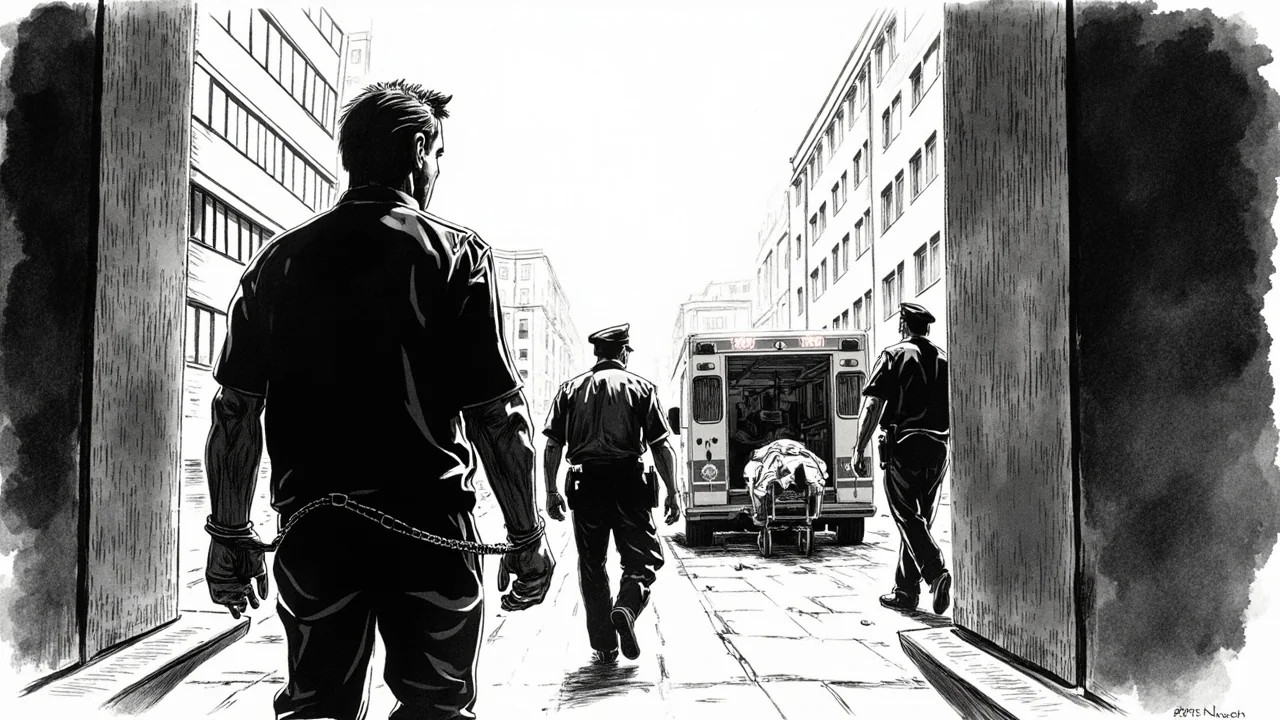
Finland apartment assault in Helsinki’s Munkkiniemi district left one person hospitalized and another taken into police custody Friday morning. Authorities responded to a private residence on Huopalahdentie after a bystander reported the incident around 8:30 a.m., prompting an immediate deployment of emergency units to the scene.
Emergency Response at Huopalahdentie
Multiple police vehicles and ambulances gathered outside a residential building on Huopalahdentie in Munkkiniemi, a well-established neighborhood in western Helsinki. A photo submitted by a local resident confirmed the location as a multi-story apartment complex, with emergency personnel visible on-site during the early hours of the day. The swift arrival of both law enforcement and medical teams underscores the seriousness with which Finnish authorities treat potential violent incidents in residential areas.
Helsinki Police Department confirmed that one individual was arrested in connection with the event, while a second person was transported to a hospital for treatment. Officials have not disclosed the nature or severity of the injuries sustained, nor have they released details about the relationship between the two individuals involved. At this stage, police classify the incident as an alleged act of violence occurring within a private dwelling.
Limited Details Released by Authorities
Despite public interest and media inquiries, the Helsinki Police Communications Unit has declined to elaborate on the specific type of violent crime allegedly committed. “We cannot comment further on the nature of the offense at this time,” a spokesperson said. Finnish law enforcement typically withholds detailed information during active investigations to protect the integrity of evidence collection and to respect the privacy rights of those involved.
The lack of immediate clarity has not stemmed speculation among local residents, many of whom expressed concern over safety in what is generally considered a quiet, family-oriented part of the capital. Munkkiniemi, located near the sea and known for its parks and proximity to government offices, rarely makes headlines for violent crime. This incident stands out against the backdrop of Finland’s relatively low rates of interpersonal violence compared to other European nations.
Timeline of the Morning Incident
According to official statements, the first alert came from a passerby who noticed signs of distress or disturbance at the apartment shortly before 8:30 a.m. Finnish emergency protocols require rapid verification of such reports, especially when potential harm is suspected. Within minutes, patrol units were dispatched to the address, followed by paramedics once the situation was assessed as involving physical injury.
Witnesses described a tense atmosphere as officers secured the building’s entrance and coordinated with medical staff. Neighbors reported hearing raised voices earlier in the morning but did not intervene, highlighting the reliance on civic reporting in urban settings. The fact that a third party—not someone directly involved—triggered the police response speaks to community vigilance, a factor often credited in Finland’s effective handling of domestic disturbances.
Context of Domestic and Residential Violence in Finland
While Finland maintains strong social support systems and low overall crime rates, incidents of violence in private homes remain a persistent challenge. Statistics from the Finnish Institute for Health and Welfare show that a significant portion of violent crimes occur between people who know each other, often within domestic settings. However, without confirmation from investigators, it would be premature to categorize this case as domestic violence.
What is clear is that Finnish police treat all reports of residential violence with urgency. Protocols developed over the past decade emphasize early intervention, victim protection, and inter-agency coordination between police, healthcare providers, and social services. These measures aim to prevent escalation and ensure that victims receive immediate care, whether physical or psychological.
Ongoing Investigation and Next Steps
As of Friday afternoon, the suspect remained in police custody undergoing questioning. Finnish criminal procedure allows for up to four days of pre-trial detention without formal charges in cases involving serious offenses, though prosecutors must justify continued detention to a judge. Investigators are likely reviewing security footage from the building, interviewing neighbors, and gathering forensic evidence from the apartment.
Authorities have not indicated whether weapons were involved or if additional persons may be connected to the incident. The Helsinki Police Department urged anyone with relevant information—such as unusual activity in the area prior to 8:30 a.m.—to come forward. Public cooperation remains a cornerstone of Finland’s community-oriented policing model.
The hospitalized individual’s condition has not been disclosed, in line with Finland’s strict patient confidentiality laws. Medical professionals are expected to provide only essential updates to law enforcement to aid the investigation, without violating privacy regulations.
What This Means for Munkkiniemi Residents
For locals, the event has disrupted the neighborhood’s usual calm. Parents walking children to nearby schools paused to observe the emergency vehicles, and some residents expressed unease about the rare intrusion of violence into their daily lives. Yet Finnish society’s deep trust in institutions means many expect a thorough, transparent process—even if full details emerge slowly.
Community leaders have not yet called for public meetings, but neighborhood associations in Helsinki often facilitate dialogue after such incidents to reassure residents and share safety resources. In the meantime, police patrols in the area may increase temporarily as a precautionary measure, though no official announcement has been made.
This case also highlights the delicate balance Finnish authorities must strike: responding decisively to violence while safeguarding legal rights and avoiding sensationalism. Unlike jurisdictions where preliminary details flood media channels, Finland’s restrained approach prioritizes factual accuracy over speed—a practice that can frustrate public curiosity but upholds judicial integrity.
As the investigation continues, one question lingers for Helsinki residents: how does a city known for safety and order respond when violence pierces the walls of a private home? The answer will unfold not in headlines, but in courtrooms, community conversations, and the quiet resilience of a neighborhood shaken—but not broken.
Read more: Helsinki Shell Station Demolition Tests Finnish Heritage Pro....
Read more: Two Named as First Parliament Candidates in Central Finland.