
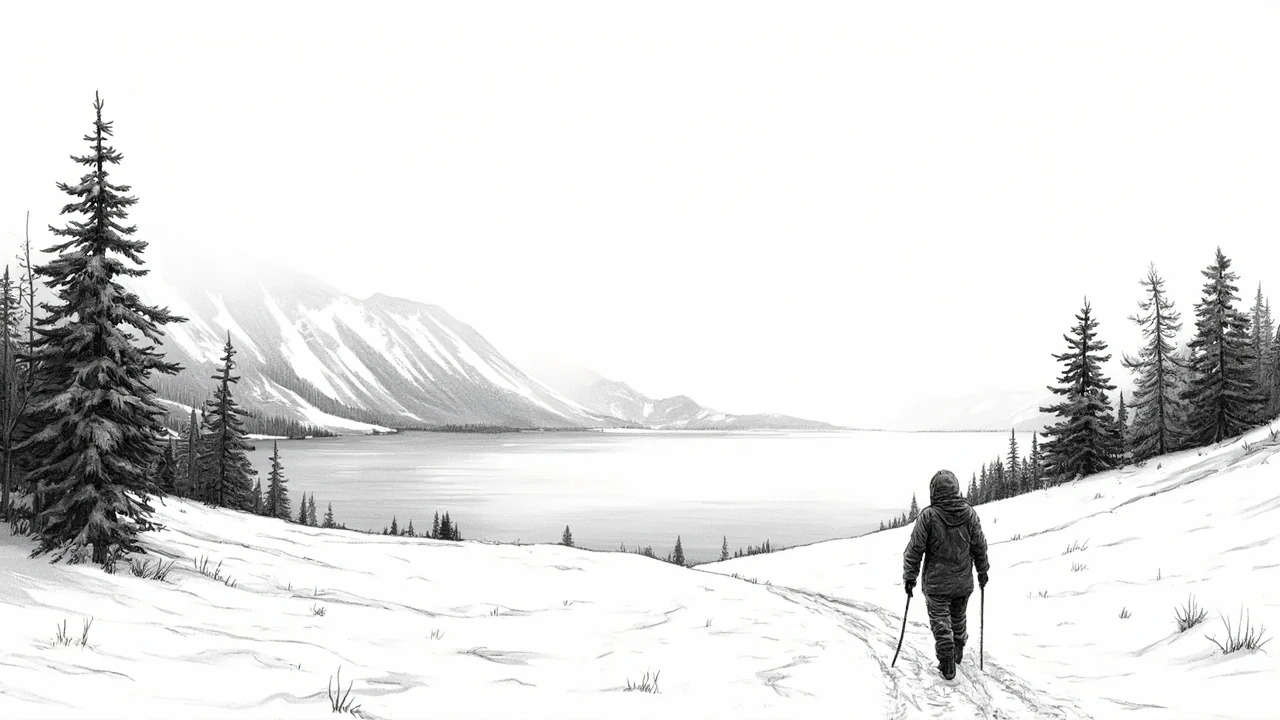
Finland's temperatures will plunge to -35 degrees Celsius this weekend with the severe cold wave set to persist until late February, new forecasts show. The Finnish Meteorological Institute and private service Foreca issued warnings on Monday, detailing a prolonged period of temperatures 8 to 10 degrees below seasonal norms across the entire country. This cold snap presents immediate challenges for infrastructure and public health, prompting scrutiny of government preparedness protocols from Helsinki's government district. Meteorologists attribute the extreme conditions to a weakening polar vortex and a stagnant high-pressure system over Fennoscandia, factors that allow Arctic air masses to drift southward.
Forecast Details and Immediate Impacts
Foreca's monthly forecast predicts the cold will hold firm until the second last week of February, with daytime temperatures in southern and central Finland dropping to -10 to -20 degrees Celsius by week's end. In the north, the mercury may fall to -25 degrees during the day, while nighttime lows could reach -35 degrees in Lapland. For central and southern regions, including Helsinki, Saturday night might see lows of -25 degrees Celsius. Ville Siiskonen, a meteorologist on duty at the Finnish Meteorological Institute, cautioned that cloud cover could cause significant variation. Measured temperatures might deviate from forecasts by 10 to 15 degrees if cloudiness differs from predictions, Siiskonen said in a statement. The strengthening high-pressure center over Finland will also keep winds weak and precipitation away at least until the weekend.
Meteorological Drivers Behind the Freeze
Two primary factors are driving this intense cold spell, according to Foreca's analysis. A sudden stratospheric warming event over the North Pole has weakened the polar vortex, which normally confines cold air to Arctic regions. This disruption allows frigid air masses to migrate further south into Scandinavia. Concurrently, a broad and persistent high-pressure area has settled over Finland and the wider Fennoskandian region, acting as a lid that suppresses winds and keeps storm systems at bay. This combination creates ideal conditions for radiative cooling, where clear skies permit heat to escape into the atmosphere, intensifying the frost. The phenomenon is not unprecedented in Finnish climatic history, but its duration and intensity are notable for this point in February.
Historical Context and Typical Government Response
Finland has experienced similar severe cold waves in past decades, often testing the resilience of its society and the responsiveness of its government. Historically, such events trigger coordinated actions from the Ministry of Social Affairs and Health and the Ministry of the Interior, focusing on vulnerable populations and critical infrastructure. Municipalities across the country typically activate cold weather plans, which include increasing shelter capacity for the homeless and issuing public advisories on frostbite prevention. While the current forecast does not detail specific government actions, past precedent shows the Eduskunta often reviews energy security and social welfare funding following extreme weather events. The consistent performance of Finland's district heating networks, a cornerstone of urban policy, becomes a focal point during prolonged freezes.
EU Energy Policy and Broader Implications
This cold snap intersects with ongoing European Union discussions on energy resilience and winter preparedness. Finland's energy mix, particularly its reliance on imports and domestic sources like peat and nuclear power, comes under renewed scrutiny during demand spikes caused by extreme cold. EU directives aimed at ensuring member states' energy security during winter months are relevant, as Finland must balance its commitments with domestic needs. The situation may prompt statements from Finnish ministers in Brussels regarding the stability of the Nordic energy market and the importance of interconnected grids. However, the immediate forecast does not indicate supply disruptions, focusing instead on the meteorological patterns sustaining the cold.
Preparedness and Public Advisory Measures
Authorities emphasize personal preparedness during such extreme cold. The Finnish Institute for Health and Welfare routinely issues guidelines, recommending layered clothing, limited outdoor exposure, and checks on elderly neighbors. Transportation agencies monitor road conditions and rail networks for ice-related hazards, standard procedure during winter months. Energy providers remain on alert to manage increased consumption for heating. The longevity of this cold wave, predicted to last until February's final days, requires sustained public awareness. Forecast accuracy diminishes the further out predictions go, as noted by both Foreca and the Finnish Meteorological Institute, underscoring the need for regular updates.