
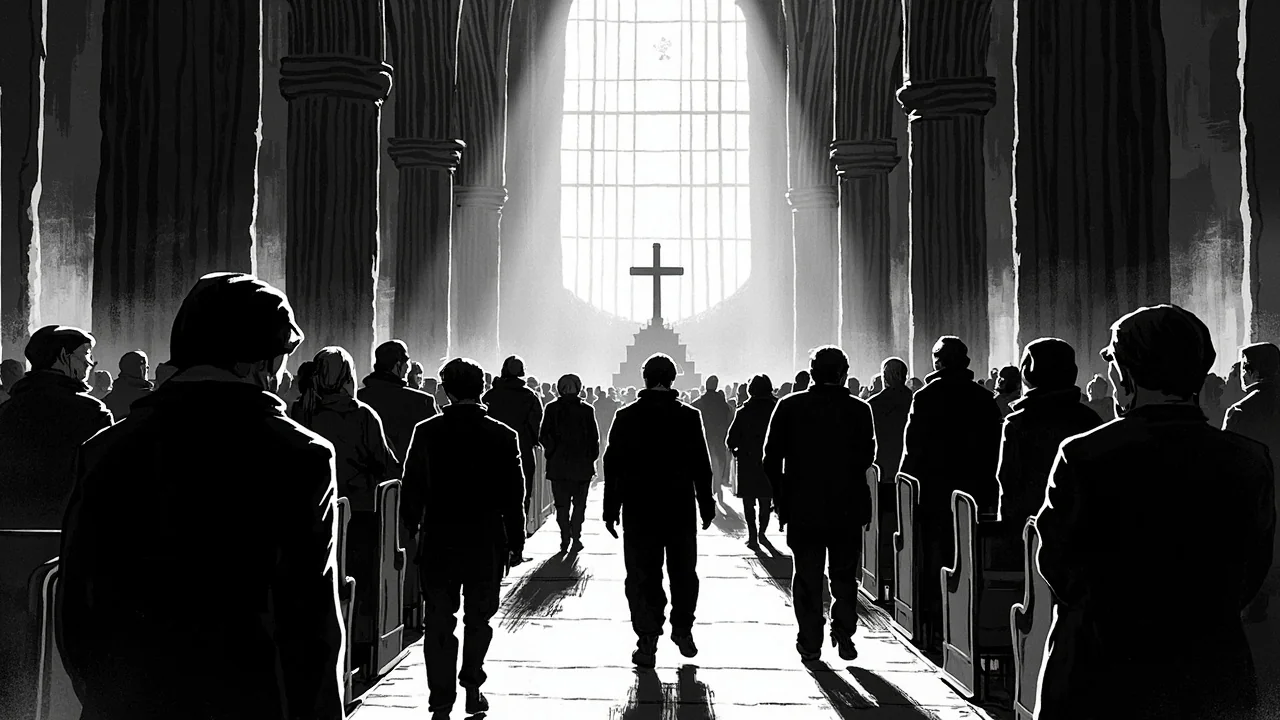
Finland's Lutheran Church saw 662 members leave its five congregations in Kouvola last year, a slight dip from the 711 departures recorded the previous year. This gradual attrition unfolds against a backdrop of deep, personal connections to the institution, as illustrated by longtime member Erica Schrall-Järvenpää, who has belonged to the church her entire life but rarely attends services. Her experience highlights the complex relationship many Finns maintain with their state church, where formal membership often persists despite infrequent participation in traditional worship. The figures from Kouvola offer a localized snapshot of a national trend, where the church remains a cultural and social anchor even as active engagement evolves.
A Lifelong Member's Perspective
Erica Schrall-Järvenpää represents a significant demographic within Finnish society. She has never formally severed her ties with the Evangelical Lutheran Church of Finland, an institution intertwined with national identity, history, and rites of passage. Her continued membership, despite not being a regular churchgoer, speaks to the church's role beyond Sunday services. For many, the church connection is linked to family traditions, moral community, and access to ceremonies like baptisms, weddings, and funerals. This passive affiliation is a defining feature of modern Finnish religiosity, where the church is often seen as a public utility or a default cultural setting rather than a weekly spiritual commitment. The decision to stay, even while not actively participating, is as telling as the decision to leave.
Interpreting the Exit Numbers
The decrease from 711 to 662 departures year-on-year in Kouvola is a minor statistical shift, not a reversal of the long-term trend of declining membership. It does, however, suggest that the rate of exit can fluctuate. These annual resignation numbers are influenced by various factors, including national debates on church doctrine, political issues involving the church's stance on social matters, and the annual church tax decision sent to every member. Each resignation is a personal choice, but collectively they map the changing religious landscape of Finnish towns. The consistency of several hundred members leaving each year in this one city indicates a steady, thoughtful reevaluation of the church's role in individual lives, rather than a sudden mass exodus driven by a single event.
The National Context of Church Membership
The story in Kouvola mirrors a nationwide conversation. The Evangelical Lutheran Church of Finland has seen its membership share of the population gradually decline for decades, though it remains the overwhelming majority religious community. This slow drift raises fundamental questions about the future structure and financing of the church, which operates as a tax-collecting entity and a major provider of social services and cultural heritage preservation. The church's extensive real estate holdings, including historic wooden churches across the countryside, and its role as a employer, mean changes in membership have tangible societal and economic effects. The dialogue around membership is not solely theological but also deeply practical, concerning community cohesion, welfare services, and the upkeep of national monuments.
The Social and Cultural Anchor
Beyond theology, the church in Finland functions as a crucial social and cultural hub, especially in smaller cities and rural areas like those around Kouvola. It organizes youth groups, volunteer activities, charity work, and community events that are secular in nature but church-facilitated. For many Finns, their local church building is a physical and emotional landmark, a place for quiet reflection, Christmas concerts, and summer festivals. This embedded role makes a simple membership statistic an incomplete measure of the institution's influence. A person like Erica Schrall-Järvenpää may value this community presence and safety net, contributing to her decision to remain a member on the books, even if her personal faith practice does not align with regular attendance.
The Rite of Passage Question
A primary reason cited for maintaining church membership is access to its rites of passage. The Lutheran Church traditionally officiates the vast majority of Finnish baptisms, confirmations, weddings, and funerals. Many non-practicing members stay enrolled to ensure these services are available for their families, viewing the church as the default institution for marking life's biggest moments. This creates a cycle where cultural tradition reinforces membership rolls. However, as secular alternatives for ceremonies become more common and socially accepted, this tie may weaken for future generations. The choice to use church services for a wedding or a funeral while not otherwise engaging reflects a compartmentalized view of the church's utility, separate from weekly faith or belief.
The Financial Link: Church Tax
The annual church tax, typically around 1% to 2% of an income, is a direct financial link between members and the institution. Every year, members receive a tax card and must actively decide to pay it. This moment serves as an annual referendum on membership, prompting individuals to consciously decide if the benefits are worth the cost. For some, the tax is a reasonable fee for a cultural and social service they might use someday. For others, it becomes the impetus to formally resign. The fluctuation in resignation numbers, like the minor decrease seen in Kouvola, can sometimes correlate with public discussions about church finances or specific expenditures, pushing the issue to the forefront of members' minds.
Looking to the Future
The gradual decline illustrated by Kouvola's numbers suggests a future where the Lutheran Church may remain a large, but less dominant, institution. Its challenge will be to redefine its value proposition to members like Erica Schrall-Järvenpää—those who feel a connection but not a compulsion to participate. This may involve emphasizing its community and social work, its role as a guardian of heritage and nature trails, and its place as a forum for ethical discussion. The church is increasingly navigating a landscape where personal spiritual belief is separate from institutional affiliation. Whether it can successfully serve both actively religious Finns and the culturally affiliated passive members will determine its shape in the coming decades. The quiet decisions of hundreds of individuals in cities like Kouvola, year after year, are slowly writing that future.