
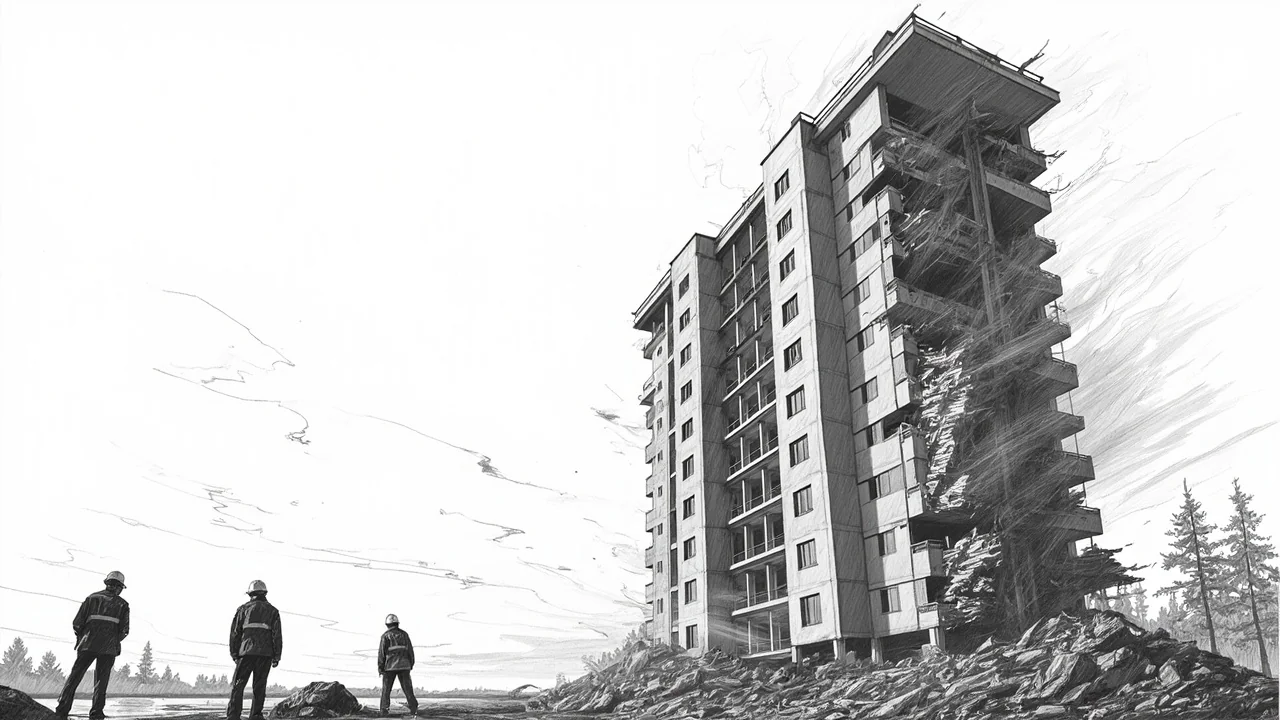
Finland's municipal housing company is set to demolish a recently renovated apartment building, leaving residents confused by the decision. In the South Karelia municipality of Joutseno, part of Lappeenranta, demolition work on the building at Osuustie 5 is scheduled to begin in the autumn of 2026. The decision by Lappeenrannan Asuntopalvelu (Lappeenranta Housing Services) has sparked questions about resource allocation and long-term planning in Finland's public housing sector.
A Shocking Notice in the Mailbox
For long-term resident Jarkko Lipiäinen, the news arrived with brutal simplicity. On the second Monday of January, a notice fell through his letterbox informing him that Lappeenrannan Asuntopalvelu had decided to tear down his home. Lipiäinen has lived in his current apartment on Osuustie for over eleven years. He says he first heard rumors about demolition plans a few years ago but thought he had dodged the threat when the building's felt roof was replaced as recently as the summer of 2023. The landlord's final decision still came as a surprise. Lipiäinen, like many other residents contacted by local media, is baffled by the logic of demolishing a property that was being renovated so recently.
The Housing Company's Rationale
Veli-Matti Pulli, the Managing Director of Lappeenrannan Asuntopalvelu, confirms that a roof renovation was carried out on the building a few years ago. However, he states that when selecting demolition targets, the company emphasized two key criteria: relative occupancy rates and the overall condition of the building. This suggests a cost-benefit analysis where ongoing maintenance and modernization costs for an older building were deemed to outweigh the benefits of continued operation, even after recent investments. The decision reflects a broader strategic calculation within Finland's municipal housing providers, who manage large portfolios of aging post-war apartment blocks, particularly in regions facing demographic challenges.
The Context of Renovation and Demolition
The situation in Joutseno highlights a recurring tension in Finnish urban policy. Municipal housing companies frequently engage in significant renovation projects to improve energy efficiency, living standards, and building longevity. These projects, like roof replacements, are substantial investments. For residents, these renovations are a clear signal that the building has a secure future. Therefore, a subsequent demolition decision inherently creates a perception of wasted public funds and poor planning. It forces a confrontation between immediate maintenance needs and long-term strategic viability, where the latter ultimately prevails in the boardroom, often to the dismay of the community on the ground.
Looking for a New Future on Osuustie
With demolition plans now firm, the process turns to the future of the plot. Lappeenrannan Asuntopalvelu has announced it will survey what residents hope to see replace the demolished apartment building. This consultation phase is critical. It represents an attempt to mend community relations and plan a development that better serves current demographic and housing needs. The outcome could range from new, modern apartment buildings designed for contemporary living standards to different forms of residential or even mixed-use development. The company's willingness to engage in this dialogue will be closely watched as a test of its commitment to the Joutseno community it is currently displacing.
A Common Story in Changing Regions
While shocking to those directly affected, the story of Osuustie 5 is not unique in Finland. Similar scenarios have played out in other municipalities, especially in areas outside major growth centers. Aging building stock, shifting populations, and the high cost of comprehensive modernization often lead to tough economic decisions. A roof repair is a single, necessary fix, but it doesn't address foundational issues, outdated floor plans, poor energy efficiency, or the economic burden of a half-empty building. The demolition, therefore, is not a negation of the recent renovation but an admission that the total sum of required investments no longer makes sense for the housing provider's portfolio and its duty to manage resources effectively.
The Human Cost of Strategic Decisions
Behind the corporate rationale lies a significant human disruption. For residents like Jarkko Lipiäinen, this is not a strategic portfolio adjustment but the loss of a home lived in for more than a decade. They must now navigate the housing market, potentially facing higher rents or relocation away from their established community. The promised consultation about the future of the plot is a small consolation for the immediate insecurity. The incident raises broader questions about communication and transparency in municipal housing management. Could earlier and clearer dialogue about the building's precarious long-term future have managed expectations, even if the final outcome remained the same?
What Comes Next for Joutseno?
The demolition on Osuustie is scheduled for 2026, giving residents time to relocate and the housing company time to plan. The coming community survey will be the next significant public milestone. Its findings will reveal whether trust can be rebuilt through participatory planning. The ultimate test will be what rises from the vacant lot after 2026 and whether it genuinely reflects the needs and desires of the Joutseno community, or remains solely a line on a balanced spreadsheet. The story serves as a stark reminder that in Finnish housing policy, even a new roof is no guarantee of a permanent home.