
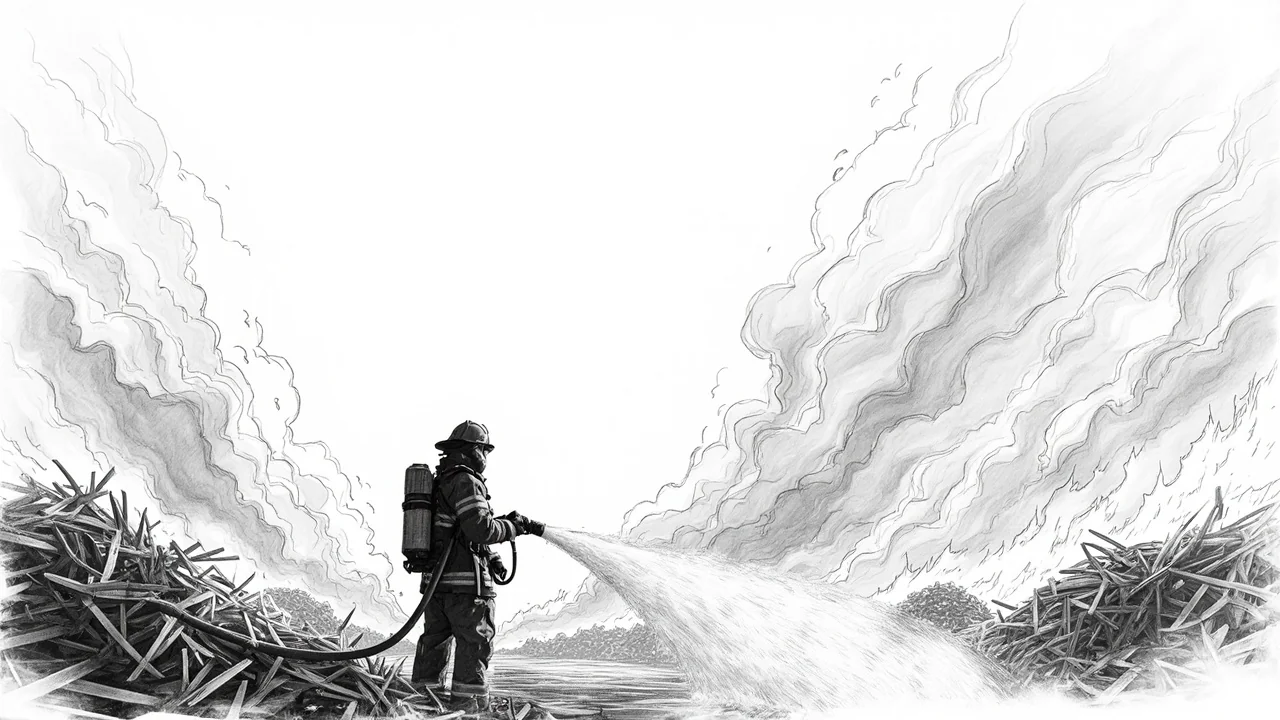
Finland's waste management facilities faced twin self-ignition incidents last Friday, with a smoldering paper shredder fire at a Mikkeli waste station and a separate blaze at a Pieksämäki biofuel storage site. The Mikkeli fire broke out in a container full of fine paper dust and shredded material at the Metsäsairila waste station early Friday morning. According to on-duty fire chief Joni Himberg of the South Savo Rescue Department, the container measured approximately two by two by five meters and contained a significant volume of combustible material. The fire was reported shortly after 6:30 AM. 'The extinguishing work required us to spread the container's contents onto the ground and water it down,' Himberg said. The fire remained confined to the waste container and did not present a risk of spreading to other areas.
Cause Under Investigation
The precise cause of the Mikkeli paper waste fire is currently unknown, and investigators are unsure at what stage the material began to smolder. Himberg's assessment points to two plausible origins. Self-ignition within the paper waste itself is considered a primary possibility due to the combustible nature of fine particulate matter. Alternatively, a small spark from a dust removal system could have landed in the pile and initiated a slow-burning fire. The incident highlights a known industrial hazard where accumulated fine dust from materials like paper, wood, or grain can spontaneously combust under certain conditions of heat and pressure. No injuries were reported, and the rescue service successfully managed the controlled extinguishing operation on-site.
Second Incident in Pieksämäki
A separate and confirmed case of self-ignition occurred around midnight the same day in Pieksämäki, approximately 70 kilometers from Mikkeli. At an old sawmill site in Takaniemi, a pile of material consisting of a peat and wood chip mixture began to smolder and emit a pungent odor into the local environment. The owner of the site used machinery to spread out the smoldering piles into thinner layers, a standard technique to reduce heat buildup. The rescue service then assisted by watering down the material to fully extinguish the fire. This incident underscores that self-ignition risks are not isolated to paper waste but extend to other organic, biomass-derived materials commonly stored in bulk within Finland's forestry and energy sectors.
Operational Response and Safety Protocols
The response to both fires followed established safety protocols for industrial and waste-related blazes. The key tactic, employed in Mikkeli, involves breaking apart concentrated piles of burning material to eliminate the insulating effect that allows intense internal heat to build. By spreading the paper shreddings on the ground, firefighters can apply water or other suppressants directly to the entire fuel source, cooling it below its ignition temperature. In Pieksämäki, the pre-emptive spreading of the peat and wood chip pile by the owner was a critical first step that facilitated the rescue service's subsequent extinguishing work. These procedures are designed to prevent flare-ups and ensure complete extinguishment, as deep-seated smoldering fires can reignite if not thoroughly treated.
Regulatory Context for Waste Storage
While the investigation continues, the incidents bring focus to national and EU-derived regulations governing the storage and handling of combustible waste materials. Finland's waste management practices operate under a framework influenced by European Union directives on waste, industrial emissions, and workplace safety. These regulations mandate risk assessments for facilities handling materials prone to self-heating, requiring specific storage conditions, volume limits, and monitoring procedures. Facilities storing large quantities of organic or fine particulate waste are typically required to implement measures to prevent heat accumulation, such as limiting pile height, ensuring adequate ventilation, and conducting regular temperature monitoring.
Economic and Environmental Considerations
Fires at waste handling and biofuel storage sites present direct economic losses through the destruction of material and potential damage to infrastructure. Beyond the immediate cost, they pose localized environmental concerns, primarily through smoke and particulate emissions, as noted by the pungent smell reported in Pieksämäki. While the Mikkeli fire was contained to its container, preventing a larger environmental incident, such events can strain local rescue resources and disrupt waste processing operations. For regions like South Savo, with a significant forestry and bioeconomy sector, managing the fire risk associated with storing biomass and its by-products is an ongoing operational challenge integrated into facility planning and insurance costing.