
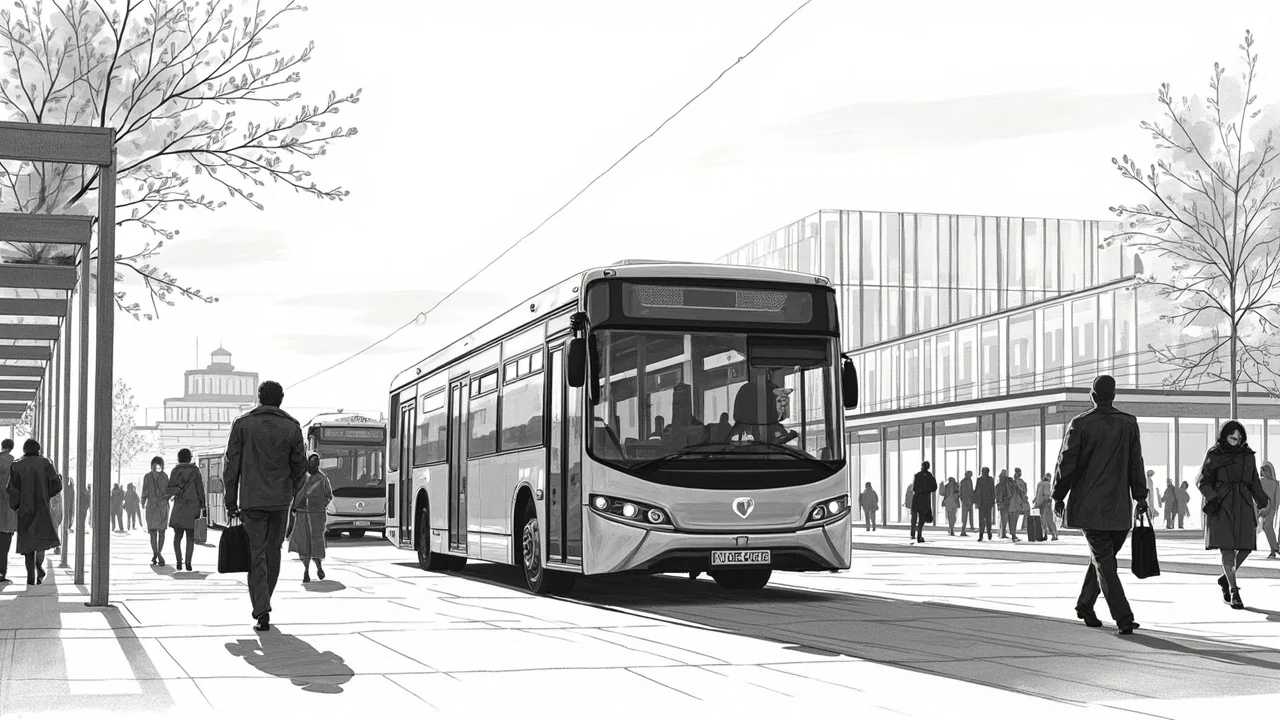
Finland's capital Helsinki is poised for a significant public transport shift as the Helsinki Regional Transport Authority (HSL) drafts plans to discontinue three bus lines and reroute four others away from the city center. The proposed changes, targeting routes in western Helsinki, are a direct response to the new Vihdintie light rail line set to begin service in the early 2030s. HSL planning unit chief Tero Mertanen states the core objective is to eliminate redundancy and cut costs by focusing direct city center travel on rail-based transport.
The Proposed Route Changes
Under the current draft, bus lines 20, 30, and 52 would be terminated completely. Lines 37, 42, 212, and 213 would no longer run into Helsinki's downtown core. Additional modifications are planned for lines 25, 29, 39, 57, 59, 500, 510(A), and 506. Line 41 would end in its current form but would begin operating on a new route resembling the northern section of the old line 52. This represents one of the most substantial reorganizations of Helsinki's bus network in recent years, fundamentally altering commuting patterns for thousands of residents in districts like Munkkiniemi, Haaga, Lassila, and Kannelmäki.
The driving force behind the proposal is Light Rail Line 14. This new line will run from the city center along Mannerheimintie through Meilahti, Munkkiniemi, Haaga, and Lassila to Kannelmäki. With this high-capacity rail service coming online, HSL aims to reduce parallel bus services. Many existing bus routes will transform into feeder services, connecting neighborhoods to light rail stations rather than providing direct downtown connections. Mertanen emphasized this strategic pivot, noting, 'We must operate cost-effectively. Trips to the center will be concentrated more on rails, meaning trams and trains, than they are now.'
Relieving Pressure at Key Terminals
A secondary benefit of the network redesign is creating capacity at Helsinki's main bus terminals. The changes would facilitate the long-planned relocation of bus stops from Elielinaukio square to the Kamppi long-distance terminal. The Elielinaukio site is slated for redevelopment into a new office complex named Flyyga. Moving these buses is essential as their current space will be consumed by construction. The consolidation into Kamppi, however, presents a logistical challenge requiring the terminal to accommodate additional regional buses alongside its existing traffic.
This terminal shift is part of a broader transformation of Helsinki's central transport interchange. The area around the Central Railway Station has long been congested with bus traffic. Redirecting buses to Kamppi is intended to streamline operations and free up prime urban space for development. The architectural plans for Elielinaukio, designed by firms Snøhetta and Proloog, envision a modern office hub, signaling a move from a transport-focused square to a commercial one. The success of this plan hinges on the Kamppi terminal's ability to absorb the extra load without compromising efficiency.
Public Consultation and Next Steps
HSL officials stress that the current plan is only a draft subject to change. The authority has already received thousands of feedback comments from residents during the public consultation phase, though these have not yet been fully analyzed. This public input is a critical component of the planning process, as changes to bus routes directly impact daily commutes, accessibility for elderly and disabled residents, and overall neighborhood connectivity. Community concerns often focus on the loss of direct services, increased travel time due to transfers, and access during off-peak hours when light rail frequency may be lower.
The feedback will be incorporated into a revised proposal. A final version is scheduled to be presented to the HSL board by this summer for a decision. This timeline allows for several months of analysis and adjustment. The board's decision will then set the stage for a multi-year implementation process, aligning with the gradual rollout of the light rail infrastructure. The changes are not expected to take full effect until the light rail line becomes operational at the start of the next decade.
A Broader Transport Strategy
This bus network restructuring aligns with Helsinki's and Finland's long-term sustainable urban mobility goals. The strategy prioritizes high-capacity, electric rail transport for main arterial corridors while using buses for local distribution. This model is common in many European cities seeking to reduce downtown congestion and lower emissions. The Finnish state and Helsinki city council have heavily invested in the light rail network, viewing it as a backbone for future growth. The bus network must adapt to complement, not compete with, this investment.
Historical context is important here. Helsinki's transport network has evolved from a tram-dominated system to one incorporating metro, commuter rail, buses, and now expanding light rail. Each new rail investment, like the recent metro extension to Espoo, has triggered a recalibration of bus routes. The scale of the change proposed for western Helsinki is notable because it affects a densely populated area currently reliant on bus lines like the frequent 30 and 20 services. The transition's smoothness will depend on seamless integration between the new trams and the reconfigured bus timetables.
For daily commuters, the implications are significant. A trip that once involved a single bus ride may soon require a bus-to-tram transfer. While this could increase travel time for some, HSL argues the overall system will be more reliable and efficient. The success of the plan will be measured by ridership numbers, public satisfaction, and whether it achieves its stated goal of cost-effective operation. As Helsinki continues to grow, the balance between different transport modes remains a central challenge for urban planners. The coming months of public debate and board deliberation will shape the city's mobility landscape for the next generation.